
How to Make Herbal Infusions and Decoctions (+ Which to Use)
In my early studies of herbal medicine and holistic health, I learned that the effectiveness of plant medicine hinges not only on the quality of the plant but on the extraction method. The market is full of supplements made with herbs extracted the wrong way. Astragalus tincture is a good example: the beneficial polysaccharides in astragalus root are not soluble in alcohol, yet you will find these products on every health food store shelf. When the method does not match the plant, you simply do not get the medicinal compounds you are after.
This guide covers the two most popular water-based extraction methods, infusions and decoctions. You will learn what each one is, how to know which to use for a given herb, and exactly how to make both at home.
Key Takeaways
- Infusions steep delicate parts (leaves, flowers, aromatic herbs) in hot water. Decoctions simmer tough parts (roots, bark, seeds, berries).
- The method matters as much as the herb. The wrong one can leave the medicinal compounds locked in the plant.
- Infusions are quick, gentle, and preserve volatile oils. Decoctions are stronger and better for dense material.
- Keep your vessel covered while brewing, to trap heat and the volatile oils that carry much of an herb's benefit.
- Both keep in the fridge. Use infusions within a day or two, and decoctions within about a week.
Decoction vs Infusion: What Is the Difference?
As herbalists, we use various methods to extract the medicinal compounds from plants, each with its own strengths and limitations. Infusions and decoctions are the two most popular water-based methods, and the difference between them is simply steeping versus simmering.
What Is a Decoction?
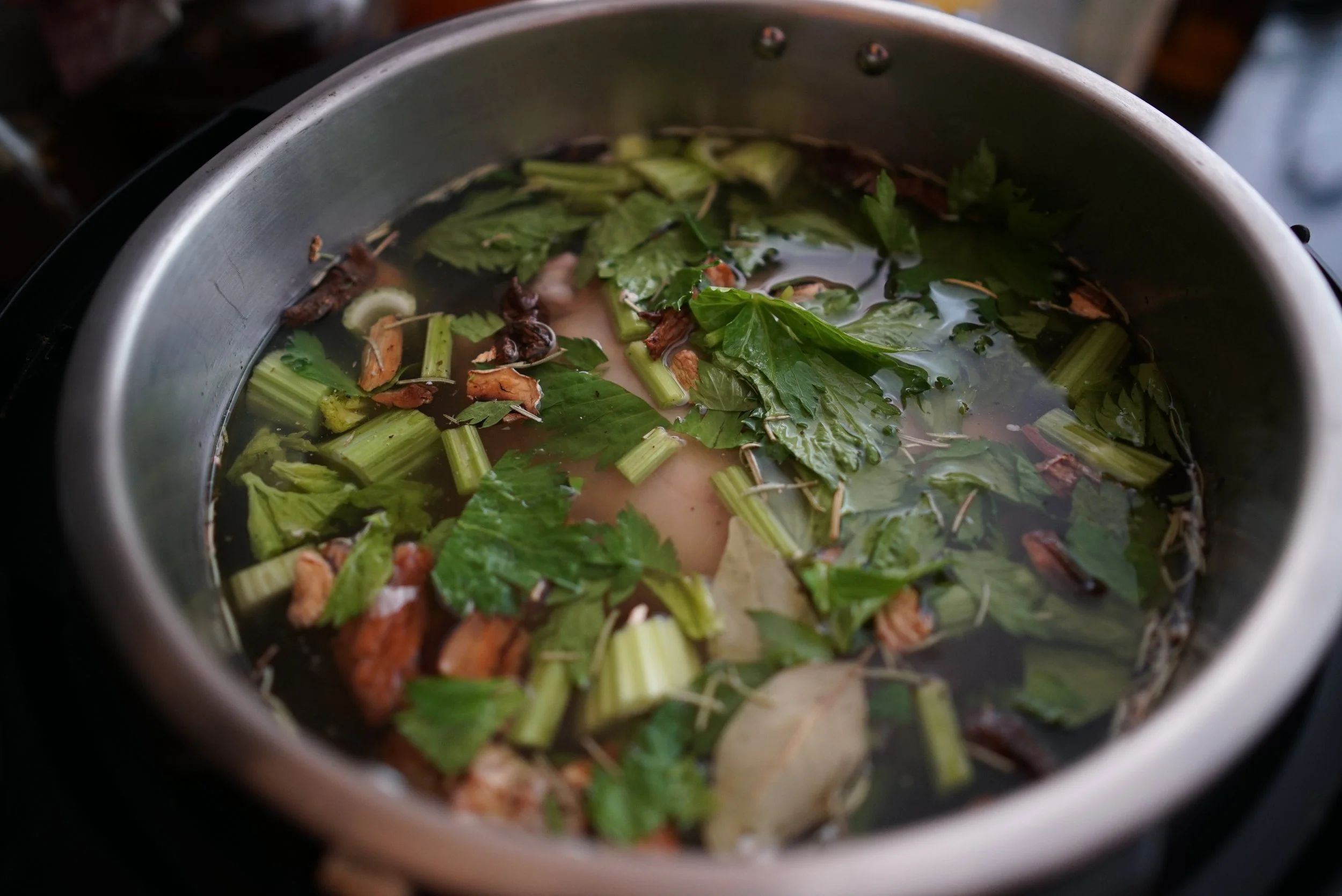
A decoction is a concentrated form of herbal tea. It is made by boiling herbs, usually the harder parts of the plant like roots, bark, seeds, and non-aromatic leaves, in water and then simmering them over time. This process pulls out the healing properties, such as bitter components, tannins, and other therapeutic substances, that would otherwise stay locked in the plant. Because they simmer for a long time, decoctions are typically more concentrated than infusions, which is why they suit stronger, denser herbs that need heat and time to release their benefits.
What Is an Infusion?
An infusion extracts the therapeutic properties of the more delicate parts of a plant, like flowers, leaves, and aromatic herbs. You pour boiling water over the plant material and let it steep, typically 5 to 15 minutes, or longer for a stronger brew. The great advantage of an infusion is that it captures volatile components like essential oils without destroying them, which the longer boil of a decoction would do. Infusions are quick to prepare, gentle on the body, and easy to enjoy several times a day, which makes them a lovely fit for daily use and general well-being.
So it is not that decocting is "better" than infusing. It is about matching the method to the plant material. That said, decoctions do generally yield a stronger, more concentrated preparation because of the longer, hotter extraction, which can be preferable when you need a more potent remedy.
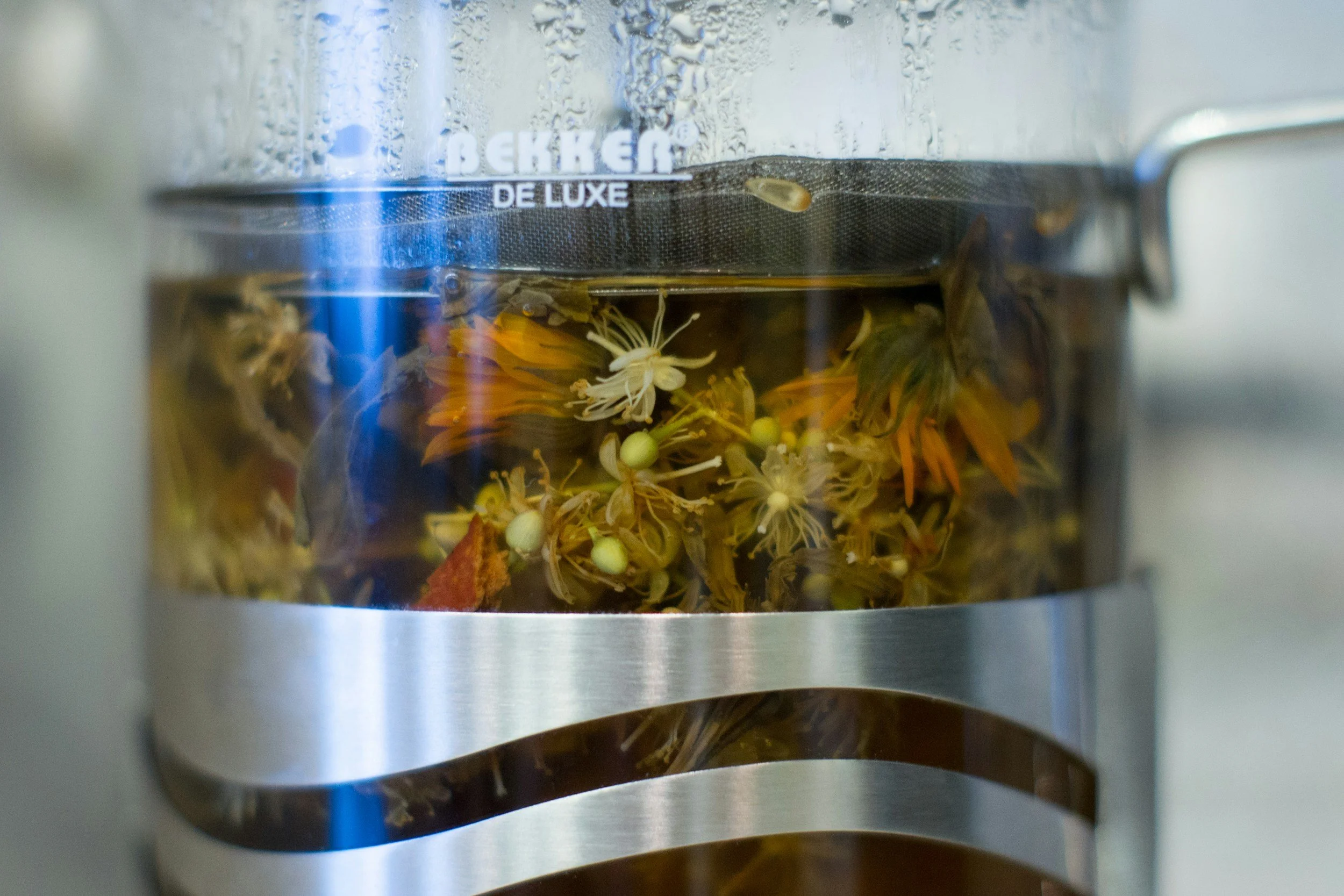
Which Method Should You Use?
The short version: decoct harder, denser materials like roots, bark, seeds, and berries, which need more heat and time. Infuse delicate parts like leaves, flowers, and aromatic herbs, which release their properties at lower temperatures and can be damaged by boiling. One exception worth remembering: herbs high in volatile oils are usually infused even if they are a thicker plant part, since simmering would drive those oils off.
| Infusion | Decoction | |
|---|---|---|
| Best plant materials | Delicate parts such as leaves, flowers, and some seeds. Aromatic herbs are well suited too. | Tough, dense materials such as roots, barks, non-aromatic seeds, and some berries. |
| Example herbs | Mint, chamomile, lemon balm, green tea, fennel, lavender. | Turmeric, ginger, cinnamon, astragalus, dandelion root, burdock root. |
| Pros | Quick and easy. Great for volatile oils and heat-sensitive compounds. Gentle on delicate material. Generally tastes more pleasant. |
Stronger, more concentrated. Better for tough plant materials. Ideal for compounds that need higher heat and longer brewing. |
| Cons | May not fully extract tougher materials. Less concentrated than a decoction. Volatile compounds escape if left uncovered. |
Takes longer to prepare. High heat can destroy sensitive compounds. Often a stronger, more bitter taste. |
Making a blend that has both woody and delicate herbs? Decoct the hard parts first, then take the pot off the heat and add your leaves and flowers, keeping it covered. Let everything infuse together for 10 to 15 minutes before straining, so nothing delicate gets boiled.
Need Something From The Shop?




How to Make an Herbal Infusion
Infusions are much easier and less labor intensive than decoctions. If you have ever had a cup of tea, you have made an infusion.
What You Will Need
- Fresh or dried organically grown herbs
- A non-aluminum teapot or mason jar (glass or stainless steel), plus a lid or cover
- A strainer (I like an all stainless steel one with a large capacity for stronger infusions), a measuring cup, and a teaspoon
- A kettle or pot for boiling, and filtered or spring water
- A digital scale (optional, for weighing herbs and water)
Instructions
- 1 Choose and measure your herbs. Good starters include chamomile, mint, or lemon balm. The usual ratio is 1 teaspoon of dried herbs, or 2 teaspoons of fresh, per 1 cup of water.
- 2 Add herbs and boiling water. Place the herbs in your teapot or jar, bring your water to a boil, and pour it carefully over the herbs.
- 3 Cover and steep. Put the lid on and let it steep. Generally 10 to 15 minutes for leaves or flowers, and up to 30 minutes for harder materials like seeds or roots.
- 4 Strain and store. Strain into a cup, or into a jar if saving for later. Store sealed in the fridge and use within 24 to 48 hours for best freshness and potency.
Why cover the infusion while it brews?
Two reasons. First, it holds the heat in, which gives a more thorough, even extraction. Second, many of an herb's essential oils are volatile and evaporate as it steeps. Covering the vessel traps those oils and lets them condense back into your infusion rather than drifting off, preserving both the flavor and the benefits.
How to Make an Herbal Decoction
A decoction takes a bit more time and effort than an infusion. It is the right choice for denser herbs like seeds, bark, or roots, which need longer to give up their medicinal compounds. I like to make a big batch so I have it on hand through the week.
What You Will Need
- Fresh or dried herbs, and filtered or spring water
- A non-aluminum pot (glass or stainless steel), a spoon for stirring, and a glass storage jar or bottle with a lid
- A measuring cup and a strainer (I like one that fits inside a wide-mouth mason jar)
- A stove or an electric herbal medicine cooker, plus a digital scale if you want to weigh precisely
Instructions
- 1 Measure your herbs and water. A typical ratio is 1:8 for dried herbs, or 1:5 for fresh. In other words, for every 1 part herbs use 8 parts water when dried (so 1 cup of dried herbs to 8 cups of water), or 5 parts water when fresh.
- 2 Combine and bring to a boil. Place the herbs and water in your non-aluminum pot and bring the mixture to a boil.
- 3 Simmer. Reduce the heat to low and let it simmer, stirring occasionally. This usually takes 20 minutes to an hour depending on how tough the herbs are. The liquid should reduce to about half or a quarter of its original volume, which concentrates the medicinal properties.
- 4 Strain and store. Remove from heat, let it cool a little, then strain into your storage container. Keep it in a cool, dark place, or in the fridge for a longer shelf life, and use as needed.
Other Articles You Might Like…


Frequently Asked Questions
What is the difference between a decoction and an infusion?
An infusion is steeped and a decoction is simmered. You infuse delicate parts like leaves and flowers by pouring hot water over them, and you decoct tough parts like roots and bark by simmering them, which pulls more out of that denser material.
How long do infusions and decoctions last?
Store both sealed in the fridge. Infusions are best used within 24 to 48 hours, while a more concentrated decoction keeps a little longer, up to about a week. Discard either if the taste, smell, or appearance changes.
Do I use fresh or dried herbs?
Either works. Fresh herbs hold more water, so you use roughly double the amount you would use of dried. For infusions that is about 2 teaspoons of fresh per cup versus 1 teaspoon of dried.
Can I reuse the herbs?
Often, yes, especially with decoctions. As long as the herbs still yield a strong tasting brew, you can simmer roots and bark again for another round or two. Store the used herbs in the fridge between decoctions to slow any microbial growth.
Do I really need to cover it while it brews?
It genuinely helps. Covering holds in the heat for a better extraction and traps the volatile essential oils that would otherwise escape as steam, and those oils carry much of an herb's aroma and benefit.
The information provided on this website is for educational and informational purposes only. It is not intended as a substitute for the advice of a healthcare professional, and it is not intended to diagnose, treat, cure, or prevent any disease or medical condition. This guide does not provide dosage information, since the right herbs and strength vary widely from person to person. Please consult a qualified healthcare provider or trained herbalist before starting any new herbal regimen.
Ready to brew?
Browse my tea blends to get started, or explore more how-to guides. I would love to hear how your infusion or decoction turns out.

A 37-page lye soap handbook built around one recipe: 90% beef tallow, 10% castor oil, 5% superfat. Exact grams measurements for each ingredient, the chemistry behind saponification, troubleshooting, adding color and scent naturally, and a printable batch log.