How to Get Fragrance Out of Thrifted Clothes: My Non-toxic Method
I am very sensitive to scents, and I have bought most of my clothing secondhand for over a decade. Almost everything from a thrift store arrives coated in someone else's detergent, fabric softener, dryer sheets, or perfume. This is the method I use to get it out, including the chemistry behind why fragrance clings to fabric and which products should never share a soak.
Key takeaways
- Fragrance oils are small, water-repelling molecules. Water alone will not lift them, so you need surfactants, alkaline powders, enzymes, or alcohol.
- I pre-soak in the bathtub for one to three days, running through borax, then vinegar, then baking soda or washing soda, with a plain-water rinse between each. Then at least two washes with an enzymatic detergent.
- Vinegar gets its own soak. Mixed with washing soda or borax it cancels out, and mixed with sodium percarbonate it forms peracetic acid.
- Wool and silk get vinegar and a gentle unscented soap only. The powders and enzymes damage protein fibers.
- Polyester and blends keep fragrance far longer than cotton, linen, or wool.
- Rub the fabric between your hands before you call it done. Scent capsules break open with friction and body heat.
This article describes my own laundry routine. Never combine cleaning products in one container beyond what is described here, work in a ventilated space, keep soaking tubs away from children and pets, and spot test any new cleaner on a hidden seam before treating the whole piece. Fabrics vary, and I cannot promise a result for any particular item.
Why fragrance sticks to fabric
Based on: published materials chemistry, plus my own results over ten years of secondhand clothing.
Most fragrance ingredients are small oily molecules: esters, aldehydes, terpenes, and synthetic musks. They repel water and dissolve into other oils. Laundry companies build their products around this. Fabric softener and dryer sheets deposit a waxy, positively charged coating (the cationic surfactant that makes fabric feel soft) onto fibers, and the fragrance oils dissolve into that coating. Each wash with a scented product adds another layer.
Many detergents, softeners, and scent beads now also carry fragrance inside microscopic plastic capsules. A 2023 review from the Technical University of Darmstadt describes how these capsules are designed to survive the wash, cling to fabric, and release scent later when the shell is crushed or warmed.1 Researchers at the fragrance manufacturer Givaudan have confirmed that these polymer capsules fall within the European Union's restriction on intentionally added microplastics, and that the industry is still looking for replacements.2 This is why a piece can smell clean on the hanger, then release fragrance once you wear it. Your body heat and movement are breaking the capsules open.
Removing all of this takes more than water:
- Surfactants (detergent, dish soap) surround oil droplets so water can carry them away.
- Alkaline powders (borax, baking soda, washing soda) raise the pH, which breaks down the waxy softener film and lets surfactants work harder.
- Acid (white vinegar) dissolves mineral deposits and loosens the softener film from a different direction than the powders.
- Enzymes in enzymatic detergent cut fats, proteins, and starches into smaller pieces that rinse out.
- Alcohol dissolves fragrance oils directly, which is why it works on pieces that cannot get wet.
- Absorbents (activated charcoal, baking soda used dry) do not remove oil from the fiber. They pull volatile compounds out of the air and off the surface, which helps with the smell but not the residue underneath it.
- Sunlight and air let volatiles evaporate and break some of them down with UV. On its own this does little for a heavily treated piece, but after the washes it helps.
What I use
Based on: my own supply shelf. None of these are affiliate links.
- Borax powder
- White vinegar
- Baking soda or super washing soda (sodium carbonate)
- Sodium percarbonate, for stains
- Unscented dish soap. A small squirt in the soak breaks up oil-based fabric softener residue.
- Biokleen enzymatic detergent (unscented), for the washes
- Activated charcoal, for things that cannot be soaked
- 70% isopropyl alcohol in a spray bottle, for dry-clean-only pieces
Castile soap also works in the borax or washing soda soak if you want a soap in there. More on where it does not belong below.
Before you start
Based on: my own routine.
I like to store new finds in a sealed bag or out in the garage until they are treated. Fragrance transfers in a closet, and it transfers in the washer. I don't wash thrifted pieces with regular laundry until the scent is gone otherwise clean clothes will pick it up.
Spot test any cleaner you have not used on that fabric before. Pick a hidden seam, apply, wait a day, and check for color change or fiber damage.
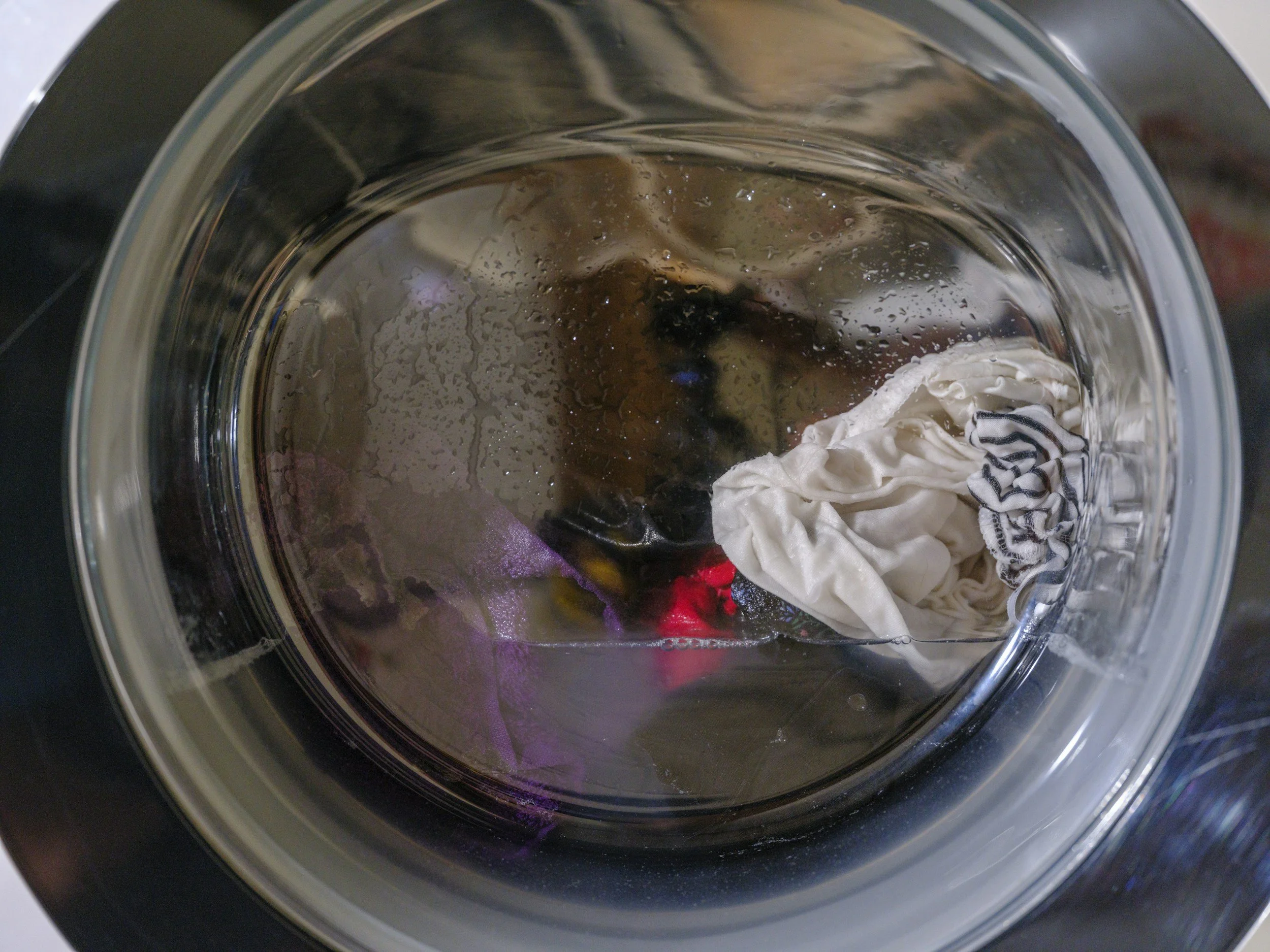
I soak in my guest bathroom tub. A utility sink, a bucket, a storage tote, or any watertight container works. For a single garment a bucket is plenty, sometimes if it's a really small piece I will use a mixing bowl from my kitchen. Whatever vessel is large enough to fully submerge your textiles.
The pre-soak routine
Based on: my own routine. The tub stage takes one to three days depending on how strong the smell is.
So, for my process, everything happens in the bathtub before the piece ever sees the washing machine. I run it through a sequence of soaks, drain the tub and rinse the fabric with plain water between each one, and refill with the next mixture. The plain-water rinse matters because the soaks do not get along with each other, and you do not want leftover borax water meeting the vinegar. For powders, you can pre-mix them in a small bowl with a little warm water so they dissolve easier in the tub. Here is the order for a washable cotton, linen, or blended piece.
Soak 1: borax
Fill the tub with warm water, about 100°F (38°C), and dissolve about a 1-2 cups of borax in it (scale down if you're just doing a small bucket soak). Add a small squirt of unscented dish soap to break up the softener film. Push the fabric under, work it with your (gloved) hands, and leave it overnight. Drain, then rinse the fabric with plain water.
Soak 2: white vinegar
Fresh warm water with a cup or two of white vinegar and nothing else. Soak for several hours or overnight. The acid in the vinegar dissolves mineral deposits and loosens the softener film from the other direction, and it clears any alkaline residue from the borax. Drain and rinse with plain water.
Soak 3: baking soda or washing soda
Fresh warm water with a cup of baking soda or half a cup of super washing soda. Washing soda is the stronger of the two, so I use it on sturdy cotton and linen and save baking soda for anything delicate or brightly dyed. Soak overnight, drain, and rinse with plain water.
Soak 4: sodium percarbonate, if there are stains
Sodium percarbonate releases hydrogen peroxide in water and needs heat to work. If you're doing this step, remove your fabric first, then fill the tub from the hot tap, at least 120°F (49°C), dissolve the percarbonate before the fabric goes back in, and soak for a few hours or overnight. This soak handles stains, yellowing, and musty storage smells rather than fragrance. Drain and rinse with plain water after.
Then the washes
Once the soaks are done, the piece goes into the washing machine with Biokleen enzymatic detergent (or other natural detergent, this is just the one I like to use), following the care instructions for that fabric. I wash at least twice, usually three or more times, with nothing else in the load. The enzymes in biokleen cut up the fats and proteins the soaks loosened so they finally rinse out. Enzymes work best in warm water and lose activity as the temperature climbs, so a warm cycle does more than a hot one.
If the smell is still there
Smell the piece after the washes, and do the rub test described further down. If fragrance is still coming up, it goes back into the tub for another pass through the soaks. Or if the smell is very faint, you could try leaving it outside in the sun for a day or two. A lightly scented cotton piece is usually done after one pass. A polyester blouse that lived in a dryer-sheet household can take two or three full passes.
What not to mix
Based on: basic chemistry, plus occupational asthma case reports on peracetic acid.
- Vinegar and borax, baking soda, or washing soda. Vinegar is an acid. The powders are alkaline. Together they neutralize each other, so you lose the benefit of both and get a tub of salty water. This is why each gets its own soak with a plain-water rinse between them.
- Vinegar and sodium percarbonate. The hydrogen peroxide from percarbonate reacts with acetic acid to form peracetic acid. Occupational medicine clinics in the UK and France have documented asthma and airway injury in workers exposed to peracetic acid and hydrogen peroxide mixtures.34 A bathtub makes far less than an industrial disinfectant, but there is no reason to breathe any of it.
- Castile soap and vinegar. Castile soap is a true soap, and acid converts it back into fatty acids. Those leave a film on the fabric. Keep castile soap in the borax or washing soda soak only.
- Castile soap and hard water. Calcium and magnesium in hard water turn soap into scum. Pair castile soap with washing soda, which binds those minerals so the soap rinses clean.
- Percarbonate and enzymes. Percarbonate needs hot water. Enzymes want warm water and break down in hot. Keep percarbonate in its own soak and let the enzymatic detergent do its work in the wash.
Wool, silk, and other protein fibers
Based on: my own routine and the textile-care rule that alkalis and proteases damage protein fibers.
Wool and silk are protein. Borax, washing soda, and percarbonate are all alkaline enough to roughen, weaken, or felt them, and the protease enzymes in enzymatic detergent digest protein the same way they digest a food stain. For these fibers I use a cool vinegar soak and a gentle unscented soap, nothing else.
Fill a tub with cool water, add a cup of vinegar, and let the piece soak for a few hours. Drain, rinse with plain cool water, refill with cool water and a small amount of gentle soap, soak again, then rinse until the water runs clear. Press the water out in a towel, never wring, and dry flat in the shade. Repeat if the fragrance is still there. Wool lets go of scent faster than polyester, so a second pass is usually the last one.
Dry-clean-only pieces: sheepskin, suede, leather, and fleece linings
Based on: my own routine. If this is a beloved piece with personal history, please take it to a professional. This is just what has worked for me in the past, and may not work for you. I'd feel so bad if you accidentally damaged an heirloom based on the instructions here, and suede/leather and other animal fibers are more finicky.
Charcoal first
Seal the item in a lidded bin or a garment bag with a few bags of activated charcoal and leave it for a week. Then hang it outside in the shade for a day or two. The charcoal pulls volatile fragrance compounds off the surface and out of the air around the piece. For a lightly scented coat this is often enough.
Isopropyl alcohol for linings
For a fleece or fabric lining, turn the piece inside out and mist it with 70% isopropyl until the fibers are damp. Press a clean white towel into the lining right away to lift the fragrance oils, then dry it in front of a fan with no heat. Isopropyl is flammable, so spray outdoors or by an open window, away from anything with a flame or pilot light.
Keep alcohol off suede and leather unless you have tested a hidden spot and waited a full day. Alcohol strips the oils that keep hide soft, and a dried-out patch does not recover.
Baking soda for fleece
This is the no-liquid option. Work baking soda into the fleece with your hands, leave it overnight, then shake it out and vacuum with a brush attachment. It absorbs surface volatiles and takes some of the loose residue with it when you vacuum.
Drying, and cleaning the washer afterward
Based on: my own routine.
After the washes, line dry outside. Fresh air carries off the volatiles that the soaks and washes loosened, and UV breaks some of them down. Leaving a piece outside for a couple of days helps, but sun and air alone will not clear a heavily treated garment. It is a finishing step, not a treatment.
Skip the dryer until the scent is gone. Heat drives fragrance oils into the drum, where they transfer onto every load that follows. The same thing happens inside the washer. After the last wash, run an empty hot cycle with half a cup of washing soda to clear the residue before your regular laundry goes back in.
Why fiber type decides how long this takes
Based on: a 2024 textile sorption study, plus my own results across fiber types.
Polyester and other synthetics keep fragrance much longer than cotton, linen, or wool. Polyester is itself an oil-loving plastic, so fragrance oils dissolve into the fiber rather than sitting on the surface. Cotton and linen are cellulose, which attracts water instead of oil, so the residue stays on the outside of the fiber where a soak can reach it.
Researchers at the University of Alberta and the University of Otago tested this directly with odor compounds carried in a synthetic sweat solution. Cotton, mercerized cotton, and viscose released the least odor in the first half hour, and after 24 hours polyester was releasing the highest amounts of ketones and aldehydes of any fiber tested.5 Those are the same chemical families that make up much of a perfume.
Synthetics also shed microplastic fibers with every wash, and researchers have raised questions about what those fibers and their additives do inside the body, including effects on fertility. I cover that evidence in my article on microplastics and chemicals in clothing. For why I treat fragrance as something to avoid rather than tolerate, see synthetic fragrance is the new secondhand smoke and are essential oils safe.
When I am deciding whether a thrifted piece is worth the work, fiber content is the first thing I check. A 100% cotton, linen, or wool piece will come clean. A polyester blend might, after a couple of full passes through the tub. A pure polyester piece that reeks of dryer sheets often goes back on the rack.
How to tell when it is done
Based on: my own routine, plus the capsule mechanism described in the fragrance encapsulation literature.
Smelling the dry piece on the hanger is not enough. Rub the fabric between your hands for a few seconds, then smell it. The friction and the warmth of your palms break open any fragrance capsules still clinging to the fibers, the same way wearing it would.1 If scent comes up, it goes back into the tub. If nothing comes up after rubbing, it is ready to join the rest of your laundry.
The vintage quilts I started soaking today will spend a few days in the tub and then go through at least two washes. Quilts have batting between the layers, and the batting soaks up fragrance along with everything else. They are worth it. I would rather spend a week on a quilt than put something freshly made from new synthetic fabric on a bed. If you want to see what becomes of the ones I rescue, my upcycled textiles are made from quilts that went through this exact process.
Questions I get about this
Based on: the questions people send me, answered from my own routine.
How do you get perfume smell out of thrifted clothes?
Pre-soak in the bathtub: borax overnight, rinse, white vinegar overnight, rinse, then baking soda or washing soda overnight and rinse again. Then wash at least twice with an unscented enzymatic detergent and line dry. Most cotton pieces are done after one pass. Synthetics can take two or three.
Does vinegar remove fabric softener smell?
It helps with the mineral and softener film, but on its own it rarely clears the fragrance. Use it as one soak in the sequence, never mixed into the same tub as borax, washing soda, baking soda, or percarbonate.
Can you use borax and vinegar together?
No. Borax is alkaline and vinegar is an acid. Together they neutralize each other and you lose the cleaning power of both. Rinse the fabric with plain water between the two soaks.
How do you get a smell out of a dry-clean-only coat?
Seal it in a bin with activated charcoal for a week, then air it outside in the shade. For a fabric lining, turn it inside out, mist with 70% isopropyl alcohol, blot with a white towel, and fan dry. Keep alcohol off suede and leather unless a hidden spot test passes.
Why does my thrifted shirt smell fine until I wear it?
Scent beads and many detergents put fragrance inside microscopic capsules that break open with friction and body heat. The shirt smells clean on the hanger because the capsules are still sealed. Rub the fabric between your hands before you decide it is finished.
How do you wash a vintage quilt that smells?
Soak it flat in a bathtub using the same soak sequence, rinsing with plain water between each one. Support the wet quilt when you lift it so the seams do not tear, press the water out in towels, then wash on the gentlest cycle the fabric allows and dry it flat or draped over several lines so the weight is spread out. Expect a few days in the tub and at least two washes.
Sources
- Russell S, Bruns N. Encapsulation of fragrances in micro- and nano-capsules, polymeric micelles, and polymersomes. Macromol Rapid Commun. 2023;44(16):e2300120. Technical University of Darmstadt and University of Strathclyde. PMID: 37150605. doi.org/10.1002/marc.202300120
- Karagianni K, Kuntzmann-Dembele F, Bocokic V, et al. Fragrance encapsulates: effect of polymeric shell purification method on the accuracy of biodegradability testing. Environ Toxicol Chem. 2024;43(6):1242-1249. All authors are employees of Givaudan, a fragrance manufacturer; cited only for its statement that fragrance capsules fall under the EU microplastics restriction. PMID: 38557972. doi.org/10.1002/etc.5852
- Walters GI, Burge PS, Moore VC, Thomas MO, Robertson AS. Occupational asthma caused by peracetic acid-hydrogen peroxide mixture. Occup Med (Lond). 2019;69(4):294-297. Birmingham Regional NHS Occupational Lung Disease Service. PMID: 30916757. doi.org/10.1093/occmed/kqz032
- Cristofari-Marquand E, Kacel M, Milhe F, Magnan A, Lehucher-Michel MP. Asthma caused by peracetic acid-hydrogen peroxide mixture. J Occup Health. 2007;49(2):155-158. Université de la Méditerranée. PMID: 17429174. doi.org/10.1539/joh.49.155
- McQueen RH, Eyres GT, Laing RM. Textile sorption and release of odorous volatile organic compounds from a synthetic sweat solution. Text Res J. 2024;94(21-22):2392-2405. University of Alberta and University of Otago. PMID: 39552794. doi.org/10.1177/00405175241249462