Sauna blankets, pop-up sauna tents, and other low-cost portable saunas are sold everywhere right now, and most of them are plastic bags with a heater inside. No independent lab has tested what they give off at operating temperature, no study has followed people who use them, and two models were recalled in the past year after reports of overheating and burns. I treat a new products (especially those marketed for health and wellness purposes) as unproven until independent data say otherwise, so this article starts with the risks on record, then covers what these products are made of, what the one published emissions test found, what is known about far infrared itself, and how thin the long-term research is.
Key Takeaways
- A PubMed search in October 2026 found no published safety testing of any sauna blanket or sauna tent, and no study of off-gassing from an infrared sauna of any kind.
- About 78,000 Lifepro sauna blankets were recalled in October 2025 after 65 overheating reports, including 32 burn injuries. Tzumi recalled 3,600 more in May 2026, and a UK recall followed in April 2026.
- The only emissions report I could read was paid for by the brand that sells the blanket. It detected N,N-dimethylformamide, a solvent California listed as a carcinogen in 2017, and it was measured in an open office rather than inside the blanket.
- Most blankets pair a polyurethane "PU leather" shell with a PVC inner lining. PVC needs plasticizers to stay flexible, and a 2025 lab study measured plasticizers moving from PVC into artificial sweat at body temperature.
- Far infrared is absorbed in the outer layers of skin, and repeated heating can produce erythema ab igne, a mottled pigment change that a dermatology review links in rare cases to skin cancer.
- The 20-year study cited in sauna marketing followed Finnish men in traditional saunas. The longest infrared trials ran 10 days in a cabin, and none used a blanket.
- No regulator reviews the materials, emissions, or wavelength output of these products before sale.
This article is for education only and does not diagnose, treat, or prevent any condition. I am a clinical herbalist, not a physician, dermatologist, or toxicologist. Do not start, stop, or change a medication or a prescribed treatment based on this article. Heart conditions, pregnancy, nerve damage that reduces pain sensation, medications that affect sweating or blood pressure, and alcohol all change how heat affects a person, and people respond differently to the same product. Bring questions about your own health history to a qualified clinician. A burn that blisters, dizziness that does not pass after cooling down, or confusion during or after heat exposure is an emergency: call 911 or your local emergency number.
Sauna Blanket Risks: What Is on Record and What Is Not
Evidence: limited. Federal recall notices, one manufacturer-funded lab report, dermatology reviews, and laboratory studies of the materials. The largest gap is that nobody has tested these products in use.
Overheating and burns
On October 23, 2025, Lifepro Fitness recalled about 78,000 Bioremedy infrared sauna blankets through the US Consumer Product Safety Commission after receiving 65 reports of overheating, including 32 reports of burn injuries. The blankets were sold through Lifepro, Amazon, Walmart, QVC, and Dick's Sporting Goods from September 2022 through June 2025 and were made in China.1 On May 28, 2026, Tzumi Electronics recalled about 3,600 SLF sauna blankets sold at Target and Macy's after six reports of overheating, five of which involved damage to furniture.2 In April 2026, the UK's product safety office posted a recall of a Bluzen sauna blanket sold at TK Maxx and Homesense because it could overheat, melt, and burn the user, and because it failed the UK's electrical safety regulations.3
Burns also turn up when these products are used as intended. In a 10-day hospital pilot study of a portable sauna in nine dialysis patients, one patient with advanced diabetic neuropathy developed a second-degree burn during a supervised session at 113°F (45°C).4 ICNIRP, the international body that sets exposure limits for infrared, advises that people with reduced pain sensation from medication, drugs, or alcohol should limit their exposure to infrared heating appliances, because pain is the main protection against a burn.5 A blanket removes a second protection that a sauna room keeps: you cannot step away from the heat source without unzipping yourself from it.
Repeated heat changes the skin
ICNIRP states that far infrared is absorbed completely in the most superficial layers of the skin, which pushes skin temperature higher than near infrared does, so prolonged reddening is often seen after exposure. It adds that chronic, repeated elevation of skin temperature can lead to pigment changes and skin damage known as erythema ab igne, or toasted skin syndrome.5 A 2023 dermatology review describes the condition as a mottled, net-like brown discoloration that develops over weeks to months of exposure to heat too low to cause a burn, and reports that chronic cases have rarely progressed to squamous cell carcinoma, Merkel cell carcinoma, and a skin lymphoma.6
An Austrian optical radiation test laboratory evaluated infrared warming cabins against the ICNIRP limits and concluded that the exposure limit that prevents skin burns "is not sufficient to prevent" erythema ab igne, that no exposure limit exists for it, and that exposure levels in cabins "may be high enough" to cause it, although no case had been reported at the time.7 The same lab noted that elevated skin temperature may slow DNA repair and could promote skin cancer started by other causes, such as sun exposure, and it advised against using warming cabins after sunbathing or sunbeds.7 ICNIRP gives the same advice: no infrared within 24 hours of intense sun or UV exposure, and stop if redness lasts more than a day.5
A listed carcinogen in the one published emissions test
The only sauna blanket emissions report I could read was commissioned by HigherDOSE, a company that sells one, and run by Enthalpy Analytical in June 2024. The blanket emitted N,N-dimethylformamide (DMF), a solvent used to make polyurethane products, at a level below the 40 µg/m³ limit in California's indoor emissions standard.89 The report states that none of the detected compounds are on California's Proposition 65 list. California added DMF to that list as a chemical known to the state to cause cancer on October 27, 2017, based on an International Agency for Research on Cancer evaluation.10 The report's own table of chemicals checked against the list does not include DMF, so its summary statement and the state's list do not agree.
The sampling method also matters for a product you lie inside. The lab placed the blanket in the middle of a 10 by 10 foot (3 by 3 m) unoccupied office and set the air sampler near the head end, so the numbers describe room air, not the air trapped against the skin inside a zipped blanket.8 DMF passes through skin as well as lungs. A 1992 study in human volunteers found that skin uptake of DMF vapor rose with ambient temperature and humidity and accounted for up to 36% of the total dose absorbed.11 A sauna blanket is hot and humid by design.
Plasticizers against sweating skin
Retail listings describe the standard construction as a PU leather exterior with a waterproof PVC inner lining.1213 PVC is rigid on its own and needs plasticizers to stay flexible. A 2025 study from a Korean government chemistry institute measured ten phthalate and non-phthalate plasticizers migrating from PVC sheets, made with 20% to 50% plasticizer by weight, into artificial sweat at body temperature, 98.6°F (37°C), and found that migration rose in step with the plasticizer content.14 An earlier study built a sweat-contact model for PVC products and reported that phthalate exposure from some everyday pads was high enough to exceed a non-cancer hazard index of 1 through skin contact alone.15 In 2021, a California citizen enforcer filed a Proposition 65 notice over PVC sauna suits, alleging exposure to the phthalate DEHP by skin contact and ingestion without the required warning.16
Air emissions tests are not designed to catch plasticizers, which evaporate slowly and move mostly by contact. No published test has measured what moves from a sauna blanket's lining into sweat at the 158°F to 185°F (70°C to 85°C) these products reach, so "phthalate-free" and "non-toxic" claims on listings rest on the manufacturer's word.
The phthalate research behind Count Down
Shanna Swan, an environmental medicine researcher at Mount Sinai, laid out the human case against phthalates in her 2021 book Count Down.26 The study at its center is her own. In 2005 her team measured 134 baby boys and found that sons of mothers with higher levels of four phthalate metabolites in their urine during pregnancy had a shorter anogenital distance, a marker of lower male hormone exposure in the womb, and were more likely to have testicles that had not fully descended. The exposure levels tied to those changes were below the levels found in a quarter of US women at the time.27 The book takes its title from the meta-analyses she published with Hagai Levine: sperm concentration among men in North America, Europe, and Australia fell 52% between 1973 and 2011, and the updated analysis through 2018 found a similar decline worldwide, with the pace doubling after 2000.2829 Those analyses measure the drop without proving its cause, and Swan's argument in the book is that phthalates and other hormone-disrupting chemicals in everyday products are the leading suspects. A plasticized PVC lining held against sweating skin for an hour is the kind of exposure she writes about, which is why the migration question above is the one I would want answered before anything else.
Nobody has followed users over time
A PubMed search in October 2026 returned no study of any kind on sauna blankets, no safety study of sauna tents, and no research on off-gassing from infrared saunas. The clinical trials of infrared cabins run 10 days.17 A 2025 review of sauna therapy states that further research is needed to "assess long-term safety."18 For blankets and tents, the research base is zero.
Why I Stay in the Control Group
This section is my opinion and my personal practice, not medical advice.
Every new product has a stretch of years when its early buyers are the safety study. My rule with new wellness devices is to stay in the control group for that stretch and let independent testing and time do their work. Lying inside a heated plastic bag made of materials nobody has tested at that temperature, with a solvent on a carcinogen list showing up in the manufacturer's own report, is an easy call for me.
Heat itself has a long human record. Wood-fired saunas, sweat lodges, and hot springs go back thousands of years, and the Finnish cohort data on traditional saunas is some of the better observational evidence in this field.19 The new part is the plastic, the electronics pressed against the body, and the marketing that borrows the traditional sauna's record for a product that shares nothing with it except warmth. The questions near the end of this article are the ones I would want answered before I let one into my house, and the same thinking shows up in my article on plastics and chemicals in clothing.
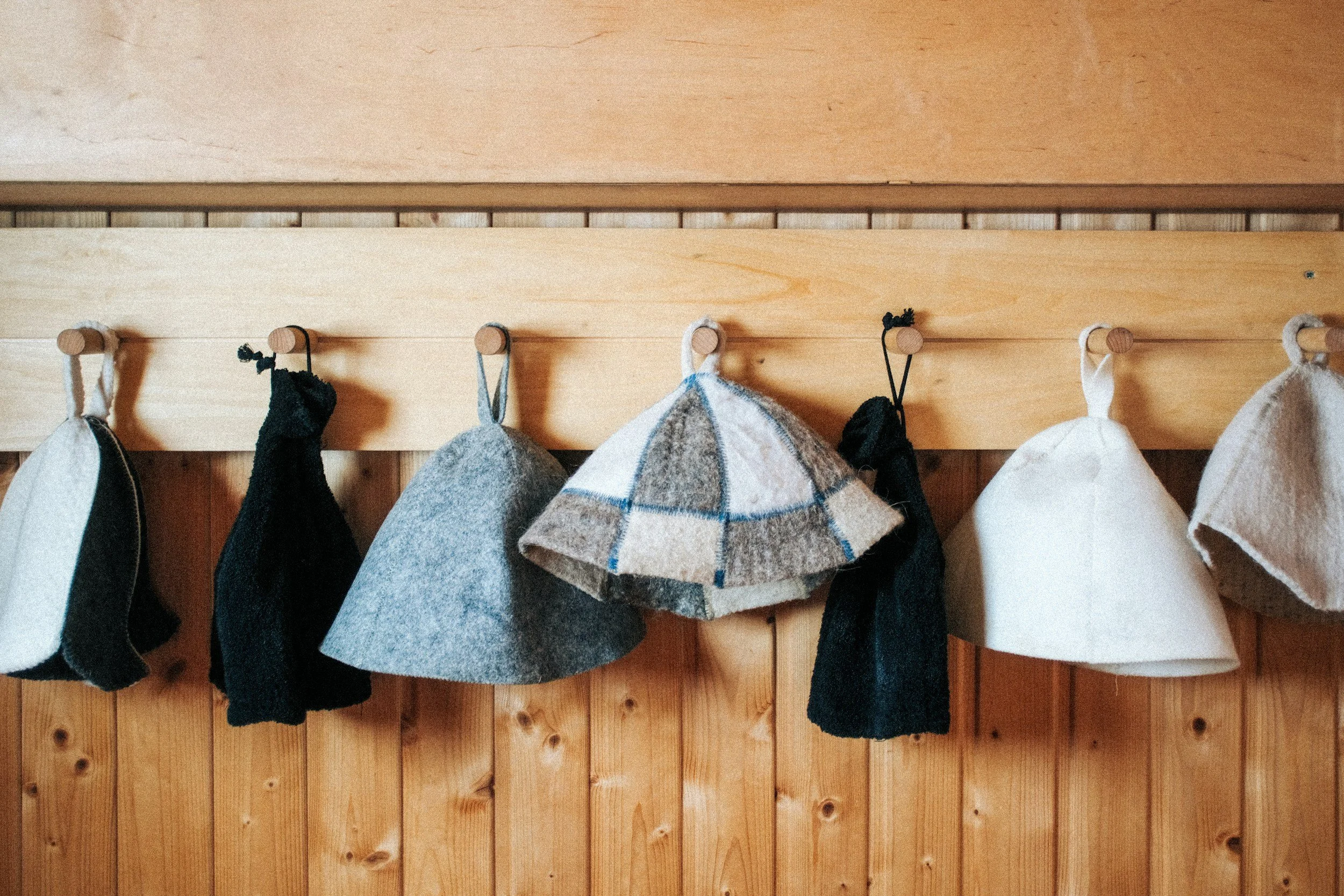
What Sauna Blankets and Sauna Tents Are Made Of
Evidence: strong for the materials, which manufacturers list themselves. Limited for how those materials behave at sauna temperatures, which no one has published.
The blanket
A sauna blanket is a sleeping-bag-shaped pouch with an electric heating element sewn between its layers. Retail listings describe the outer shell as "PU leather," the inner lining as waterproof PVC or polyester Oxford cloth, and the heating element as carbon fiber, with about 600 watts of power and temperature settings that run from 86°F up to 185°F (30°C to 85°C) depending on the model.1213 The user zips in with the head outside, so the skin is in contact with the lining for the whole session and the air inside is warmer and wetter than the room.
How PU leather is made, and why that solvent showed up
PU leather is a fabric backing coated with polyurethane. California's chemical profile for DMF lists it as a solvent used in the production of polyurethane products, acrylic fibers, pharmaceuticals, and coatings.9 Residual solvent left in the coating is the most likely reason DMF was the compound that Enthalpy detected coming off the HigherDOSE blanket.8 How much remains in any one blanket depends on the factory and the batch, and no brand publishes that figure.
PVC and its plasticizers
Rigid PVC is the material of drain pipes. To make it soft enough for a lining, manufacturers blend in plasticizers, and the 2025 Korean study measured migration from PVC sheets containing 20% to 50% plasticizer by weight.14 Phthalates such as DEHP are the traditional choice, and some are now restricted in children's products, so manufacturers have switched to alternatives. In the same study, the non-phthalate replacement diisononyl adipate (DiNA) was one of the three plasticizers with the highest migration into sweat, alongside two phthalates.14 A "phthalate-free" label says which family was left out, not what was put in.
The heating element and the word "infrared"
Every warm surface emits infrared, and the wavelength it emits depends on its temperature. The Austrian test laboratory's evaluation of warming cabins sorts the sources by that rule: large plates at 122°F (50°C) and rods at 662°F to 842°F (350°C to 450°C) both emit mainly in the far infrared range (IR-C, beyond 3,000 nanometers), while only filtered high-temperature filaments emit the deeper-penetrating near infrared (IR-A, 700 to 1,400 nanometers).7 A carbon fiber element running a blanket surface at 158°F to 185°F (70°C to 85°C) therefore emits far infrared by physics, which is the one marketing claim that needs no lab. I found no independent measurement of the output of any sauna blanket, so the specific wavelength figures printed on listings remain manufacturer claims.
Sauna tents
Pop-up sauna tents come in two kinds. Steam tents are a PVC or coated polyester cube with a plug-in steam pot, and infrared tents hang carbon fiber panels inside the same kind of fabric. Most steam tents leave the head outside through a collar, while some infrared tents and domes enclose the whole body, and either way the air inside a plastic enclosure exchanges less than the air in a sauna room. Wood-fired tent saunas are a separate category with a separate hazard: a 2025 case report in Japan described a patient who developed acute lung injury two hours after lighting a tent sauna stove with kerosene, which vaporized in the heat and was inhaled.20
What the One Published Lab Report Shows, and What It Skipped
Evidence: limited. One manufacturer-funded report with a method that answers a narrower question than the one buyers are asking.
HigherDOSE publishes its Enthalpy Analytical report on its store, which is more disclosure than most brands offer, and the report is worth reading for what it does and does not cover.8
- What it tested. Volatile organic compound emissions from a sauna blanket and a PEMF mat at several heat settings, with air collected on thermal desorption tubes and analyzed by gas chromatography and mass spectrometry.
- Where it tested. An unoccupied 10 by 10 foot (3 by 3 m) office, with the product in the middle of the room and the sampler near the head end. A sealed emissions chamber, which the California standard it cites is written for, concentrates emissions and gives a worst-case number, while an open office dilutes them.
- What it found. DMF, below the 40 µg/m³ limit in California's Specification 01350 for indoor products.
- What it compared against. A partial list of Proposition 65 chemicals, limited to those the lab's method can detect, and that list does not include DMF, which California added to Proposition 65 as a carcinogen in 2017.10
- What it did not test. Air inside the zipped blanket, skin contact with the lining, plasticizer migration into sweat, heavy metals, or anything after months of use when coatings crack and wear.
A room-air VOC number tells you whether the blanket will change the air quality of your bedroom. It does not tell you what reaches the skin of the person sealed inside it, and no brand has published that test.
Has Far Infrared Been Evaluated for Safety?
Evidence: moderate for the heat hazards, which have exposure limits and decades of occupational data. Limited for everything else: ICNIRP states that evidence for the claimed benefits is limited, and the test laboratory that measured cabins states that the hazards "are not yet fully studied."
What the exposure limits cover
Infrared is non-ionizing, and ICNIRP's 2006 statement on far infrared, along with its 2013 guidelines on visible and infrared radiation, sets limits built around heat injury to skin and eyes.215 The Austrian laboratory's measurements of warming cabins found the skin burn limit was not exceeded and the retinal limit was not exceeded, while the limit for the lens and cornea of the eye could be exceeded close to near and mid infrared sources. It listed three effects that the limits do not cover at all: erythema ab igne, co-carcinogenesis through slowed DNA repair in heated skin, and heat stress.7
Sauna blankets were not among the products measured, and no lab has published measurements of one. The blanket also sits in a different situation from a cabin: the heated surface is in direct contact with skin, so irradiance limits written for a source across the room do not describe the exposure.
Far infrared and the skin
ICNIRP explains that IR-C is absorbed entirely in the outermost skin layers, which is why far infrared cabins produce higher skin temperatures and longer-lasting redness than near infrared sources, and why the pigment changes of erythema ab igne are the concern with repeated use.5 The dermatology literature on that condition comes from heating pads, laptops, car seats, and space heaters held against the skin for long periods, which is closer to how a blanket is used than a cabin is.6
Near infrared and collagen
"Full spectrum" products add near infrared (IR-A), which penetrates into the dermis. A German environmental medicine institute reported in 2010 that IR-A increases the expression of a collagen-degrading enzyme (matrix metalloproteinase-1) in cultured human skin cells and reduces new collagen synthesis, through a reaction that runs through the cells' mitochondria, and the same group argued that sun protection should cover IR-A for that reason.2223 Those are laboratory findings on cultured cells, so they do not prove what a blanket does to a face, but they are the reason I do not accept "infrared is good for collagen" as a settled claim.
Who ICNIRP is
ICNIRP is a private nonprofit scientific commission registered in Germany. Its limits are adopted by many governments but it is not a regulator, and compliance with its limits is something a manufacturer claims rather than something an agency checks on a consumer blanket. ICNIRP's own page on infrared cabins states that scientific support for the claimed health benefits is currently limited, and that people at risk from overheating, including people with cardiovascular disease, should seek medical advice before use.5
Is There Any Long-Term Data on Infrared Saunas?
Evidence: moderate for traditional Finnish saunas in observational data. Limited and short for infrared cabins. None for blankets or tents.
The 20-year study is about traditional saunas
The study behind most "sauna extends your life" marketing followed 2,315 Finnish men aged 42 to 60 for a median of 20.7 years and found that men who used a sauna four to seven times a week had lower rates of sudden cardiac death and all-cause mortality than men who went once a week.19 The saunas were traditional Finnish hot rooms, the design is observational, and the authors wrote that the mechanism remained to be established. An observational study cannot separate the sauna from the kind of man who has the time, health, and money to sit in one every day, and it says nothing about a plastic blanket plugged into a wall.
The infrared trials run 10 days
The largest infrared trial is the Japanese WAON-CHF study, in which 149 hospitalized heart failure patients were randomized to either standard care or 10 days of daily sessions in a far infrared dry sauna at 140°F (60°C) for 15 minutes, followed by 30 minutes wrapped in a blanket to keep the warmth in. The treated group improved on several heart measures, and no serious adverse events were observed.17 The lead author heads the Waon Therapy Research Institute, an organization built around promoting this method, which is the kind of tie I disclose on any study I cite.
A 2018 meta-analysis of sauna bathing for heart failure found nine eligible studies, all of them infrared, and rated the strength of evidence from moderate to insufficient. It reported short-term improvements and stated that more evidence is needed on long-term effects.24 One of its co-authors, Tei, led several of the studies it analyzed. A 2009 review in a Canadian family medicine journal found nine usable papers on far infrared saunas, called the evidence for most manufacturer claims limited, and found consistent evidence against the claim that they lower cholesterol.25 A 2025 review of sauna therapy for rheumatic disease closed by calling for research to assess long-term safety.18
Every one of those studies used a cabin or a sauna room with the person sitting in heated air. The one published study that used a portable sauna, the dialysis pilot above, enrolled nine patients, had no control group, ran 10 days, and recorded a second-degree burn.4
What that leaves
Heat applied to the body has centuries of use and a body of research behind it. The plastic, the coating solvents, the plasticizers, the heating element pressed against skin, and daily sessions over years are the part no one has studied, and the people buying blankets in 2026 are the first cohort. That is the gap I would want closed before I joined it, and even then...
What to Ask Before Buying a Sauna Blanket or Tent
Evidence: a checklist drawn from the recall notices, the lab report, and the material studies cited above.
My own answer is to skip these products. For anyone weighing one anyway, these are the questions I would want answered first, in the spirit of informed consent: having enough information to judge a product before you pay for it.
- Is this model on a recall list? Check the model number against the CPSC recall database before buying new or used.12
- What is the inner lining made of, exactly? "Non-toxic" is not a material, so the answer should name PVC, polyester, or something else, and for PVC it should name the plasticizer.
- Has the finished product been tested in a sealed emissions chamber at its highest heat setting, by an accredited lab, and will you send me the full report? The one published report used an open office and measured room air.8
- Has the lining been tested for plasticizer migration into sweat? No brand I found has published this, and air tests do not measure it.14
- Which compounds did the report screen for, and was DMF compared against the current Proposition 65 list? The published report's comparison list left DMF out.810
- Is the product safety-listed by a recognized testing laboratory, and does it have an automatic cutoff if the element overheats? Overheating is the failure in every recall on record.123
- What is the measured surface temperature at the highest setting, and where are the hot spots? The exposure limits that protect against burns do not protect against erythema ab igne, and hot spots are where it starts.7
- What wavelength does the element emit, and who measured it? A number from the manufacturer is a claim until an independent lab reports it.
- How does this product's one-year warranty compare with the decades of use behind a wood sauna? The answer tells you how long the maker expects it to last.
If the answers are not available, that is the information: nobody has looked.
Sauna Blanket Safety FAQ
Evidence: each answer draws on the sources cited in the sections above.
Are sauna blankets safe?
Nobody knows, because no independent study has tested one. What is on record is two US recalls for overheating and burns, a UK recall for the same hazard, a manufacturer-funded emissions test that detected a listed carcinogen in room air, and laboratory studies showing that PVC plasticizers move into sweat.123814
Do sauna blankets off-gas?
The only published test detected N,N-dimethylformamide, a polyurethane solvent, coming off a blanket in an open office at a level under California's indoor limit.8 No test has measured the air inside a zipped blanket, and DMF is absorbed through skin faster in warm, humid conditions.11
Is far infrared radiation safe?
Far infrared is non-ionizing, and its exposure limits are built around heat injury. ICNIRP states that it is absorbed in the outer skin layers, raises skin temperature more than near infrared, and with repeated exposure can produce erythema ab igne.5 An accredited test laboratory found that the burn limit does not prevent that condition and that no limit exists for it.7
Can a sauna blanket cause cancer?
No study has looked, and the pieces on record are a solvent on California's carcinogen list detected in one emissions test, a dermatology review reporting rare progression of erythema ab igne to skin cancers, and a test laboratory's note that heated skin may repair DNA more slowly.81067 None of those is a finding about blankets, and none has been tested in blanket users.
Has any sauna blanket been recalled?
Yes. Lifepro recalled about 78,000 Bioremedy blankets on October 23, 2025, after 65 overheating reports and 32 burn injuries, and Tzumi recalled about 3,600 SLF blankets on May 28, 2026. A UK recall of a Bluzen blanket sold at TK Maxx and Homesense was posted in April 2026.123
Is there long-term research on infrared saunas?
No. The 20-year Finnish cohort study covered traditional saunas,19 the largest infrared trial ran 10 days in a cabin,17 and the one portable sauna study enrolled nine patients for 10 days.4 Nothing has followed blanket or tent users.
Are sauna tents safer than sauna blankets?
No study has compared them, and a tent keeps the heater off the skin, which removes direct contact with the lining, but it encloses more air in plastic, and the one published tent sauna case report involved lung injury from kerosene vapor in a wood-fired model.20
What does the Prop 65 warning on a sauna blanket mean?
California requires a warning when a product can expose the user to a chemical on its list of carcinogens and reproductive toxicants. A 2021 Proposition 65 notice named the phthalate DEHP in PVC sauna suits,16 and DMF, the solvent detected in the one blanket emissions test, was added to the list in 2017.10
Sources
- US Consumer Product Safety Commission. Lifepro Fitness Recalls Bioremedy Infrared Sauna Blankets Due to Risk of Burn Injuries. Recall 26-036, October 23, 2025. cpsc.gov. ↩
- US Consumer Product Safety Commission. Tzumi Electronics Recalls SLF Sauna Blankets Due to Fire and Burn Hazards. Recall 26-511, May 28, 2026. cpsc.gov. ↩
- UK Office for Product Safety and Standards. Product recall: Bluzen Infrared Sauna Blanket, model LER-01, sold by TK Maxx and Homesense, October 2025 to March 2026. Notice as reproduced by the London Borough of Bromley. bromley.gov.uk. ↩
- Maggiani-Aguilera P, Chávez-Iñiguez JS, Navarro-Blackaller G, et al. Portable sauna stimulated-diaphoresis for the treatment of fluid-overload in peritoneal dialysis patients: A pilot study. Frontiers in Medicine. 2022;9:887609. doi:10.3389/fmed.2022.887609. Open-label, nine patients, no control group, 10 days; the authors declared no commercial funding. ↩
- International Commission on Non-Ionizing Radiation Protection. Infrared Warming Cabins (application page). icnirp.org. ICNIRP is a private nonprofit scientific body registered in Germany, not a regulator. ↩
- Harview CL, Krenitsky A. Erythema Ab Igne: A Clinical Review. Cutis. 2023;111(4):E33-E38. doi:10.12788/cutis.0771. ↩
- Schulmeister K. Photobiological hazards of infrared warming cabins. Poster, Seibersdorf Labor GmbH (published under the company's former name, Austrian Research Centers), Austria. seibersdorf-laboratories.at. Seibersdorf is an accredited optical radiation test laboratory that tests products for manufacturers. ↩
- Enthalpy Analytical-MTP (Mt. Pleasant, MI). VOC Report: Sauna Blanket & PEM Mat. Summary report prepared for HigherDOSE, Brooklyn, NY. C.O.C. #108215, June 13, 2024. Report PDF hosted on the HigherDOSE store. Commissioned and paid for by the manufacturer. ↩
- California Office of Environmental Health Hazard Assessment. Chemical profile: Dimethylformamide (CAS 68-12-2); occurrence and use, chronic inhalation reference exposure level 80 µg/m³. oehha.ca.gov. ↩
- California Office of Environmental Health Hazard Assessment. Chemicals Listed Effective October 27, 2017 as Known to the State of California to Cause Cancer: N,N-Dimethylformamide, 2-Mercaptobenzothiazole, and Tetrabromobisphenol A. oehha.ca.gov. ↩
- Mráz J, Nohová H. Percutaneous absorption of N,N-dimethylformamide in humans. International Archives of Occupational and Environmental Health. 1992;64(2):79-83. doi:10.1007/BF00381473. Volunteer study at an occupational exposure level. ↩
- Currys (UK retailer). Product listing and technical specifications: Echelon ECH-TX-SB Infrared Sauna Blanket (exterior PU, lining PVC, 600 W, 80°C maximum). Retrieved October 15, 2026. currys.co.uk. Manufacturer and retailer marketing copy. ↩
- Academy Sports + Outdoors. Product listing: Lifepro BioRemedy Regular Sauna Blanket (PU and Oxford fabric, dual layer carbon fiber, 86°F to 158°F). Retrieved October 15, 2026. academy.com. Manufacturer and retailer marketing copy. ↩
- Lee YM, Lim Y, Kang S, Kim S. Migration of phthalate and non-phthalate plasticizers from polyvinyl chloride (PVC) materials. Science of the Total Environment. 2025;1002:180559. doi:10.1016/j.scitotenv.2025.180559. Laboratory migration study by a Korean government research institute. ↩
- Ge JL, Wang JX, Wu CC, Bao LJ, Zeng EY. Development of an in vitro model to simulate migration of organic contaminants from pad products to human sweat and enhance dermal exposure risk assessment. Science of the Total Environment. 2021;795:148827. doi:10.1016/j.scitotenv.2021.148827. ↩
- Wozniak P (noticing party), Chanler LLC (counsel). Sixty-Day Notice of Violation, California Health & Safety Code §25249.5 et seq. (Proposition 65), to Alibaba Group: Sauna Suits, listed chemical di(2-ethylhexyl) phthalate (DEHP), routes of exposure ingestion and dermal. February 17, 2021. Filed with the California Attorney General as notice 2021-00384. oag.ca.gov. A private enforcement notice stating an allegation, not a court finding. ↩
- Tei C, Imamura T, Kinugawa K, et al. Waon Therapy for Managing Chronic Heart Failure: Results From a Multicenter Prospective Randomized WAON-CHF Study. Circulation Journal. 2016;80(4):827-834. doi:10.1253/circj.CJ-16-0051. The lead author heads the Waon Therapy Research Institute, which promotes the method; 10-day trial in heart failure patients. ↩
- Fedorchenko Y, Fedorchenko M, Yessirkepov M, Bekaryssova D. Sauna therapy in rheumatic diseases: mechanisms, potential benefits, and cautions. Rheumatology International. 2025;45(5):94. doi:10.1007/s00296-025-05852-0. Narrative review. ↩
- Laukkanen T, Khan H, Zaccardi F, Laukkanen JA. Association between sauna bathing and fatal cardiovascular and all-cause mortality events. JAMA Internal Medicine. 2015;175(4):542-548. doi:10.1001/jamainternmed.2014.8187. Observational cohort of Finnish men using traditional saunas; it did not study infrared devices. ↩
- Yamanaka M, Nishiyama Y, Fujishima N, Yokoyama A, Komiya K. An Acute Case of Exogenous Lipoid Pneumonia Which Developed in Tent Sauna. Internal Medicine. 2025;64(23):3419-3423. doi:10.2169/internalmedicine.5634-25. Single case report. ↩
- International Commission on Non-Ionizing Radiation Protection. ICNIRP statement on far infrared radiation exposure. Health Physics. 2006;91(6):630-645. doi:10.1097/01.HP.0000240533.50224.65. ↩
- Calles C, Schneider M, Macaluso F, Benesova T, Krutmann J, Schroeder P. Infrared A radiation influences the skin fibroblast transcriptome: mechanisms and consequences. Journal of Investigative Dermatology. 2010;130(6):1524-1536. doi:10.1038/jid.2010.9. Laboratory study on cultured human skin cells. ↩
- Schroeder P, Calles C, Benesova T, Macaluso F, Krutmann J. Photoprotection beyond ultraviolet radiation: effective sun protection has to include protection against infrared A radiation-induced skin damage. Skin Pharmacology and Physiology. 2010;23(1):15-17. doi:10.1159/000257259. Short review; no funding statement appears in its PubMed record. ↩
- Källström M, Soveri I, Oldgren J, et al. Effects of sauna bath on heart failure: A systematic review and meta-analysis. Clinical Cardiology. 2018;41(11):1491-1501. doi:10.1002/clc.23077. Co-authors include Tei, of the Waon Therapy Research Institute, who led several of the included studies. ↩
- Beever R. Far-infrared saunas for treatment of cardiovascular risk factors: summary of published evidence. Canadian Family Physician. 2009;55(7):691-696. PMC2718593. ↩
- Swan SH, Colino S. Count Down: How Our Modern World Is Threatening Sperm Counts, Altering Male and Female Reproductive Development, and Imperiling the Future of the Human Race. New York: Scribner; 2021. Chapters on phthalates and other endocrine-disrupting chemicals in consumer products. ↩
- Swan SH, Main KM, Liu F, et al. Decrease in anogenital distance among male infants with prenatal phthalate exposure. Environmental Health Perspectives. 2005;113(8):1056-1061. doi:10.1289/ehp.8100. Funded by US government research grants; 134 boys, 85 with prenatal urine samples. ↩
- Levine H, Jørgensen N, Martino-Andrade A, et al. Temporal trends in sperm count: a systematic review and meta-regression analysis. Human Reproduction Update. 2017;23(6):646-659. doi:10.1093/humupd/dmx022. Swan is senior author; 185 studies, 42,935 men. ↩
- Levine H, Jørgensen N, Martino-Andrade A, et al. Temporal trends in sperm count: a systematic review and meta-regression analysis of samples collected globally in the 20th and 21st centuries. Human Reproduction Update. 2023;29(2):157-176. doi:10.1093/humupd/dmac035. Swan is senior author; 223 studies, samples collected 1973 to 2018. ↩