Hot Springs Health Benefits: What the Research Shows
Hot mineral springs are one of the oldest health practices on record, and in Europe and Japan they are still prescribed by doctors and studied in clinical trials under the name balneotherapy. Western Montana has dozens of them. This article goes through what the published research says about soaking for joint pain, back pain, fibromyalgia, blood pressure, sleep, mood, and skin, and what the infection and heat-safety literature says about the risks. Most of these studies come from countries with a spa industry, so I note where the authors work for a spa.
Key Takeaways
- Osteoarthritis has the most research. A 2007 Cochrane review found mineral baths beat no treatment for pain, but the trials were small and poorly reported.
- In a double-blind Hungarian trial, knee osteoarthritis patients bathed in either thermal mineral water or heated tap water. Both groups felt better during treatment. Three months later, only the mineral-water group still did.
- Meta-analyses report moderate pain relief in fibromyalgia and chronic low back pain lasting up to six months.
- Japanese surveys link regular hot spring bathing with less hypertension and fewer depressive symptoms, but a 2026 review found heat lowers blood pressure for hours, with no proof it treats hypertension long term.
- A warm bath of 104°F to 108°F (40°C to 42.5°C) taken 1 to 2 hours before bed helped people fall asleep faster in a 2019 meta-analysis.
- Magnesium absorbed through the skin is a marketing claim with no supporting data. Sulfur does cross skin as hydrogen sulfide.
- The documented risks are Legionella pneumonia from badly maintained pools, a rare and nearly always fatal amoeba found in warm fresh water (including hot springs in Grand Teton National Park), and overheating.
This article is for education only and does not diagnose, treat, or prevent any condition. I am a clinical herbalist, not a physician. Do not start, stop, or change a medication or prescribed treatment based on this article. Heat changes how the body handles blood pressure medication, beta-blockers, diuretics, alcohol, and pregnancy, and people respond differently to the same water. Open wounds, a weakened immune system, heart disease, and nerve damage that reduces pain sensation all change the risk of soaking. Bring questions about your own health history to a qualified clinician. Dizziness that does not pass after cooling down, chest pain, confusion, or a severe headache with fever in the days after swimming in warm fresh water is an emergency: call 911 or your local emergency number.
How Hot Springs Work on the Body
Evidence: moderate for heat and water pressure, weak for mineral absorption. Physiology reviews and lab studies; few human measurements of minerals entering the body through skin.
A hot spring does three things at once, and researchers have not fully pulled them apart. Heat is the first. Water at 97°F to 100°F (36°C to 38°C), the range most balneotherapy trials use, widens blood vessels, sends more blood to muscles and skin, relaxes muscle, and raises the pain threshold. The water itself is the second. Buoyancy takes weight off joints, and the pressure of water on the body pushes fluid up from the legs, so the heart pumps more blood with each beat. A rheumatology group in Siena, Italy, lists these two as the most likely explanation for the pain relief seen in trials, along with changes in inflammatory markers measured in blood after spa courses.1
Minerals are the third, and this is where the marketing gets ahead of the science. A spring is named by what is dissolved in it: sulfur, bicarbonate, chloride, calcium, magnesium, silica, iron, and in some springs radon gas. Sulfur has the most lab work behind it. Researchers at the medical hydrology school in Madrid describe how sulfur in spring water exists mostly as hydrogen sulfide when the water is acidic and low in oxygen, that this gas passes through skin, and that the body makes small amounts of it on its own as a signaling molecule for blood vessel relaxation and inflammation. High doses are toxic. Enzymes convert low doses to harmless sulfate.2
Magnesium is a different case. A 2017 review in Nutrients went through the evidence for magnesium absorbed through skin from sprays, flakes, and baths and called the idea "scientifically unsupported." The few studies were small, unblinded, or measured the wrong thing. Two of the authors work with an institute tied to an oral magnesium supplement company, so they have a reason to favor pills, but nobody has shown a meaningful rise in blood or cell magnesium from soaking.3 If a hot spring helps, heat, water pressure, and possibly sulfur are the reasons with evidence behind them.
Hot Springs for Arthritis and Joint Pain
Evidence: moderate for osteoarthritis, weak for rheumatoid arthritis. Randomized trials, two Cochrane reviews, and several meta-analyses, mostly from spa regions.
Osteoarthritis
The Cochrane Collaboration reviewed balneotherapy for osteoarthritis in 2007. Seven randomized trials with 498 patients showed that mineral baths beat no treatment for pain, quality of life, and painkiller use, which Cochrane rated "silver level," its middle tier. Sulfur and Dead Sea baths beat no treatment at the end of the course but not at three months. The reviewers said the trial methods were poor, statistics were often missing, and the results "should be viewed with caution." None of the trials tracked side effects.4
The one trial that separates the water from the heat came out of Hungary in 2006. The National Institute of Rheumatology randomized 64 people with knee osteoarthritis to 30-minute baths, five days a week for four weeks, in either thermal mineral water from Nagybaracska or heated tap water. Neither the patients nor the examiners knew who got which. Both groups improved on pain and function scores by the end of the four weeks. At three months, the tap water group was back to where they started and the mineral water group was not.5 It is one trial with 52 people finishing it, but it is the cleanest test on record that the minerals add something.
Two later Hungarian trials agree. In 2016, 41 people with hip osteoarthritis were randomized to home exercise alone or exercise plus 15 sulfur baths over three weeks, in water with one of the highest sulfide levels in the country at 13.2 mg per liter. At 12 weeks, 81% of the bath group had a clinically meaningful improvement in function. In the exercise-only group it was 30%. The authors work at a rehabilitation center that provides the baths.6 A 2012 trial in hand osteoarthritis found that 20-minute baths in thermal water at 100°F (38°C), daily for three weeks, left patients with better pinch strength and function 13 weeks later than controls. The lead author works at a spa hospital.7
A 2021 umbrella review of 49 systematic reviews concluded that the better-quality evidence supports spa therapy as an add-on for osteoarthritis, fibromyalgia, rheumatic low back pain, and chronic venous insufficiency, with improvements lasting up to nine months in some studies. One author is affiliated with a research foundation funded by the Italian spa industry.8 Hot mud packs from mineral springs have their own trial base. A 2026 meta-analysis of 28 randomized trials found moderate pain relief that was still present at six months, strongest in knee osteoarthritis, with skin redness the most common side effect at 6.5% of patients. The authors teach at naturopathy colleges that practice mud therapy.9
Rheumatoid arthritis
Rheumatoid arthritis is an autoimmune disease, not joint wear, and the research reads differently. The 2015 Cochrane review found nine trials with 579 participants, most with unclear risk of bias, and called the evidence "insufficient" to show that balneotherapy beats no treatment, that any one bath type beats another, or that baths beat exercise or relaxation. Two trials that added radon to carbon dioxide baths showed some benefit at six months.10 If you have rheumatoid arthritis, the osteoarthritis results above are not about your condition.
Chronic Low Back Pain and Fibromyalgia
Evidence: moderate. Meta-analyses of randomized trials rated low to moderate certainty; small trials, short follow-up, and no way to blind someone to being in a hot spring.
A 2006 meta-analysis from the complementary medicine unit at Exeter, a group known for skeptical reviews, found five randomized trials for low back pain. Against waiting-list controls, spa therapy cut pain by about 27 points on a 100-point scale and balneotherapy by about 19. The authors called the data "encouraging" but "not compelling" and asked for bigger trials.11
Fibromyalgia has more trials. A 2014 meta-analysis found moderate-to-strong evidence for a small drop in pain and a small gain in quality of life at the end of treatment, with no change in depressive symptoms or tender points.12 A 2024 meta-analysis of 16 randomized trials from the University of Almería found bigger effects. Balneotherapy at 97°F to 100°F (36°C to 38°C) reduced pain and disability at the end of treatment, and both gains were still there at one, three, and six months. The effect on depression was smaller and came and went across time points.13 The two reviews pooled different trials, which is why the effect sizes differ, but both found pain relief that outlasted the baths.
Hot Springs and Blood Pressure
Evidence: weak for long-term benefit, moderate for a short-term drop. Japanese questionnaire studies and a 2026 narrative review; no randomized trial has tested regular hot spring bathing for hypertension.
Beppu, on the Japanese island of Kyushu, has more hot spring sources than any other city, and the university hospital there has been studying its bathers. In a 2022 survey of 10,428 adults aged 65 and over, people who bathed in hot springs at 7 p.m. or later had 15% lower odds of a hypertension history after adjusting for age and other illnesses. The same data showed less depression history among habitual evening bathers. The authors say a survey cannot show cause and ask for randomized trials.14 Their 2024 follow-up had 1,116 bathers at 14 Beppu facilities record their own blood pressure before and after an evening soak. Pressure dropped across the group, with a smaller drop in people over 65, people on blood pressure medication, people with arrhythmia or depression, and people using chloride springs.15 Self-reported readings from people who chose to bathe are weak data, so both studies raise a question rather than answer one.
The same group published a review in 2026 that pulls the heat research together. Across 21 studies of saunas, hot spring bathing, hot water immersion, and mud packs, systolic pressure fell by roughly 11 to 27 mmHg within 24 hours. Most studies had no control group. The authors conclude that heat "consistently induced transient reductions" in blood pressure, that long-term benefit for hypertension "is unproven," and that nobody has defined a safe margin for frail older adults or people on beta-blockers.16
Heat itself has a long record. A Finnish cohort followed 2,315 men for 20 years and found that those who used a traditional sauna four to seven times a week had about half the rate of fatal heart disease of once-a-week users.17 That is dry sauna, not hot springs, and the men who sauna most may differ in other ways, but it is the longest follow-up of regular heat exposure in the literature and it points the same way as the Beppu surveys.
Sleep and Mood
Evidence: moderate for falling asleep faster after warm water, weak for mood. A meta-analysis of bath and shower studies, plus cross-sectional surveys.
A 2019 meta-analysis from the University of Texas at Austin screened 5,322 papers and found 17 studies of warm baths or showers before bed. Water at 104°F to 108°F (40°C to 42.5°C), taken 1 to 2 hours before bedtime for as little as 10 minutes, helped people fall asleep faster and rate their sleep better. The mechanism is cooling, not warming. Warm water pulls blood to the hands and feet, the body sheds heat through them afterward, and core temperature falls faster than it would on its own. That drop is one of the signals the brain uses to start sleep.18 Timing is the practical part: a soak right before bed leaves you warm when the body wants to be cooling. More on sleep without medication is in my natural remedies for insomnia article.
Mood has less behind it. A 2025 study of 542 adults aged 40 and over in Kagoshima, Japan, found that people who bathed in a hot spring at least once a week had about half the odds of a depressive-range score on a standard questionnaire, after adjusting for age, income, outings, mobility, smoking, and drinking. How often they bathed at home made no difference.19 The 2024 fibromyalgia meta-analysis found a modest drop in depression scores at the end of a balneotherapy course that did not show up at every follow-up.13 Someone well enough to make a weekly trip to a hot spring is a different person from someone who is not, so the Kagoshima result could run either way.
Hot Springs for Skin: Psoriasis and Eczema
Evidence: moderate for psoriasis at the Dead Sea, weak elsewhere. Uncontrolled clinical series, a 2024 systematic review, and lab work on sulfur.
The best-known skin results come from the Dead Sea, where treatment combines salt water with sun exposure at the lowest point on earth. The extra atmosphere there filters out the most burning ultraviolet wavelengths. In a 2007 series of 64 German psoriasis patients treated for four weeks, the average severity score fell by 95.5%, three-quarters reached a 75% improvement, and the median time before plaques came back was 23 weeks. There was no control group, the lead author works at a research center attached to a Dead Sea hotel, and because the program includes hours of daily sun, the study cannot say how much of the effect came from the water.20
A 2024 systematic review of randomized trials published from 2018 to 2024 found positive early results for balneotherapy in psoriasis, alongside curcumin, dietary change, indigo naturalis, meditation, and acupuncture, and said larger trials are needed to confirm benefit and safety.21 The case for sulfur springs in particular rests on hydrogen sulfide crossing the skin and its effects on inflammation and the overgrowth of skin cells in psoriasis, as reviewed by the Madrid group.2 Sulfur springs have been used for skin disease in Europe and Japan for centuries, and sulfur baths were among the treatments in the Cochrane osteoarthritis review.4 For eczema I found no randomized trial of natural hot spring bathing, so that stays a traditional use.
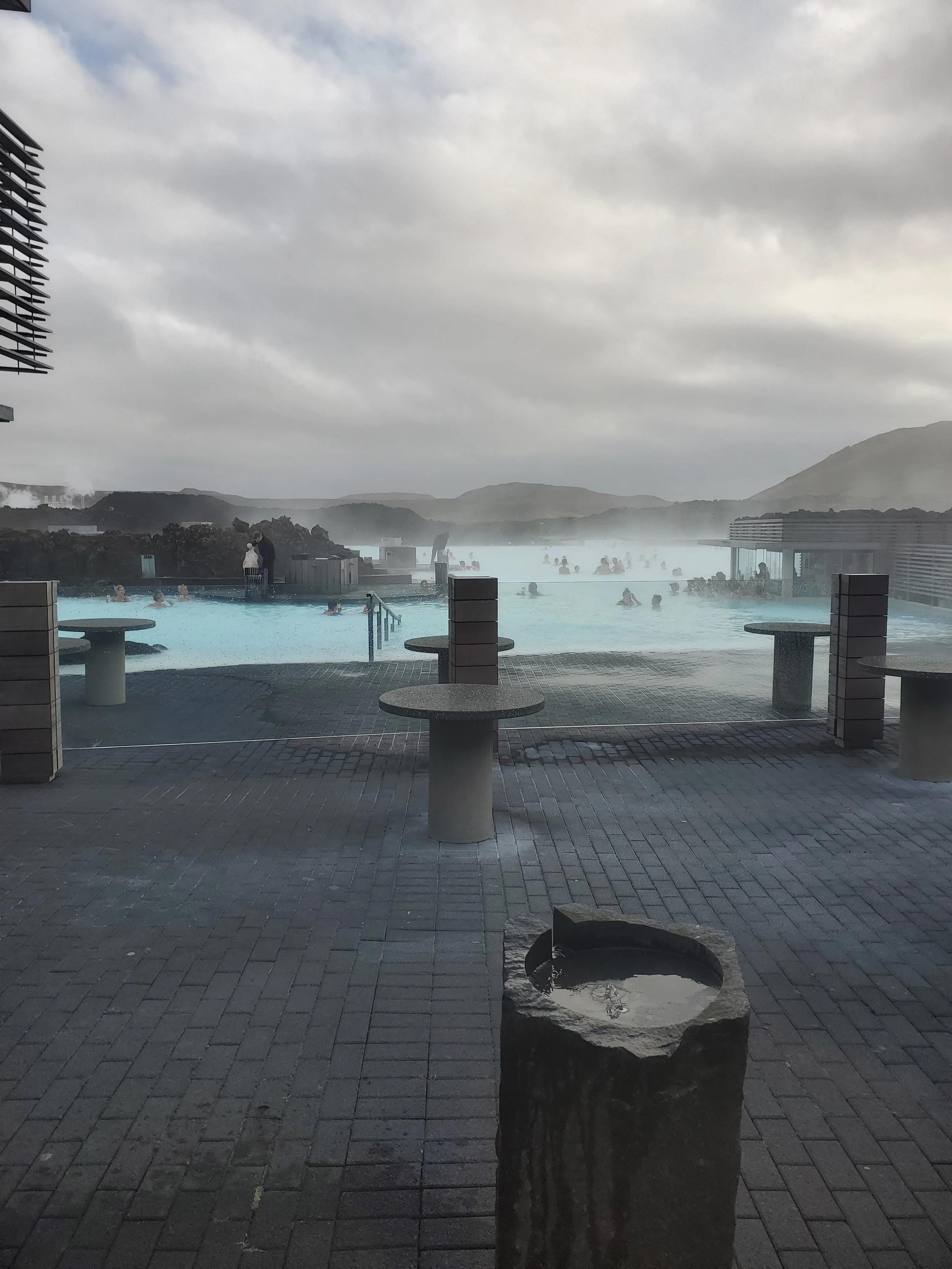
Blue Lagoon hot springs in Iceland, 2019. Photo taken by me :D
Hot Spring Risks on Record
Evidence: strong for infection outbreaks and heat effects. Outbreak investigations, environmental sampling, and the heat-safety review above.
Legionella in poorly maintained pools
The most common serious infection tied to hot spring facilities is legionellosis, a pneumonia from bacteria that grow in warm water and spread in the mist above a pool or in a shower. A 2018 systematic review from the University of Bologna collected 42 events and 1,079 cases linked to recreational water, including hot springs, hot tubs, whirlpools, and natural spas. About 58% were the milder flu-like Pontiac fever, with no deaths. The other 42% were Legionnaires' disease, which killed 6.3% of the people who got it.22 Japanese academic authors reviewing their own country's record name hot springs and public baths as the main sources of legionellosis there, with older bathers at most risk, and call for strict enforcement of cleaning rules at onsen facilities.23 This is a facility problem, not a water-chemistry problem. The bacteria live in biofilm in pipes, jets, and shower heads. A developed spring that posts its maintenance and testing is a different exposure from a neglected concrete pool.
A warm-water amoeba, now found in the northern Rockies
Naegleria fowleri is a single-celled organism that lives in warm fresh water and soil. If water carrying it is forced up the nose, it can reach the brain and cause primary amebic meningoencephalitis, which kills nearly everyone who gets it within about a week of symptoms. Cases are rare, and infection needs water in the nose; swallowing it or touching it does not do it. In 2020, the University of Costa Rica confirmed that country's first three cases and found the amoeba in hot spring water and a well.24 It was long considered a southern US problem, but in 2024 the US Geological Survey's Wyoming-Montana water science center and Montana State University reported the first detections of N. fowleri in water, sediment, and biofilm from five hot spring sites in Grand Teton National Park, across the Wyoming line from western Montana. That was a sampling survey, not a case report, and three of its co-authors are from the CDC.25 The takeaway is the one bathers in the southern states already follow: keep your head above water in natural hot springs and do not dunk, dive, or let water up your nose.
Heat and blood pressure
The 2026 heat-therapy review recorded systolic drops of 11 to 27 mmHg within a day of heat exposure and found few studies of people over 65 or on blood pressure medication, where the drop may be larger.16 Standing up fast from a hot pool, soaking after drinking, and soaking during pregnancy or with a heart condition are the situations the safety literature flags. Dizziness on standing is common enough that most developed springs post warnings about it. The Beppu surveys recorded no serious events, but they were not set up to catch them.15
Radon springs
Some springs in Montana, Japan, Germany, and Austria carry dissolved radon gas and advertise it. A 2023 survey in Misasa, Japan, a radon spring town, found that people who bathed more than once a week reported better overall health and more relief from hypertension symptoms than people who bathed less.26 The Cochrane rheumatoid arthritis review found some pain benefit at six months from adding radon to carbon dioxide baths.10 Radon is also a known lung carcinogen at the levels found in some basements, and nobody has measured the long-term risk of repeated short bath exposures. The traditional record and the toxicology point in opposite directions here, and I do not seek these springs out.
My Take on Hot Springs
This section is my own experience and opinion, not medical advice. The numbers come from the trials cited above.
The only hot spring I have been to is the Blue Lagoon in Iceland, a few years ago, at the tail end of an 11-day trip through five countries. By the time we got there I had stacked up a lot of travel stress through Bucharest, Budapest, and Oslo, and a long soak in that silica water was what finally let some of it go. Rob and I are going to the hot springs up near Glacier National Park this November, and I am looking forward to it.
Water, heat, and minerals from the ground have a record going back thousands of years, which is the bar I set for anything I put on or around my body. When a new wellness gadget comes out, I stay in the control group and let other people be the safety study. A mineral spring is the opposite case. The safety study is already thousands of years long, and the only new variables are how the pool is maintained and whether you keep your head out of the water.
The balneotherapy trials used 20 to 30 minute sessions in water around 97°F to 100°F (36°C to 38°C), several times a week for three to four weeks.567 Many natural pools run hotter, so my plan is about 20 minutes in, a few minutes out to cool off, water to drink before and after, and finishing the soak 1 to 2 hours before bed rather than right before it, which is where the sleep research points.18 I keep my head and face out of the water and prefer a pool that flows through or gets drained and refilled on a schedule over one that stands. If you take blood pressure medication, a beta-blocker, or a diuretic, or you are pregnant, run the idea past a pharmacist or clinician with your medication list first, because the short-term blood pressure drop is the one effect of heat that is well documented.16
I also think hot springs are the better winter ritual for women than the cold plunge that is everywhere right now. I laid out my reasons in are cold plunges good for women: cold immersion is a stress signal, and women with low thyroid function or a worn-down nervous system are the people least able to afford one. A warm soak followed by a slow cool-down gives the body the temperature drop the sleep research describes, without the shivering.
Hot Springs FAQ
Evidence: each answer draws on the sources cited in the sections above.
Are hot springs good for you?
The randomized trials show pain relief in osteoarthritis, chronic low back pain, and fibromyalgia that can last several months after a course of soaks, and a warm bath before bed helps people fall asleep faster.4111318 Effects on blood pressure, mood, and skin come from surveys and uncontrolled series, not randomized trials.1416
Is it the minerals or the hot water?
Mostly the heat and the water pressure. One double-blind trial found mineral water and heated tap water helped knee osteoarthritis equally during treatment, but only the mineral water group was still better three months later, so the minerals seem to add something.5 Sulfur, as hydrogen sulfide, crosses skin; magnesium absorption through skin has not been demonstrated.23
How long should you soak in a hot spring?
The clinical trials used 20 to 30 minute sessions in water around 97°F to 100°F (36°C to 38°C).567 Natural pools often run hotter, and the heat-safety review found blood pressure drops within a day of heat exposure that have not been well studied in older adults or people on blood pressure medication.16
Do hot springs lower blood pressure?
For a few hours, yes. A 2026 review found systolic drops of 11 to 27 mmHg within 24 hours across heat therapies, but concluded that long-term benefit for hypertension is unproven.16 Surveys in Beppu, Japan, link evening hot spring bathing with less hypertension, and the authors themselves ask for randomized trials before anyone draws conclusions.1415
Can you get sick from a hot spring?
Yes, in two documented ways. Legionella bacteria in poorly maintained pools and showers cause pneumonia; one systematic review counted 1,079 cases linked to recreational water.22 A warm-water amoeba, Naegleria fowleri, causes a rare and almost always fatal brain infection when water enters the nose; it has been found in hot springs in Costa Rica and in Grand Teton National Park.2425 Keeping your head above water removes the second risk.
Are hot springs safe during pregnancy?
The balneotherapy trials excluded pregnant women, and the heat-safety literature flags pregnancy as a condition that changes how the body handles heat.16 That is a question for a midwife or obstetrician.
Do hot springs help psoriasis or eczema?
The strongest psoriasis results come from the Dead Sea, where four weeks of salt water and sun cleared plaques in most of 64 patients for a median of 23 weeks, but the study had no control group and the sun may account for much of the effect.20 A 2024 review of randomized trials called balneotherapy promising but unconfirmed.21 I found no randomized trial of hot spring bathing for eczema.
What about radon hot springs?
A Japanese survey linked frequent radon spring bathing with better self-rated health, and a Cochrane review found some pain benefit at six months from radon added to baths in rheumatoid arthritis.2610 Radon is also a lung carcinogen, and no study has measured the long-term risk of repeated bath exposure. I leave those springs alone.
Sources
- Tenti S, Cheleschi S, Galeazzi M, Fioravanti A. Spa therapy: can be a valid option for treating knee osteoarthritis? International Journal of Biometeorology. 2015;59(8):1133-1143. doi:10.1007/s00484-014-0913-6. Narrative review from a university rheumatology unit in Siena, Italy, a region with a large spa industry. ↩
- Carbajo JM, Maraver F. Sulphurous mineral waters: new applications for health. Evidence-Based Complementary and Alternative Medicine. 2017;2017:8034084. doi:10.1155/2017/8034084. Review from the Professional School of Medical Hydrology, Complutense University of Madrid. ↩
- Gröber U, Werner T, Vormann J, Kisters K. Myth or reality: transdermal magnesium? Nutrients. 2017;9(8):813. doi:10.3390/nu9080813. Two authors are affiliated with IPEV, an institute connected to Protina, a German maker of oral magnesium supplements; the review argues for oral over skin absorption. ↩
- Verhagen AP, Bierma-Zeinstra SM, Boers M, et al. Balneotherapy for osteoarthritis. Cochrane Database of Systematic Reviews. 2007;(4):CD006864. doi:10.1002/14651858.CD006864. Seven trials, 498 patients. ↩
- Bálint GP, Buchanan WW, Adám A, et al. The effect of the thermal mineral water of Nagybaracska on patients with knee joint osteoarthritis: a double blind study. Clinical Rheumatology. 2007;26(6):890-894. doi:10.1007/s10067-006-0420-1. 64 patients randomized; 52 completed; Hungarian National Institute of Rheumatology. ↩
- Kovács C, Bozsik Á, Pecze M, et al. Effects of sulfur bath on hip osteoarthritis: a randomized, controlled, single-blind, follow-up trial: a pilot study. International Journal of Biometeorology. 2016;60(11):1675-1680. doi:10.1007/s00484-016-1158-3. 41 patients; authors work at a Hungarian musculoskeletal rehabilitation center that provides balneotherapy. ↩
- Horváth K, Kulisch Á, Németh A, Bender T. Evaluation of the effect of balneotherapy in patients with osteoarthritis of the hands: a randomized controlled single-blind follow-up study. Clinical Rehabilitation. 2012;26(5):431-441. doi:10.1177/0269215511425961. 63 patients; the lead author works at a Hungarian medicinal spa hospital. ↩
- Antonelli M, Donelli D, Veronesi L, Vitale M, Pasquarella C. Clinical efficacy of medical hydrology: an umbrella review. International Journal of Biometeorology. 2021;65(10):1597-1614. doi:10.1007/s00484-021-02133-w. 49 reviews. One author is affiliated with the FoRST Foundation, an Italian thermal-medicine research foundation funded by the spa sector. ↩
- Balakrishna S, Hansoge Manjanna P, Mudalahippe Kumaraswamy N, et al. Effectiveness and safety of mud therapy (pelotherapy) for musculoskeletal disorders: a systematic review and meta-analysis. Journal of Lifestyle Medicine. 2026;16(2):39-48. doi:10.15280/jlm.2026.16.2.39. 28 randomized trials, 2,186 patients; authors are at Indian naturopathy colleges, which practice mud therapy. ↩
- Verhagen AP, Bierma-Zeinstra SM, Boers M, et al. Balneotherapy (or spa therapy) for rheumatoid arthritis. Cochrane Database of Systematic Reviews. 2015;(4):CD000518. doi:10.1002/14651858.CD000518.pub2. Nine trials, 579 participants. ↩
- Pittler MH, Karagülle MZ, Karagülle M, Ernst E. Spa therapy and balneotherapy for treating low back pain: meta-analysis of randomized trials. Rheumatology (Oxford). 2006;45(7):880-884. doi:10.1093/rheumatology/kel018. Five trials. ↩
- Naumann J, Sadaghiani C. Therapeutic benefit of balneotherapy and hydrotherapy in the management of fibromyalgia syndrome: a qualitative systematic review and meta-analysis of randomized controlled trials. Arthritis Research & Therapy. 2014;16(4):R141. doi:10.1186/ar4603. ↩
- García-López H, García-Giménez MT, Obrero-Gaitán E, et al. Effectiveness of balneotherapy in reducing pain, disability, and depression in patients with fibromyalgia syndrome: a systematic review with meta-analysis. International Journal of Biometeorology. 2024;68(10):1935-1951. doi:10.1007/s00484-024-02732-3. 16 randomized trials; University of Almería, Spain. ↩
- Yamasaki S, Tokunou T, Maeda T, Horiuchi T. Hot spring bathing is associated with a lower prevalence of hypertension among Japanese older adults: a cross-sectional study in Beppu. Scientific Reports. 2022;12:19462. doi:10.1038/s41598-022-24062-3. Questionnaire study, 10,428 adults aged 65 and over; Kyushu University Beppu Hospital. ↩
- Yamasaki S, Kashiwado Y, Maeda T, Horiuchi T. Night-time hot spring bathing is associated with improved blood pressure control: a mobile application and paper questionnaire study. PLoS One. 2024;19(11):e0299023. doi:10.1371/journal.pone.0299023. 1,116 volunteers at 14 Beppu facilities; self-reported. ↩
- Yamasaki S, Tokunou T, Kashiwado Y, Makishi M, Horiuchi T. Acute blood pressure responses and safety considerations in heat therapy interventions: a narrative review. Complementary Therapies in Medicine. 2026;98:103341. doi:10.1016/j.ctim.2026.103341. 21 studies across saunas, hot spring bathing, hot water immersion, and mudpacks. ↩
- Laukkanen T, Khan H, Zaccardi F, Laukkanen JA. Association between sauna bathing and fatal cardiovascular and all-cause mortality events. JAMA Internal Medicine. 2015;175(4):542-548. doi:10.1001/jamainternmed.2014.8187. Observational cohort of 2,315 Finnish men followed about 20 years. ↩
- Haghayegh S, Khoshnevis S, Smolensky MH, Diller KR, Castriotta RJ. Before-bedtime passive body heating by warm shower or bath to improve sleep: a systematic review and meta-analysis. Sleep Medicine Reviews. 2019;46:124-135. doi:10.1016/j.smrv.2019.04.008. 17 studies; University of Texas at Austin. ↩
- Wada R, Miyata M, Masumitsu T, et al. Association between depressive tendencies and bathing or hot spring bathing habits among community-dwelling middle-aged and older adults. Psychogeriatrics. 2025;25(3):e70046. doi:10.1111/psyg.70046. Cross-sectional, 542 participants, Kagoshima, Japan. ↩
- Harari M, Novack L, Barth J, et al. The percentage of patients achieving PASI 75 after 1 month and remission time after climatotherapy at the Dead Sea. International Journal of Dermatology. 2007;46(10):1087-1091. doi:10.1111/j.1365-4632.2007.03278.x. 64 patients, no control group; the lead author works at the Dead Sea Research Center, which is attached to a Dead Sea resort hotel. ↩
- Chalupczak NV, Lio PA. Complementary and alternative therapies for psoriasis. Archives of Dermatological Research. 2024;316(8):531. doi:10.1007/s00403-024-03279-4. Systematic review of 12 randomized trials published 2018 to 2024. ↩
- Leoni E, Catalani F, Marini S, Dallolio L. Legionellosis associated with recreational waters: a systematic review of cases and outbreaks in swimming pools, spa pools, and similar environments. International Journal of Environmental Research and Public Health. 2018;15(8):1612. doi:10.3390/ijerph15081612. 47 articles, 1,079 cases; University of Bologna. ↩
- Tanimoto T, Takahashi K, Crump A. Legionellosis in Japan: a self-inflicted wound? Internal Medicine. 2021;60(2):173-180. doi:10.2169/internalmedicine.4852-20. Review by Japanese academic authors. ↩
- Retana Moreira L, Zamora Rojas L, Grijalba Murillo M, Molina Castro SE, Abrahams Sandí E. Primary amebic meningoencephalitis related to groundwater in Costa Rica: diagnostic confirmation of three cases and environmental investigation. Pathogens. 2020;9(8):629. doi:10.3390/pathogens9080629. University of Costa Rica. ↩
- Barnhart EP, Kinsey SM, Wright PR, et al. Naegleria fowleri detected in Grand Teton National Park hot springs. ACS ES&T Water. 2024;4(2):628-637. doi:10.1021/acsestwater.3c00650. Led by the US Geological Survey Wyoming-Montana Water Science Center with Montana State University; three co-authors are from the CDC. ↩
- Kataoka T, Habu H, Tanaka A, et al. Association between radon hot spring bathing and health conditions: a cross-sectional study in Misasa, Japan. Acta Medica Okayama. 2023;77(4):387-394. doi:10.18926/AMO/65749. Self-reported questionnaire; Okayama University. ↩