AIP Sheet Pan Roasted Root Vegetables with Rosemary
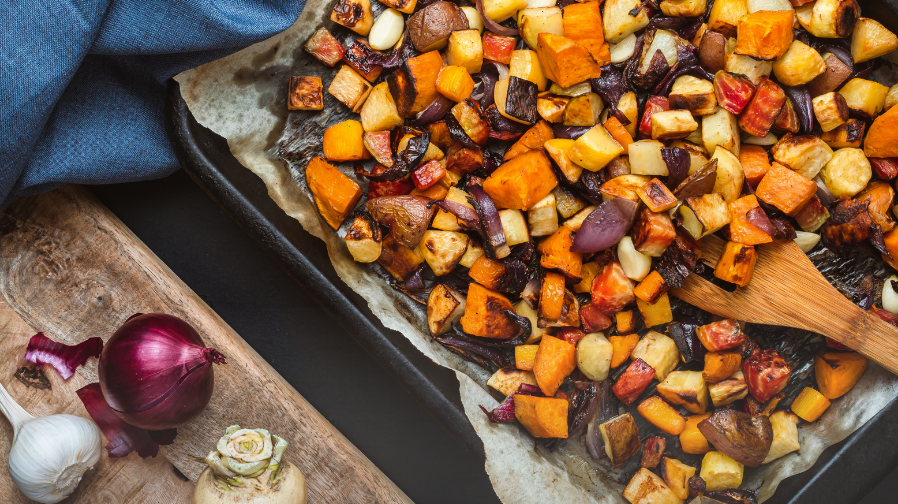
This sheet pan of roasted parsnips, carrots, turnips, sweet potato and butternut squash is one of the simplest AIP compliant side dishes I make. The vegetables roast in tallow at 400°F (204°C) with rosemary, garlic and onion, then get a handful of fresh parsley at the end. Serve it next to roast chicken or beef, use the leftovers as a breakfast base, or bring it to Thanksgiving as a side that everyone at the table can eat.
Key takeaways
- Every ingredient in this recipe is on the standard AIP elimination-phase food list: root vegetables, squash, alliums, leaf herbs, salt and tallow.
- White potato is the one root vegetable AIP removes, because it is a nightshade. Sweet potato is a different plant family and is allowed.
- Use 4 to 5 cups of chopped vegetables in any mix of parsnips, carrots, turnips, orange sweet potato and butternut squash. The seasoning amounts are written for that volume.
- Flipping the vegetables halfway through browns both sides and keeps them from sticking to the pan.
This article is for education only and does not diagnose, treat or replace care from a qualified practitioner. I am a clinical herbalist, not a physician. The Autoimmune Protocol is an elimination diet, and anyone managing an autoimmune condition should talk with their own provider before making large changes to how they eat. Do not start, stop or change any medication based on this article. People respond to foods differently.
What makes a recipe AIP compliant
Evidence: limited. A few small, uncontrolled human trials, with no randomized trials published so far.
The Autoimmune Protocol (AIP) is a stricter elimination diet built on paleo eating. During the elimination phase it removes grains, legumes, dairy, eggs, nuts, seeds, nightshades, refined sugar, seed oils and alcohol, then reintroduces foods one at a time to see which ones a person tolerates.
The research on AIP is small. A 2017 trial at Scripps Clinic followed 15 adults with active Crohn's disease or ulcerative colitis through a 6-week elimination phase and a 5-week maintenance phase, and the researchers recorded improvements in symptom scores by week 6.[1] A follow-up paper on the same group reported quality-of-life scores improving as early as week 3.[2] A 2019 pilot study of 16 women with Hashimoto's thyroiditis on a 10-week AIP coaching program recorded lower symptom scores and lower hs-CRP, but no significant changes in thyroid hormone levels or thyroid antibodies.[3] None of these studies had a control group, and the authors of each called for larger randomized trials.
Ingredients
Serves 4 as a side.
- 4 to 5 cups chopped vegetables, in any mix of:
- Parsnips
- Carrots
- Small turnips
- Orange sweet potato
- Butternut squash
- ½ yellow onion
- 3 cloves garlic, crushed and then minced
- 1 sprig fresh rosemary, or 1 teaspoon dried
- 3 tablespoons tallow
- 1 teaspoon sea salt
- Fresh parsley, chopped, to garnish
How to make AIP sheet pan root vegetables
- Heat the oven to 400°F (204°C). If your tallow is solid, put it on the sheet pan and let it melt in the oven while it heats.
- Peel and chop your vegetables into bite-size pieces until you have 4 to 5 cups. Carrots and parsnips are denser, so cut them a little smaller than the sweet potato and squash so everything finishes at the same time. Cut the onion into wedges.
- Toss the vegetables and onion with the melted tallow, salt and rosemary. Pull the leaves off a fresh sprig and chop them, or sprinkle on dried rosemary.
- Spread everything out in a single layer. Vegetables piled on top of each other steam instead of browning, so use a second pan if one is crowded.
- Roast for about half the cooking time, then flip and mix the vegetables and stir in the minced garlic.
- Keep roasting until the vegetables are browned and a fork slides in easily, 20 to 30 minutes total depending on how thick you cut them.
- Top with chopped parsley and serve.
Why every ingredient is AIP compliant
Root vegetables
Parsnips, carrots, turnips and sweet potato are all on the AIP elimination list. White potato is the one root vegetable the protocol removes, because it belongs to the nightshade family with tomatoes and peppers. Orange sweet potato is in the morning glory family and is allowed.
Butternut squash
Winter and summer squash are compliant, including butternut, acorn, delicata, pumpkin and zucchini. AIP removes seeds, so scoop out the squash seeds and leave out roasted pepitas.
Onion, garlic and herbs
Onion and garlic are alliums, which are allowed on AIP. Rosemary and parsley are leaf herbs, which are also allowed. The spices AIP removes are the seed-based ones, such as cumin, coriander seed, fennel seed and mustard, along with black pepper and anything made from peppers, like paprika and chili powder.
Tallow and salt
Tallow, lard and other animal fats are on the AIP fats list along with olive, avocado and coconut oil. I use grass-fed tallow from a Montana ranch, which browns the vegetables well and keeps seed oils out of the recipe. Any unrefined sea salt works.
Swaps and add-ins
- More squash: delicata can go in with the skin on, since the skin softens as it roasts. Acorn squash works too.
- Other roots: beets, rutabaga, celery root and taro all roast well at the same temperature. Count them toward your 4 to 5 cups. Beets will tint everything around them pink.
- Herbs: fresh thyme or sage can stand in for rosemary.
- Make it a full meal: push the vegetables to the sides of the pan for the last 15 minutes and roast chicken thighs or sausage that has no seed spices in the middle.
Serving and leftovers
Leftovers keep in the fridge for 4 days. To reheat, put them back in a hot skillet with a little more tallow so the edges crisp up again. They make an easy AIP breakfast with browned ground beef and green onion, or next to a bowl of oxtail soup.
Frequently asked questions
Are root vegetables allowed on AIP?
Yes. Carrots, parsnips, turnips, beets, rutabaga, sweet potato, taro and cassava are all on the elimination-phase list. White potato is the exception because it is a nightshade.
Is squash AIP compliant?
Yes. The flesh of both winter and summer squash is allowed. The seeds are not, since AIP removes all seeds during the elimination phase.
Can I use olive oil instead of tallow?
Yes. Olive oil, avocado oil and coconut oil are all on the AIP fats list. Seed oils such as canola, sunflower and soybean are not.
Why is there no black pepper in this recipe?
Most AIP food lists leave black pepper out of the elimination phase and put it in the first group of foods to reintroduce. Salt, garlic and rosemary carry the flavor here.
Can I make this ahead for Thanksgiving?
Chop the vegetables the day before and keep them in a sealed container in the fridge. Roast them shortly before the meal, since roasted vegetables lose their crispness as they sit.
Sources
- Konijeti GG, Kim N, Lewis JD, et al. Efficacy of the Autoimmune Protocol Diet for Inflammatory Bowel Disease. Inflamm Bowel Dis. 2017;23(11):2054-2060. doi:10.1097/MIB.0000000000001221. PMID: 28858071. Uncontrolled trial with 15 participants. The PubMed record lists NIH and non-government research support.
- Chandrasekaran A, Groven S, Lewis JD, et al. An Autoimmune Protocol Diet Improves Patient-Reported Quality of Life in Inflammatory Bowel Disease. Crohns Colitis 360. 2019;1(3):otz019. doi:10.1093/crocol/otz019. PMID: 31832627. Same 15-person cohort as source 1, with no control group.
- Abbott RD, Sadowski A, Alt AG. Efficacy of the Autoimmune Protocol Diet as Part of a Multi-disciplinary, Supported Lifestyle Intervention for Hashimoto's Thyroiditis. Cureus. 2019;11(4):e4556. doi:10.7759/cureus.4556. PMID: 31275780. Uncontrolled pilot study with 16 participants who completed it. Two authors are listed as independent researchers in private practice, and co-author Angela Alt helped develop the AIP coaching program that was tested.