
 Image 1 of 4
 Image 2 of 4
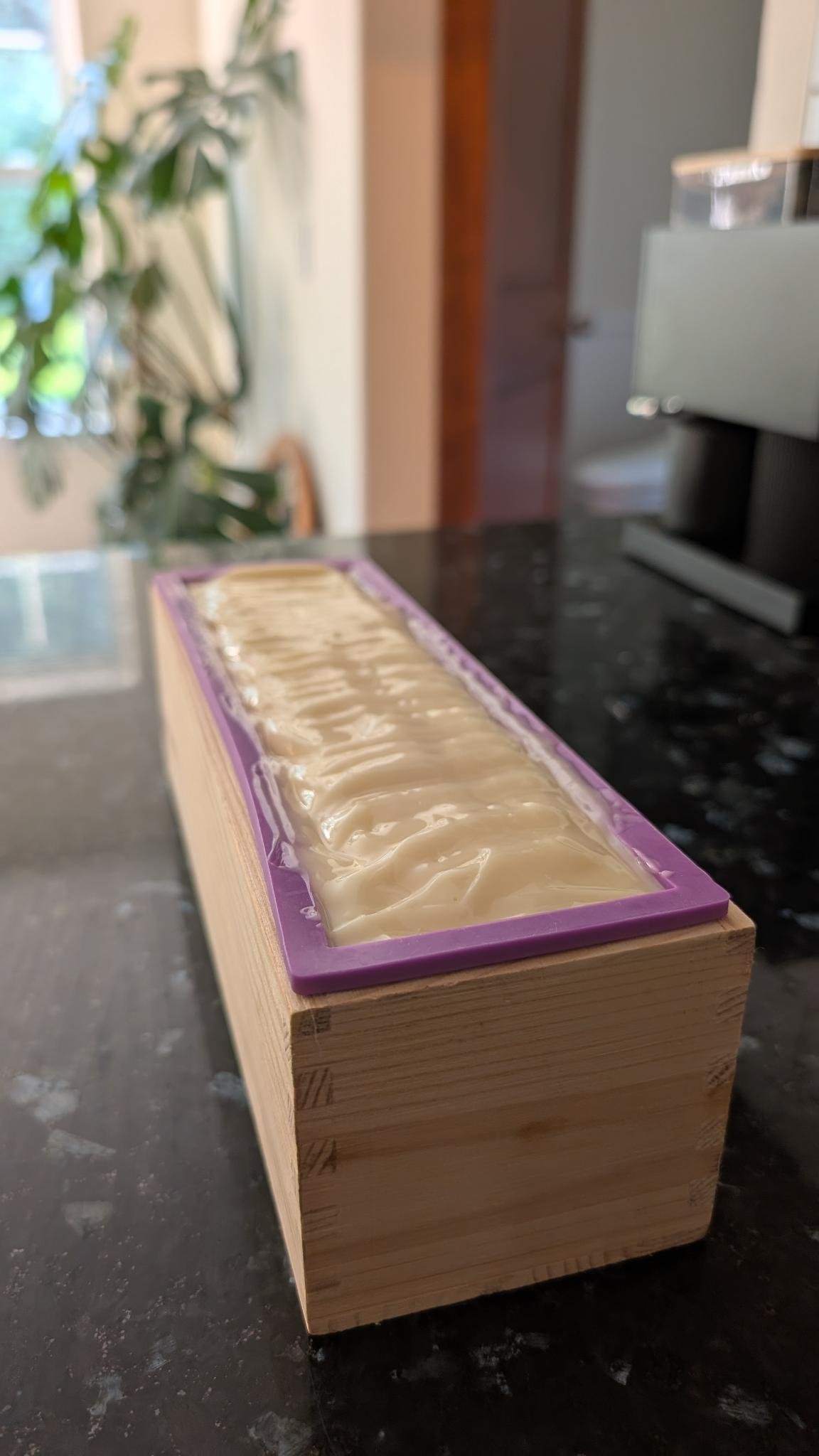 Image 3 of 4
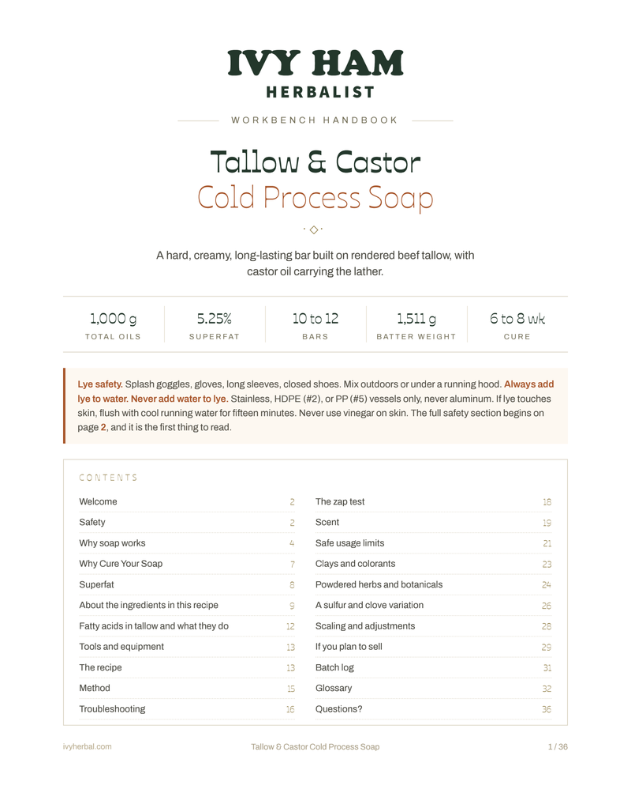 Image 4 of 4
What's covered
Inside the Cold Process Tallow Soap Handbook
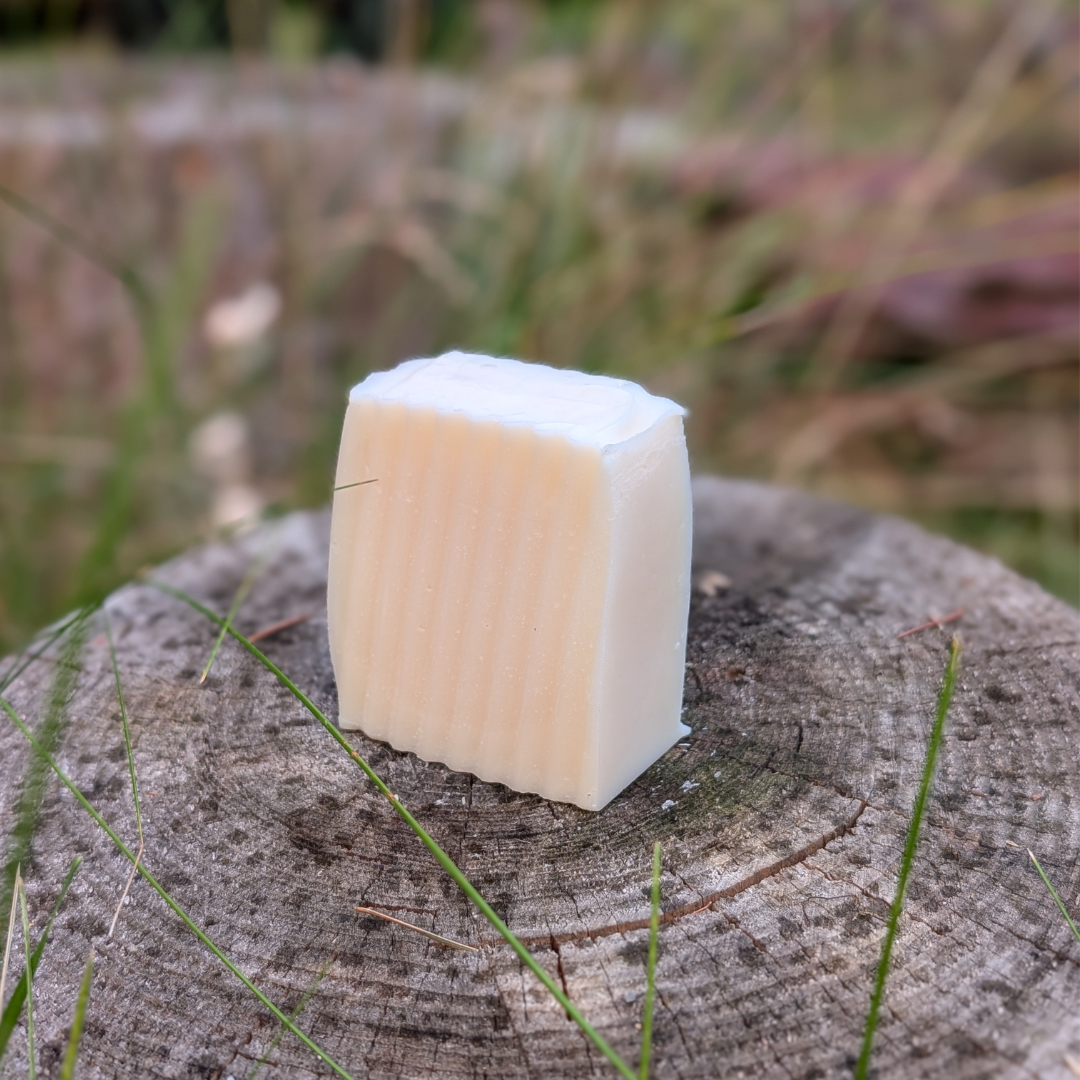
Tallow has been the standard soap fat for most of the history of soapmaking, and it still makes one of the hardest, longest-lasting bars you can produce at home. This handbook shows you how to make tallow soap from one tested cold process recipe, written in grams, with every step and temperature spelled out.
You will learn how to handle lye safely, why soap works, what each ingredient does, and how to add color and scent once you are comfortable with the basic bar. A troubleshooting section is there for the batch that does not go to plan.
Safety
Read this first. It covers the one rule that matters when mixing lye, what to wear, and what to do if any reaches your skin or eyes.
Why soap works
How fat and lye turn into soap, illustrated step by step. No chemistry background needed.
Why cure your soap
What happens during the six to eight week cure, how to know when a bar is finished, and whether you can use one early.
Superfat and lye calculation
What superfat means, why this recipe uses 5.25 percent, and a simple table showing how different amounts change the bar.
About the ingredients
What each ingredient does, what to look for when you buy it, and why common alternatives like palm oil and tap water were left out.
Fatty acids in tallow
A short table of the seven fatty acids in this recipe and what each one gives the bar. Useful whenever you wonder about substituting an oil.
Tools and equipment
Everything you need, most of it already in your kitchen, with notes on what is optional and which containers to avoid.
The tallow soap recipe
The full recipe in grams: 90 percent beef tallow, 10 percent castor oil, 10 to 12 bars. Two temperatures and one cutting window are all you need to keep track of.
Method
Seventeen numbered steps from lining the mold to cutting the bars, with pictures of the four stages of trace so you know when to pour.
Troubleshooting
Eleven common problems, listed by what you see so you can find yours fast. Each one explains what happened, whether the batch is safe, and how to fix it.
The zap test
A four-step way to confirm a bar is safe to use, and why it works better than pH strips.
Scent
Essential oils compared with fragrance oils, how to buy a good essential oil, and why infusions and hydrosols do not carry scent into soap.
Safe usage limits
A table of sixteen essential oils with the maximum amount for this batch and how each one behaves in cold process.
Clays and colorants
Ten clays and activated charcoal compared on color and how they affect the batter, so you can pick one that suits your bar.
Powdered herbs and botanicals
Thirteen botanicals with the color you start with and the color you end up with, plus the two ways to add them.
A sulfur and clove variation
A second bar to try once you are comfortable with the basic recipe, with rates and method changes worked out for you.
Scaling and adjustments
How to resize the batch for any mold, a smaller test batch already calculated, and a coconut oil version for more bubbles.
If you plan to sell
The paperwork, labeling rules and a ten-point checklist to work through before your first sale. Skip it if you are only making soap for yourself.
Batch log
A printable record sheet to copy for every batch, with a strip for tracking cure weight week by week.
Glossary
Eighty-six soapmaking terms explained in plain language, so nothing in the handbook reads like a foreign language.
Delivered as a printable 37-page PDF.
Tallow Soap Questions, Answered
I've never made soap before. Can I start here?
Yes. The handbook was written for a first batch, with seventeen numbered steps and a cue for each one so you know what to look for. If something goes wrong, the troubleshooting section is organized by what you see.
Can you make tallow soap without lye?
No. All soap is made by reacting fat with lye, including the melt-and-pour bases sold as lye-free. In a properly made bar the lye is used up completely, so none is left in the soap you wash with.
Is lye soap safe?
The finished bar is safe. The only part that needs care is the mixing, which is why safety is the first section of the handbook. It covers what to wear, how to mix, and what to do if lye touches skin, and after one read you will not have to think about it much again.
Is tallow soap good for skin?
Tallow makes a hard, creamy bar that is gentle on skin, and the 5 percent superfat in this recipe leaves a little free oil in the bar to keep it from feeling drying.
Why is there only one recipe?
One recipe you understand well is more useful than a dozen you follow without knowing why. The handbook explains what each ingredient does, then shows you how to scale the batch and add other ingredients like coconut oil for more lather once you are ready to change things.
Where do I get tallow for soap making?
Local butchers and ranches are good sources of beef fat to render yourself, and pre-rendered tallow is sold online. The ingredients section explains what to look for.
How long does tallow soap last?
A well-cured tallow bar outlasts most store-bought soap in the shower and keeps for a year or more if stored somewhere dry.
Grams or ounces?
The recipe is in grams, because lye needs to be measured precisely and grams remove rounding errors. Any digital kitchen scale will do.
Can I sell the soap I make from it?
Yes. A section near the end covers the paperwork, labeling rules, and a ten-point checklist to work through before your first sale.
What exactly am I buying, and what is the refund policy?
A 37-page printable PDF, delivered by download link right after purchase. Because it is a digital file, all sales are final, but if something is wrong with your download, send a message and it will be made right.