Herbal Remedies for Dandruff
Dandruff is tied to a yeast that lives on every adult scalp and feeds on scalp oil. That single fact rules out some popular natural remedies for dandruff and explains why others have held up in trials. This article covers what is happening on the scalp, the herbal and kitchen remedies that have been studied, what each study found, and the exact ratios and contact times so you can use each one the way it was tested.
Key takeaways
- Dandruff is linked to Malassezia, a yeast that lives on every adult scalp and feeds on scalp oil, not on the sugar you eat.
- A 5% tea tree oil shampoo has the strongest trial record of any plant remedy for dandruff, and it belongs in a rinse-off product for a set number of weeks, not in a leave-on treatment used indefinitely.
- Apple cider vinegar rinses are acidic, which suits the scalp's natural pH. No clinical trial has tested them for dandruff.
- Coconut oil and aloe vera each have one supporting human study.
- Give any routine 4 weeks, the length of the tea tree trial, before judging it.
This article is for education and is not medical advice. Flaking on the scalp can also be seborrheic dermatitis, scalp psoriasis, eczema, or ringworm, and those need a diagnosis. Talk with a healthcare provider before starting any new regimen, and patch test every topical remedy on the inner forearm for 24 hours before scalp use.
What causes dandruff
Evidence: laboratory and human mechanism studies, including research funded by Procter & Gamble.
Malassezia is a yeast found on nearly every adult scalp. It cannot make its own fats. It survives by breaking down the triglycerides in sebum, the oil your scalp produces, and that breakdown releases free fatty acids such as oleic acid. In people whose skin reacts to those fatty acids, the outer skin layer sheds faster than normal and the shed cells clump into visible flakes.1
Researchers tested this directly. They applied oleic acid to the scalps of volunteers with a history of dandruff and produced flaking with no yeast present at all. Three factors have to line up: the yeast, enough sebum to feed it, and a scalp that reacts. Yeast counts alone do not predict how bad dandruff gets, which is why two people with similar amounts of Malassezia can have very different scalps.1
Dandruff or dry scalp?
A dry scalp produces small, powdery flakes with tight skin, often in winter or after a harsh shampoo. Dandruff flakes tend to be larger, sometimes oily, and come with itch. Oily flakes point toward yeast activity. Dry, dusty flakes point toward a barrier problem, and heavy oiling or vinegar rinses can make a dry scalp worse. Sort out which one you have before choosing a remedy.
Diet and scalp oil
Evidence: one cross-sectional population study of 4,379 adults in the Netherlands, with one Unilever co-author. No controlled diet trial exists for dandruff.
Because the yeast feeds on sebum rather than sugar, diet works indirectly if it works at all, by changing how much oil the scalp produces and how reactive the skin is. The Rotterdam Study examined 4,379 middle-aged and older adults with full skin exams and detailed food questionnaires. Participants who ate the most fruit had 25% lower odds of seborrheic dermatitis, the more severe form of scalp flaking. Women who ate most heavily in a Western pattern, defined in the study by meat, potatoes, and alcohol, had higher odds. Vegetable intake, fat intake, and total antioxidant intake showed no association.3
This is observational data. It cannot show that changing your diet clears dandruff. It does make a diet high in whole fruit and low in fried and processed food a reasonable base while the topical remedies below do the direct work.
Apple cider vinegar rinse
Evidence: in vitro antimicrobial testing and hair fiber pH research. No clinical trial on dandruff.
Healthy skin surface sits at a pH near 5. Alkaline products swell the hair cuticle and raise friction between fibers, which is why a review of 123 commercial shampoos flagged the ones above pH 5.5.7 An apple cider vinegar rinse pulls the scalp and hair back into the acidic range after washing.
What vinegar does to Malassezia is less certain. In laboratory testing, apple cider vinegar stopped Candida albicans, a different yeast, only at full strength. Diluted to the level used in a hair rinse, it did not.6 At rinse strength, count on the vinegar for pH correction and cuticle smoothing only.
How to use it
Mix 1 tablespoon of raw apple cider vinegar into 1 cup of cool water. After shampooing, pour it over the scalp, massage for 30 seconds, leave it 3 minutes, then rinse. Two rinses a week is the right frequency, and skip it on any day the scalp is broken or stinging. If you want a herbal version, replace the water with a cooled rosemary infusion using the method in our guide to herbal preparations.
Tea tree oil
Evidence: one randomized, placebo-controlled trial of 126 people over 4 weeks. Hormonal caveat based on case reports and cell studies, with a 2023 review disputing causation.
Tea tree oil (Melaleuca alternifolia) has the best trial record of any plant remedy for dandruff. In a 4-week study at Royal Prince Alfred Hospital in Sydney, 126 people with mild to moderate dandruff washed daily with either a 5% tea tree oil shampoo or the same shampoo without the oil. The tea tree group improved 41% on a scalp area and severity score. The placebo group improved 11%. Self-rated itch, scaliness, and greasiness all fell more in the tea tree group, and nobody left the study because of side effects.2
The trial was single-blind, participants could likely smell which shampoo they had, and the study has not been repeated at the same scale in the 20 years since.
The hormonal question
Daily use for months is a different question from a 4-week course. In 2007, physicians reported three boys who developed breast tissue growth while using products containing lavender and tea tree oils, and laboratory testing found that both oils act on estrogen and androgen receptors in human cells.8 A 2023 review argued that skin absorption of these oils is too low to explain those cases and that cause and effect has not been shown.9 The question is open.
My own position as a herbalist is that tea tree oil belongs in a rinse-off shampoo for a defined stretch of weeks and nowhere else. A shampoo washes most of the oil away within minutes. A leave-on scalp oil or serum keeps it on the skin for hours, and I do not recommend that at any concentration. Use the shampoo to bring flaking under control, then hand maintenance over to the aloe and vinegar steps, which carry no such question.
How to use it
Add 5 mL (1 teaspoon) of tea tree essential oil to 95 mL of unscented shampoo and shake well. That gives the 5% concentration used in the trial. Lather, leave it on the scalp for 3 minutes, the same contact time the participants used, then rinse. Never put undiluted tea tree oil on the scalp. Contact allergy to tea tree oil is documented, so patch test first.
Are essential oils safe for daily use?
"Therapeutic grade" is a marketing term with no certification behind it, and case reports link lavender and tea tree oils to hormonal effects in children. Read the full breakdown of the research, the industry, and what I use instead before you build a routine around any essential oil.
Read the essential oil safety articleCoconut oil
Evidence: one 16-week scalp microbiome study of 140 women, co-authored by L'Oréal researchers.
Does coconut oil help with dandruff? The one study that examined the question followed 70 women with dandruff and 70 without through 12 weeks of coconut oil application and 4 weeks of follow-up, collecting scalp microbe samples throughout. On dandruff scalps, coconut oil use was followed by a rise in Cutibacterium acnes and Malassezia globosa, and those shifts tracked with lower dandruff scores. The authors read this as coconut oil pushing the scalp community back toward the pattern seen on healthy scalps.4
The study measured microbes and scalp parameters, not itch relief, and it did not compare coconut oil against an anti-dandruff shampoo. It also took place in India, where scalp oiling is routine, so the results may not transfer to people whose scalps have never been oiled.
How to use it
Warm 1 tablespoon of virgin coconut oil until liquid, work it into the scalp with fingertips, leave it 1 hour, then shampoo it out, once a week. Fine hair may need two washes to clear the oil. Watch how the scalp responds over the first 2 weeks. Oil sitting on an already greasy scalp gives the yeast more to feed on, so if flakes are oily rather than dry, keep the coconut oil to a pre-wash treatment and never leave it in.
Aloe vera
Evidence: one double-blind, placebo-controlled trial of 44 adults with seborrheic dermatitis.
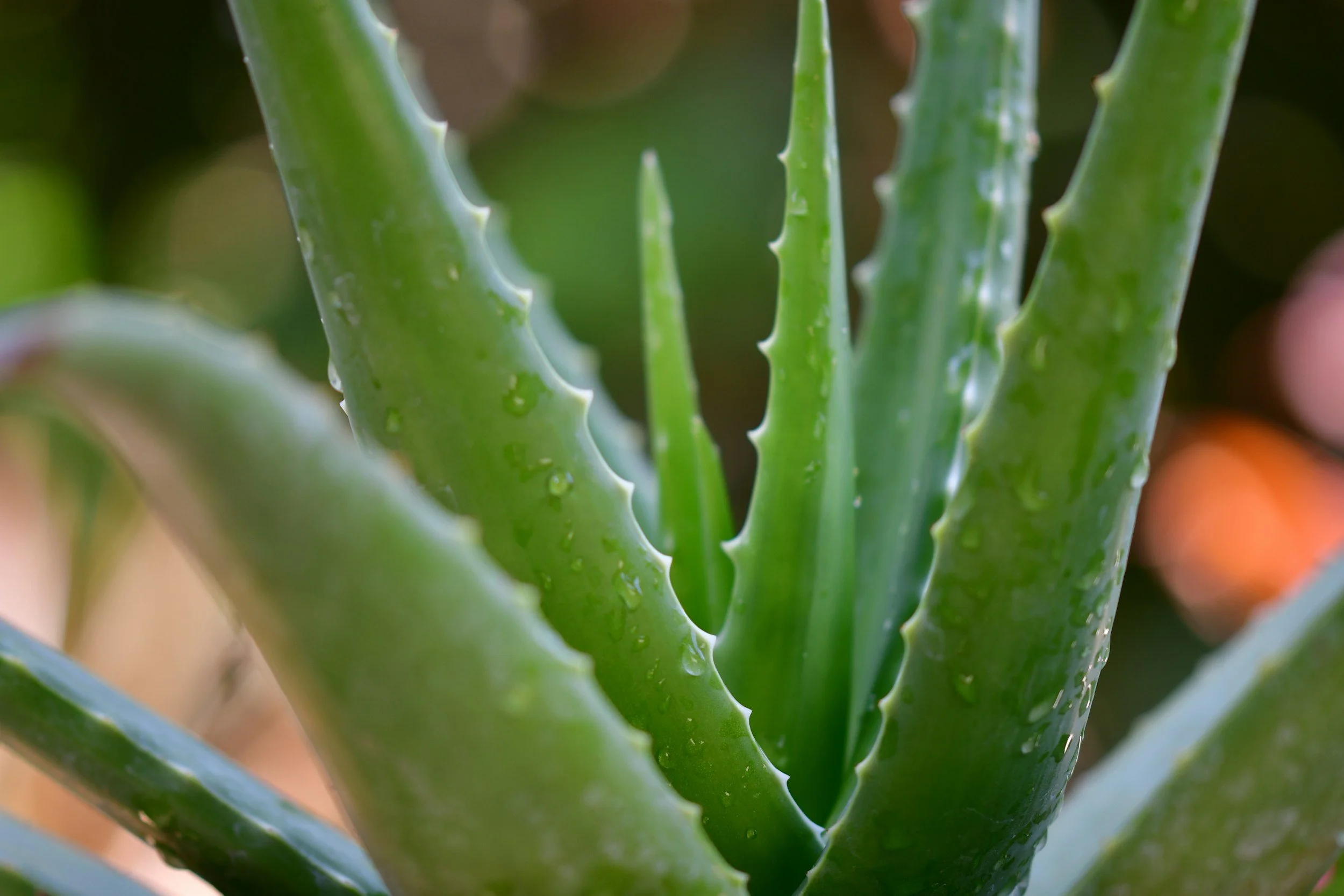
Does aloe vera help with dandruff? The closest test is a 1999 Israeli trial in which 44 adults applied either an aloe vera emulsion or a placebo to seborrheic dermatitis for several weeks. Scaliness, itch, and the number of affected sites dropped more in the aloe group. Redness did not change. Dermatologists rated 58% of the aloe group as improved against 15% on placebo.5 The trial is small and more than 25 years old, and it has not been repeated.
How to use it
Use pure inner-leaf gel, not a lotion with aloe listed far down the label. Apply it to the scalp, leave it 20 minutes, then rinse. Aloe adds no oil, so it fits on the days between a vinegar rinse and a coconut oil treatment, and it suits a scalp that is already greasy.
Rosemary
Evidence: traditional use only. The clinical research on rosemary oil measured hair count, not flaking.
Rosemary rinses are a staple of European folk hair care, and people often ask whether rosemary oil is good for dandruff. No dandruff trial exists. The clinical work on rosemary oil has focused on hair growth and did not measure flakes or itch. Rosemary has antimicrobial activity in laboratory dishes, which is true of most aromatic herbs and tells you little about a rinsed scalp.
Use rosemary for scent and as the herbal base of your rinse, and let tea tree oil or aloe do the measured work. A strong infusion, 2 tablespoons of dried rosemary steeped in 1 cup of boiled water for 20 minutes and cooled, replaces the plain water in the vinegar rinse above.
A weekly routine
Evidence: schedule built from the contact times and frequencies used in the studies above.
Pick one wash day for oil and one for vinegar so they never overlap. On the first wash day, apply coconut oil for 1 hour, then wash with the 5% tea tree shampoo, leaving the lather on for 3 minutes. On the second wash day, wash with the tea tree shampoo, then follow with the apple cider vinegar or rosemary vinegar rinse. Use aloe gel on any day the scalp itches between washes. Keep every other product the same so you can tell what changed. Run the routine for 4 full weeks before deciding whether it worked, then retire the tea tree shampoo and keep the vinegar and aloe steps for maintenance.
When to see a dermatologist
Evidence: standard clinical practice.
Book an appointment if you see thick yellow or greasy crusts, patches spreading to the eyebrows, ears, face, or chest, hair coming out in patches, weeping or bleeding skin, or no change after 4 weeks of consistent care. Children with scalp flaking and broken hairs may have ringworm, which needs prescription treatment and will not respond to anything in this article.
- DeAngelis YM, Gemmer CM, Kaczvinsky JR, Kenneally DC, Schwartz JR, Dawson TL. Three etiologic facets of dandruff and seborrheic dermatitis: Malassezia fungi, sebaceous lipids, and individual sensitivity. J Investig Dermatol Symp Proc. 2005;10(3):295-297. doi:10.1111/j.1087-0024.2005.10119.x ↩
- Satchell AC, Saurajen A, Bell C, Barnetson RS. Treatment of dandruff with 5% tea tree oil shampoo. J Am Acad Dermatol. 2002;47(6):852-855. doi:10.1067/mjd.2002.122734 ↩
- Sanders MGH, Pardo LM, Ginger RS, Kiefte-de Jong JC, Nijsten T. Association between diet and seborrheic dermatitis: a cross-sectional study. J Invest Dermatol. 2019;139(1):108-114. doi:10.1016/j.jid.2018.07.027 ↩
- Saxena R, Mittal P, Clavaud C, et al. Longitudinal study of the scalp microbiome suggests coconut oil to enrich healthy scalp commensals. Sci Rep. 2021;11:7220. doi:10.1038/s41598-021-86454-1 ↩
- Vardy DA, Cohen AD, Tchetov T, Medvedovsky E, Biton A. A double-blind, placebo-controlled trial of an Aloe vera (A. barbadensis) emulsion in the treatment of seborrheic dermatitis. J Dermatolog Treat. 1999;10(1):7-11. doi:10.3109/09546639909055904 ↩
- Yagnik D, Serafin V, Shah AJ. Antimicrobial activity of apple cider vinegar against Escherichia coli, Staphylococcus aureus and Candida albicans. Sci Rep. 2018;8:1732. doi:10.1038/s41598-017-18618-x ↩
- Gavazzoni Dias MFR, de Almeida AM, Cecato PMR, Adriano AR, Pichler J. The shampoo pH can affect the hair: myth or reality? Int J Trichology. 2014;6(3):95-99. doi:10.4103/0974-7753.139078 ↩
- Henley DV, Lipson N, Korach KS, Bloch CA. Prepubertal gynecomastia linked to lavender and tea tree oils. N Engl J Med. 2007;356(5):479-485. doi:10.1056/NEJMoa064725 ↩
- Braunstein EW, Braunstein GD. Are prepubertal gynaecomastia and premature thelarche linked to topical lavender and tea tree oil use? touchREV Endocrinol. 2023;19(2):60-68. doi:10.17925/EE.2023.19.2.9 ↩