
Flu Shots Can Increase Your Risk of the Flu + Holistic Immune Support Tips
Thinking of getting your flu shot this season? Well, according to a study on last year’s flu vaccine’s effectiveness, doing that may actually increase your risk of getting the flu. The 2024/25 season flu shot was linked to a 27% increased risk of catching the flu. You would have been better off remaining unvaccinated during last year’s flu season. It’s actually relatively common to have low or even negative effectiveness from flu vaccines (e.g. 2014/2015 flu season, 2009 H1N1 flu, and 2018/2019 "A(H3N2)"). Here’s a video breakdown of this study (starts at around 3.5 min in), done by Dr John Campbell, who is a retired nurse teacher and former clinical nurse based in England.
Why does this happen?
Well, since vaccines take around 9 months to develop, and manufacture, they have to literally guess at what the most prolific flu strain(s) will be for the coming year. As a result, you’re really gambling on these companies having picked the correct strain out of thousands for that year’s flu. This past year is not the first time the wrong strain has been selected, and surely won’t be the last.
Keep in mind that this article is not medical advice. It’s my opinion that if your doctor is recommending you get a flu shot, it may be time to find a new one that gives evidence-based recommendations, not just regurgitated info from a pharma brochure.
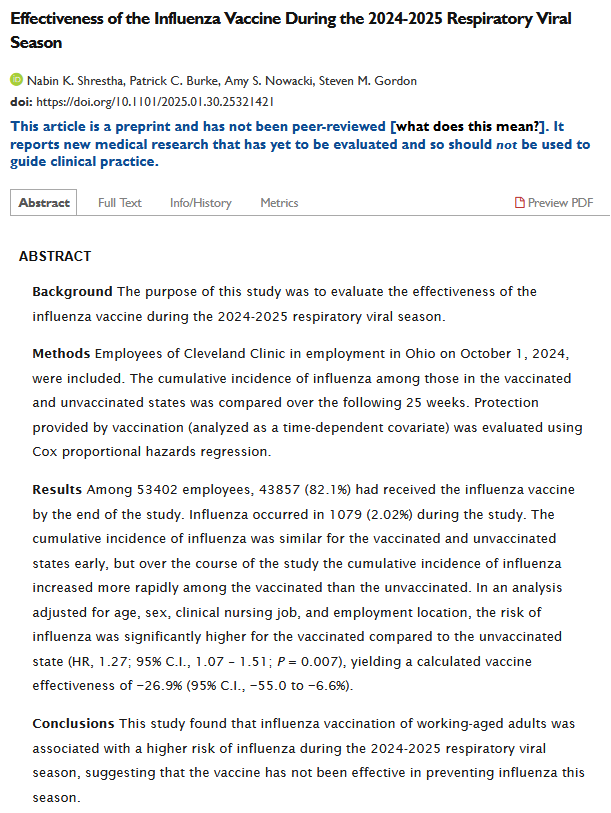
This study is pre-peer review, which means that it is not yet published. I am taking it seriously despite its lack of peer review because there are no obvious issues with the design, and the peer reviewing process has been shown to be corrupted in many cases (here’s one example). Additionally, there are other studies and news reports from previous years that have produced similar results.
Why would getting a vaccine make you more susceptible to catching a disease?
Vaccines are made from more than just saline and dead/deactivated virus particles. What else is in them will depend on the manufacturing process, and how they’ll be administered, but what all of them have in common is that they contain other ingredients, some of which are known to be individually harmful to health.
Normally, exposure to any substance is studied via contact with skin/eyes/lungs/stomach, and this information is laid out in the Safety Data Sheet (SDS) for that chemical. But injecting something under the skin, (an abnormal route of exposure), is a lot different from being exposed externally.
Even injecting something universally regarded as being safe to consume like a piece of chicken or an apple would likely promote inflammation and could even be toxic. When you eat food, our digestive system disassembles everything down to the most basic particles so that it can be used by our cells for energy and nutrients. If particles of these items that have not be disassembled in the gut are found by our immune system (like we see in people with increased intestinal permeability aka leaky gut or celiac disease), the immune system views these particles as foreign invaders and attacks, resulting in inflammation, which can contribute to other health conditions.
On the other hand, this is actually part of the theory of design of traditional vaccines. Toxic vaccine adjuvants are added to trigger the immune system, so that your body’s immune system will notice and hopefully “learn” the (hopefully) deactivated viral particles to produce temporary immunity for later exposures. Of course, in the context of a flu shot this only can work if the company guessed correctly and developed their vaccine for the correct strain.
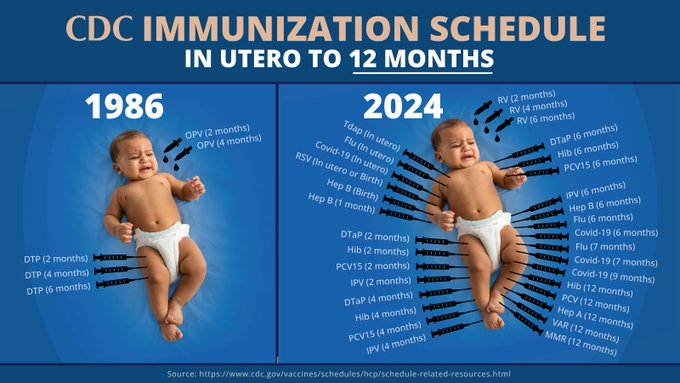
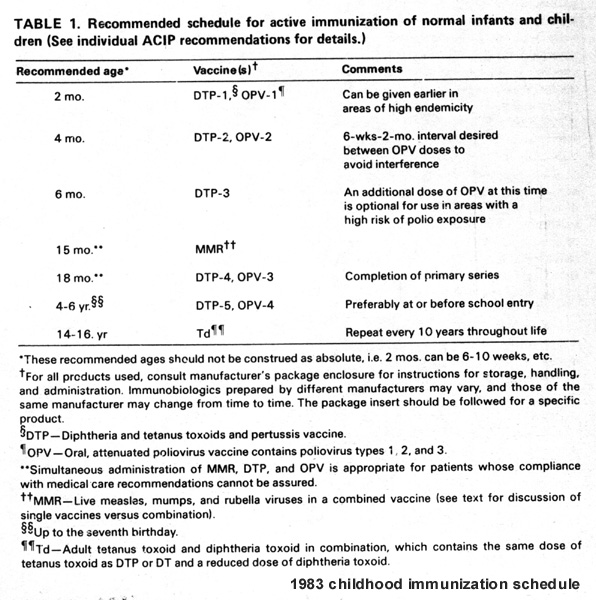
Sources: 2025 CDC Childhood Vaccination Schedule: https://www.cdc.gov/vaccines/hcp/imz-schedules/downloads/child/0-18yrs-child-combined-schedule.pdf
1983 CDC Childhood Vaccination Schedule: https://www.cdc.gov/vaccines/hcp/imz-schedules/images/schedule1983s.jpg
In recent years, even mainstream news organizations are beginning to report that the adjuvant ingredients in vaccines we’ve used for decades can cause both chronic and acute harm to those with compromised detoxification pathways (e.g. MTHFR genetic mutations). Many reputable scientists and doctors are now asking if the increase in chronic disease in recent decades is at all linked with the explosion of the US childhood vaccination schedule that began in 1986 concurrent with the National Childhood Vaccine Injury Act. There have also been several recent highly suppressed, but well-designed studies showing that those who have received vaccines are less healthy overall and have more incidence of chronic disease than unvaccinated people.
Ingredients In Flu Vaccines for 2025-2026
This year’s vaccines are all made by the same manufacturers as last years failed shots, with partially updated formulas. All vaccines listed below are Trivalent for the 2025-2026 season, meaning that they contain antigens from three strains: A/Victoria (H1N1), A/Croatia (H3N2), and B/Austria (Lineage B/Victoria). You can google individual ingredients to find their safety data sheets.
Some Definitions:
Excipients are the inactive substances, such as buffers, salts, and stabilizers, used to maintain the vaccine’s pH balance, shelf stability, and liquid consistency.
Adjuvants are specific additives, like thimerosal or squaline oil, designed to create an immune provocation that amplifies the body's overall response to the vaccine's antigen.
Residuals are trace amounts of materials used during the manufacturing process, such as egg proteins, viral contaminants from animal cell growth mediums, antibiotics, or formaldehyde, that are impossible to entirely remove and remain in the final product after purification.
| Vaccine Brand | Manufacturing Method | Full Ingredient List (Excipients & Residuals) |
|---|---|---|
| Flublok (Sanofi) |
Recombinant (Synthetic/Insect Cell) |
Excipients: Sodium chloride, Monobasic sodium phosphate, Dibasic sodium phosphate, Polysorbate 20 (Tween 20). Residuals: Baculovirus and Spodoptera frugiperda (insect) cell proteins, Baculo and cellular DNA, Triton X-100. *100% Egg-Free, Antibiotic-Free, and Preservative-Free. |
| Flucelvax (CSL Seqirus) |
Cell-Based (Mammalian Kidney) |
Excipients: Sodium chloride, Potassium chloride, Magnesium chloride hexahydrate, Disodium phosphate dihydrate, Potassium dihydrogen phosphate, Water. Residuals: Beta-propiolactone, Cetyltrimethylammonium bromide (CTAB), Polysorbate 80, Hydrocortisone, MDCK cell protein/DNA. *Egg-Free and Antibiotic-Free. Thimerosal-free in syringes. |
| Fluad (CSL Seqirus) |
Egg-Based (Adjuvanted) |
Adjuvant (MF59): Squalene (shark oil), Polysorbate 80, Sorbitan trioleate, Sodium citrate, Citric acid. Excipients: NaCl, KCl, KH2PO4, Na2HPO4, MgCl2, CaCl2. Residuals: Ovalbumin (egg), Kanamycin, Neomycin (antibiotics), Formaldehyde, Hydrocortisone, CTAB. |
| Fluzone High-Dose (Sanofi) |
Egg-Based (High Antigen) |
Excipients: Sodium phosphate-buffered isotonic sodium chloride solution. Residuals: Formaldehyde (≤100 mcg), Octylphenol ethoxylate (Triton X-100) (≤250 mcg), Ovalbumin (egg). *Antibiotic-Free and Preservative-Free. |
| Afluria (CSL Seqirus) |
Egg-Based (Standard) |
Excipients: NaCl, KCl, Na2HPO4, KH2PO4, CaCl2. Residuals: Beta-propiolactone, Sodium taurodeoxycholate, Hydrocortisone, Ovalbumin, Sucrose, Neomycin, Polymyxin B. Preservative: Thimerosal (only if Multi-Dose Vial). |
| Fluarix (GSK) |
Egg-Based (Standard) |
Excipients: NaCl, KCl, MgCl2, Na2HPO4, KH2PO4. Residuals: Vitamin E, Polysorbate 80, Sodium deoxycholate, Formaldehyde, Ovalbumin, Triton X-100, Gentamicin. |
| FluLaval (GSK) |
Egg-Based (Standard) |
Excipients: NaCl, KCl, MgCl2, Na2HPO4, KH2PO4. Residuals: Vitamin E, Polysorbate 80, Formaldehyde, Sodium deoxycholate, Ovalbumin. *Often preferred as an antibiotic-free egg-based option. |
| FluMist (AstraZeneca) |
Egg-Based (Live/Nasal) |
Excipients: Monosodium glutamate (MSG), Arginine hydrochloride, Sucrose, Potassium phosphate buffers. Residuals: Gelatin (porcine), Gentamicin (antibiotic), Ovalbumin (egg). |
Note on Thimerosal: Per the July 2025 policy update, multi-dose vials (which contain thimerosal /mercury) are no longer recommended for the 2025-2026 season. However, some may still be present in the supply chain as "residual stock." If you really were decided on getting a flu shot but wanted to ensure a mercury-free dose, specifically request a Single-Dose Prefilled Syringe (PFS).
Holistic Flu Prevention
So flu vaccines aren’t reliable and don’t produce durable immunity, masking is likely not effective for viral airborne diseases, and social distancing caused more harm than good during the pandemic (particularly in adolescents). So what CAN we do to support our body during flu season?
Personally, I view health from the terrain model, which means that I support my body’s immune system as best I can with nutrient-dense and anti-inflammatory diet, food-based vitamins, sunlight (vitamin D), adequate rest and movement so that when I encounter a pathogen I can fight it off more easily and get the benefits of life-long natural immunity.
Since 2019, I have been sick twice, and both times I recovered in less than 3 days. I do work from home, but still encounter sick people regularly, in public and through my family who all work or go to school. Despite not being vaccinated for COVID, I don’t think I’ve ever been sick with COVID-19, none of the antigen or PCR tests I’ve taken have ever been positive - though both of these methods have questionable accuracy.
Supplements
Most supplements are overhyped. You are better off getting nutrients from food, or food-based supplements. Synthetically made supplements, in my view, will not absorb as well in the body and are more likely to contain contaminants. They are literally an ultra-processed food. There are some cases where supplementing makes sense, since modern farming practices have seriously degraded soil nutrient density in the last century, it has become difficult to get all of our nutrients from the grocery store. If you’re going to supplement, choose wisely, do your own research, ignore marketing and find a brand that publishes third-party testing results.
Vitamin C
Everyone knows about vitamin C and immune health, but what you may not have heard is that it is best to get your vitamin c from food-based sources. Vitamin C supplements are commonly made with synthetically-made ascorbic acid, which is linked to increased risk of developing kidney stones. My mom recently switched from ascorbic acid to a vitamin C made from acerola cherry, and she said she felt noticeably better.
Aside from acerola cherry-based supplements, there’s also camu camu, and amla berries. Kiwis, oranges/citrus, strawberries and other fruits are all also high in Vitamin C. These food-based sources will also contain a range of other micronutrients and antioxidants that are not found in isolated supplement forms.
Vitamin D
I mainly get my vitamin D from the sunlight, but you can also supplement, especially if you live in an area like the PNW that gets fewer days of sunlight. Vitamin D can also be found in fatty fish like salmon or mackerel, in cod liver oil and in pasture-raised egg yolks.
Zinc
Zinc is another nutrient that is important for immunity, and also is essential for hair and skin health. Getting zinc from food-based sources is actually super important since those foods often also contain cofactors that help you absorb it better, such as copper. Plant-based sources of zinc are less ideal since they are missing cofactors, and will also contain phytates, which are compounds in plants that block mineral absorption.
The best way to get zinc is to eat oysters. Period. A single serving can provide 500%+ of your daily requirement for this mineral, along with necessary cofactors to absorb it better. Other sources include: beef and lamb, other types of shellfish like crab, and organ meats.
Vitamin A
Vitamin A is so important for maintaining the structural integrity of your mucosal cells, which are the moist linings of your nose, throat, and gut. If these barriers are weak, pathogens can enter the bloodstream more easily. Vitamin A also supports skin health, and is a popular ingredient in skincare for this reason.
Your best food sources for this nutrient will be beef liver and then butter or ghee made from grass-fed/finished cows. Always opt for grass-fed/finished over conventionally-raised cows if you can, as the meat is higher quality and will have a better fatty acid profile.
Lifestyle
Get outside! Vitamin D is so important for immunity, and the best way is to get it from the sun. Supplements obviously work as well, but they come with a risk of containing manufacturing contaminants, and ingredients that undo some of the benefits (like sunflower oil or other high PUFA oils, stabilizers, and other ingredients to increase shelf-life). Additionally, (and this is my personal view) there are probably other beneficial compounds we get or bodily processes that are stimulated by being in the sunshine aside from vitamin d that we have yet to study. We are still discovering all the benefits we get from red light, and the sun is the original red light therapy device.
What About Skin Cancer??
If you’re concerned about skin cancer, please read this article by A Midwestern Doctor, which goes really in-depth about relative statistical risks of sun exposure and the huge fear-based scam that has been pulled on all of us by modern dermatology.
Working as a lifeguard in my teens, and eating a Standard American Diet full of processed foods and high PUFA oils, I used to burn almost instantly in the sun. Now, after eating an anti-inflammatory, low-PUFA and seed-oil free diet composed of mostly whole foods, I can be in the sun during peak UV times without getting burned.
Getting your vitamin D from the sun in the morning, in particular is also super helpful for your sleep schedule as it helps set your circadian rhythm. So if you’re someone who struggles to go to bed on time, this can really help get you back on track, plus it can help with things like Seasonal Affect Disorder.
Final Thoughts
When we look at the data, from the negative efficacy rates of past vaccines to the cocktail of excipients and contaminants we see in every year’s batch, it becomes pretty clear that the flu shot is not the guaranteed safety net it is advertised to be.
“Nothing ever comes to one that is worth having, except as a result of hard work.”
Instead of outsourcing your immunity to a system that requires guesswork and trust in serially criminal corporations, I think it makes more sense to focus on the variables you can control. A robust immune system can totally be built and maintained without ANY pharmaceuticals, and arguably this is the less risky way to go.

Germ Theory and Terrain Theory offer two contrasting perspectives on disease: one focusing on external pathogens, the other emphasizing the importance of the body's internal environment. In this article, we explore how both theories shape our understanding of health, from vaccine efficacy and natural immunity to the modern rise of chronic diseases.