The Quilt Coat

from $150.00
Color:

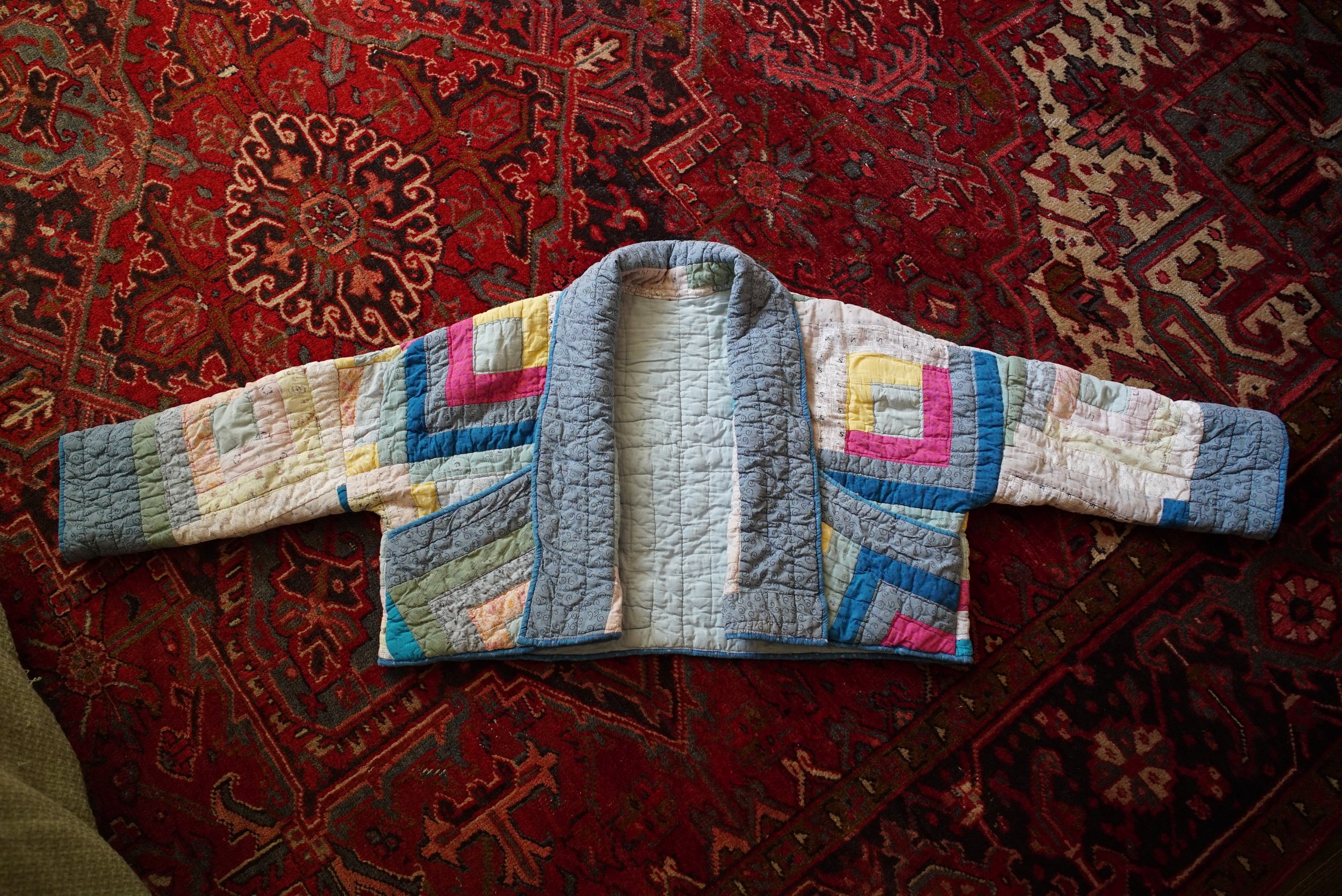
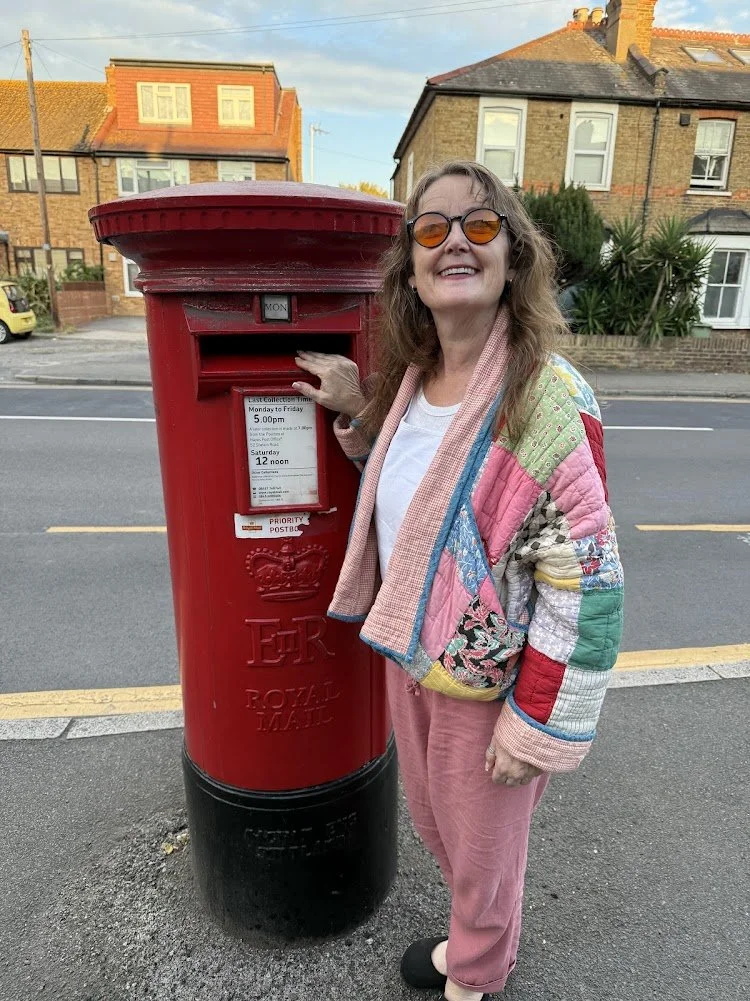
Cropped with a cozy, oversized fit and big pockets. One size fits most. Handmade by me from damaged and/or vintage quilts.

Cropped with a cozy, oversized fit and big pockets. One size fits most. Handmade by me from damaged and/or vintage quilts.

  • Small Batch
  • USDA Organic or Wildcrafted Herbs
  • Woman-Owned Business
  • USA Small Business

Available now

Coats ready to ship

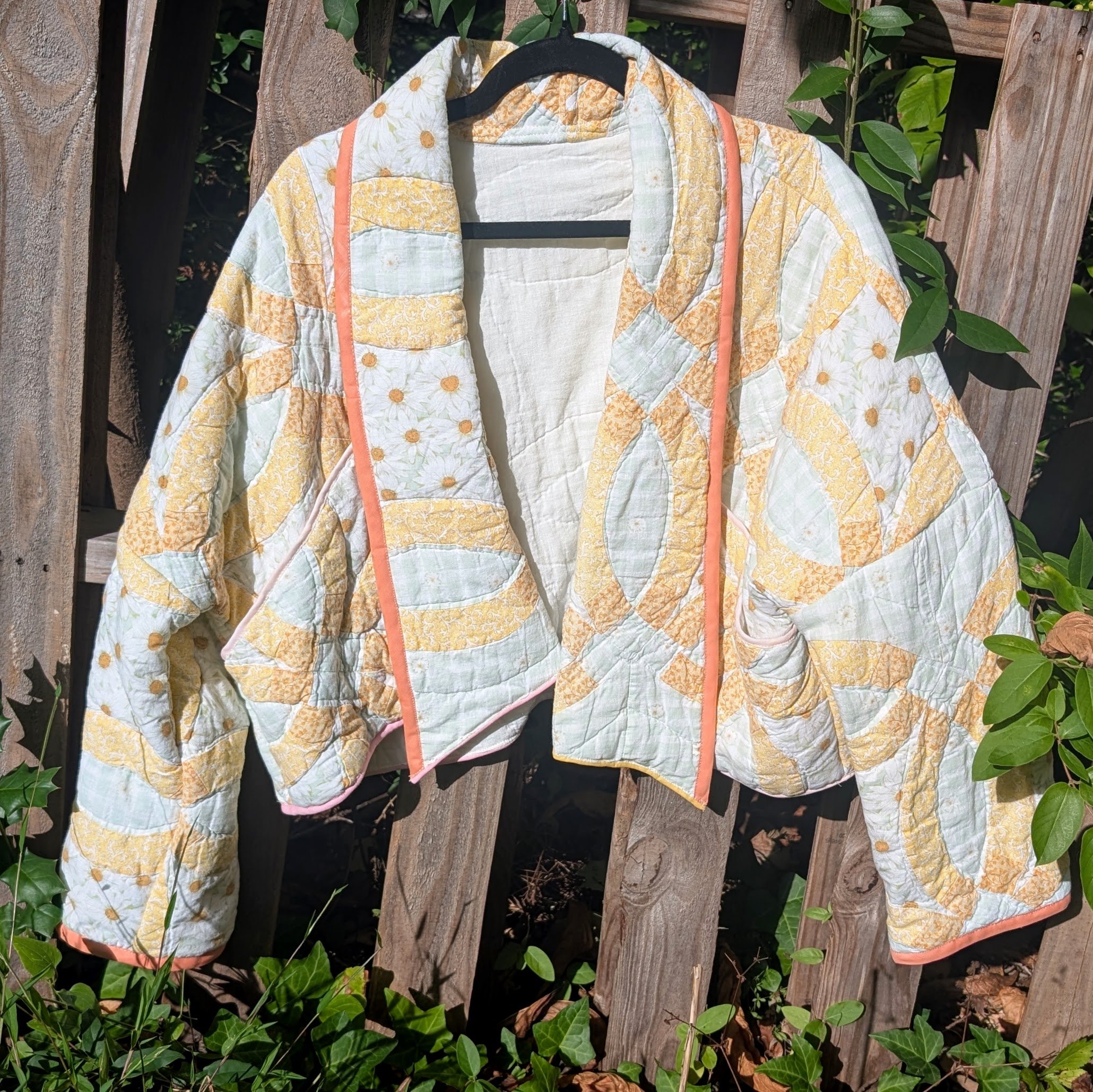
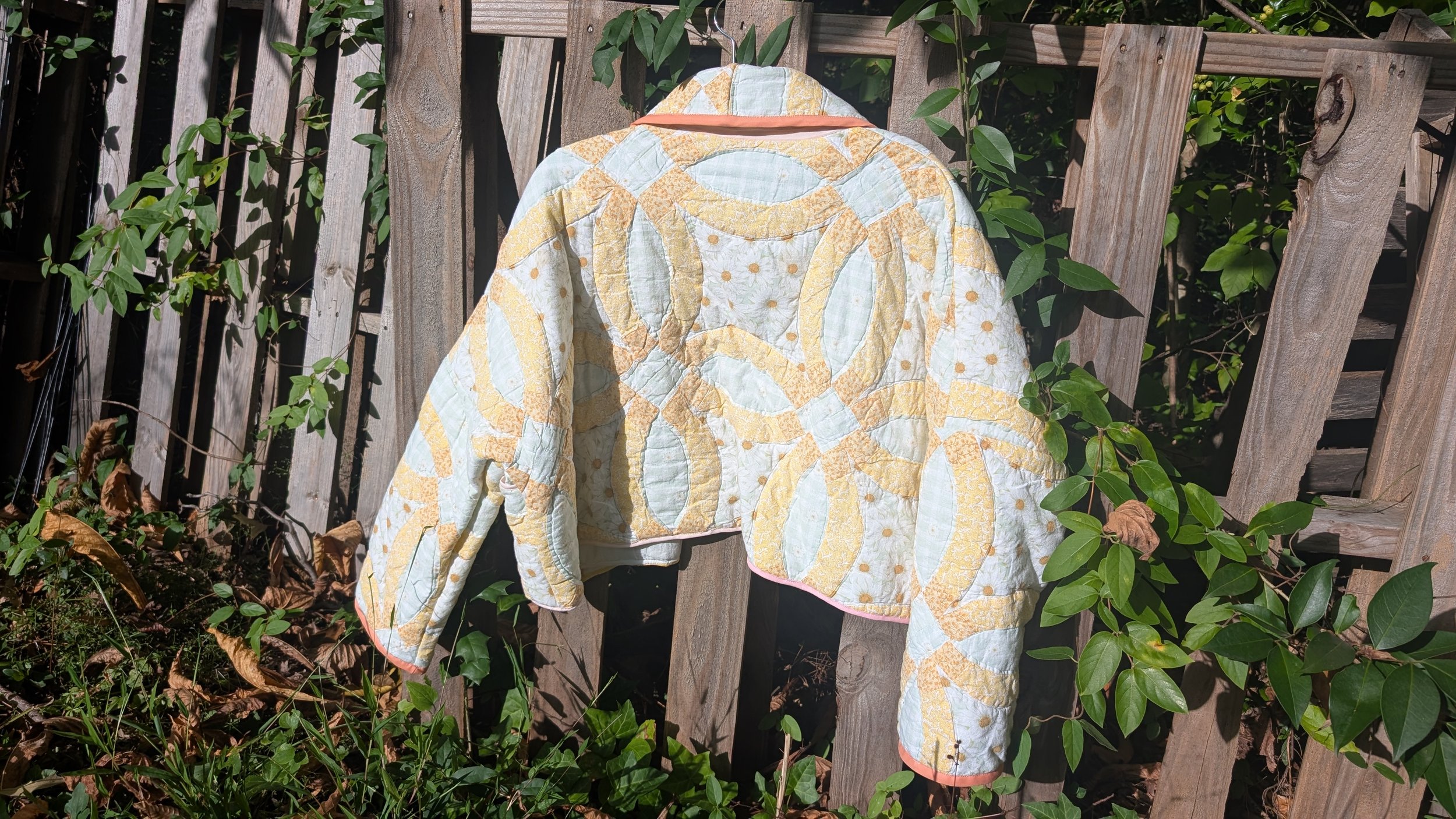
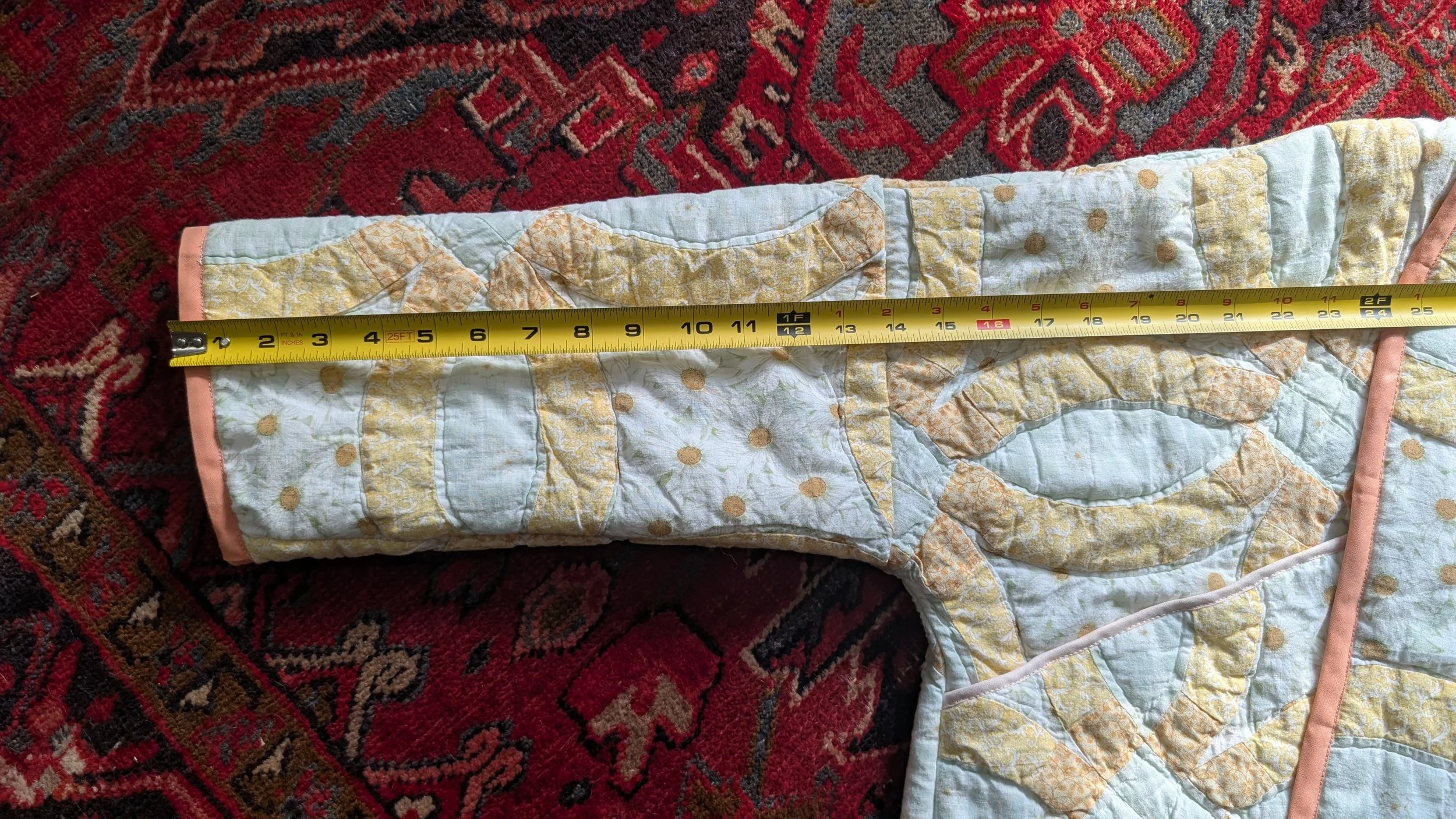
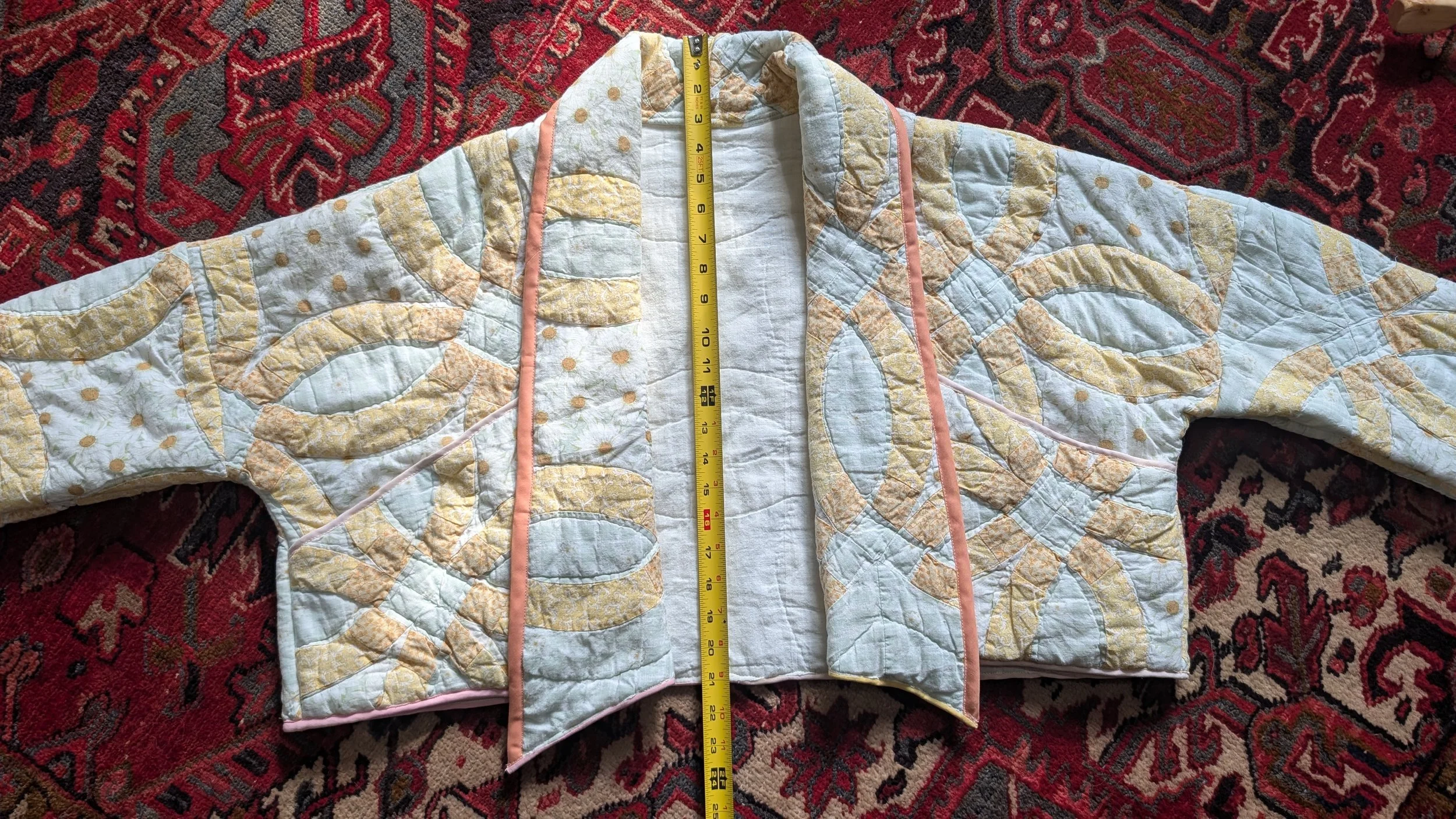
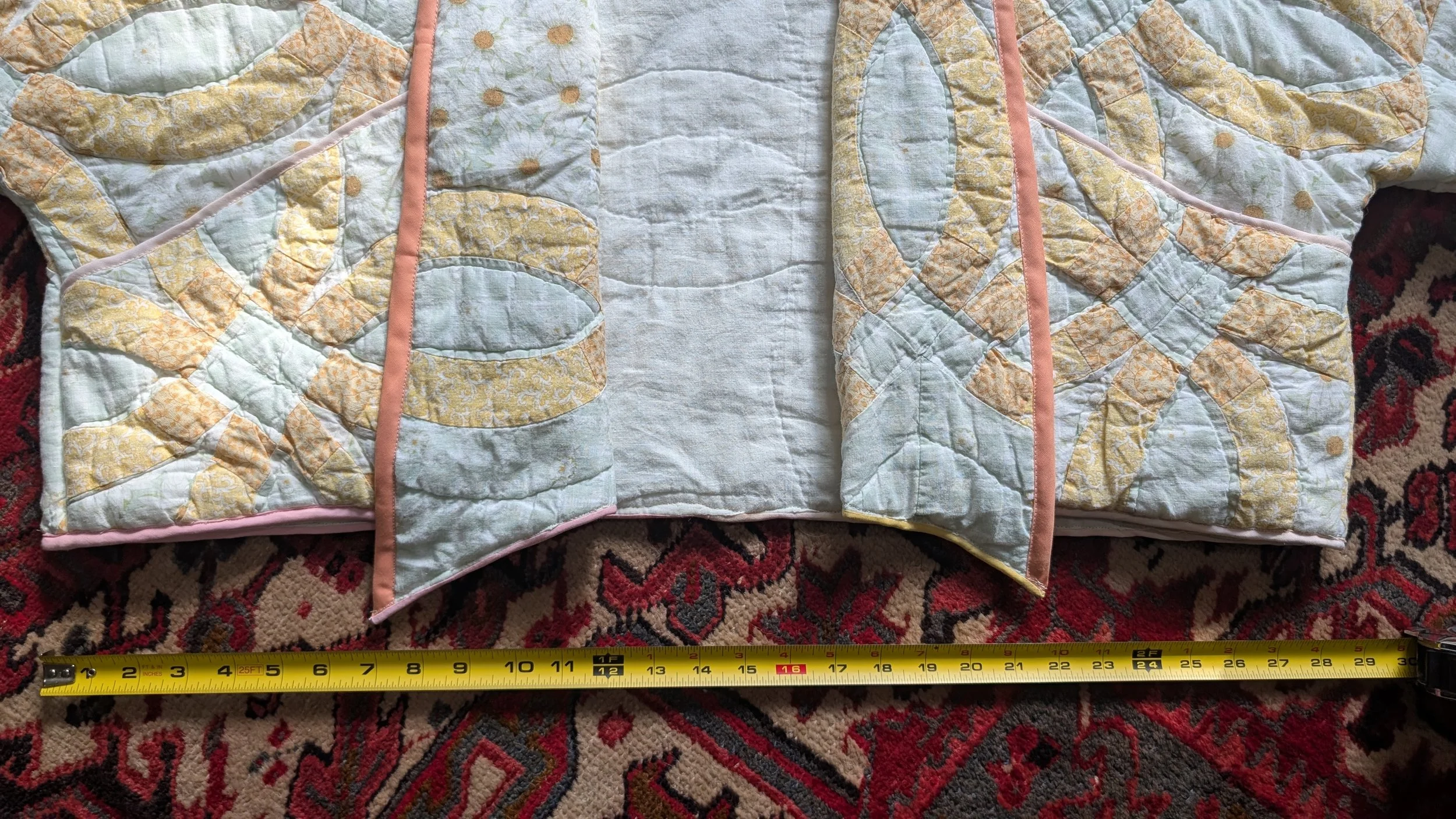
Front view of a yellow and white double wedding ring quilt coat with peach binding

Yellow and white double wedding ring

Ready to ship

Quilt: machine pieced, poly batting · Binding: peach · Warmth: medium to light

Care: wash cold, delicate cycle, tumble dry low

Photos
coming soon

Floral garden double wedding ring

Coming soon

Quilt: white background with yellow and pastel teal florals, multicolor, cotton fabrics and cotton batting · Warmth: lightweight

Care: this quilt is very old. Wash cold, delicate cycle, tumble dry low, by itself so it doesn't snag on zippers or fasteners

Available later this week

Up close

A closer look at the quilt coat

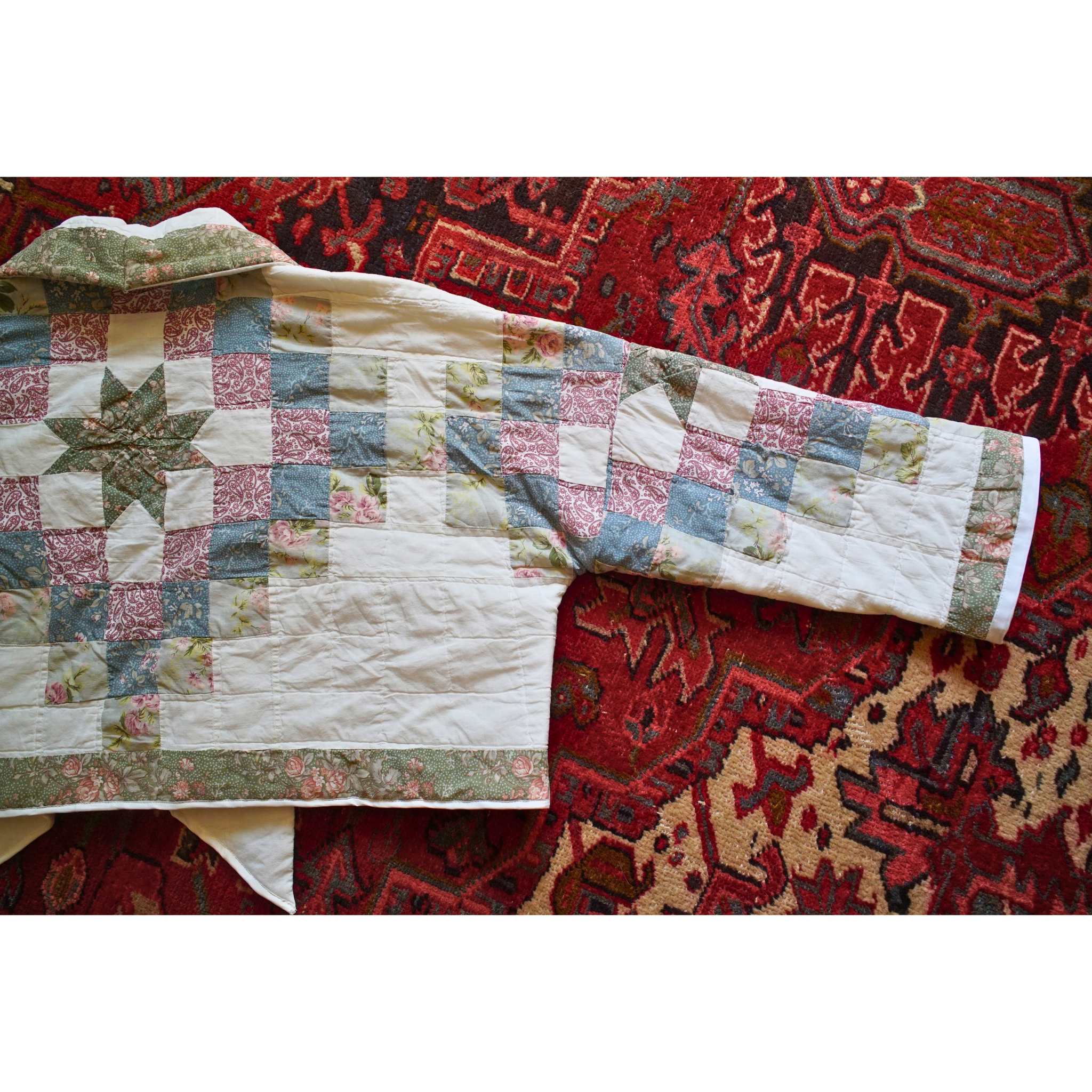
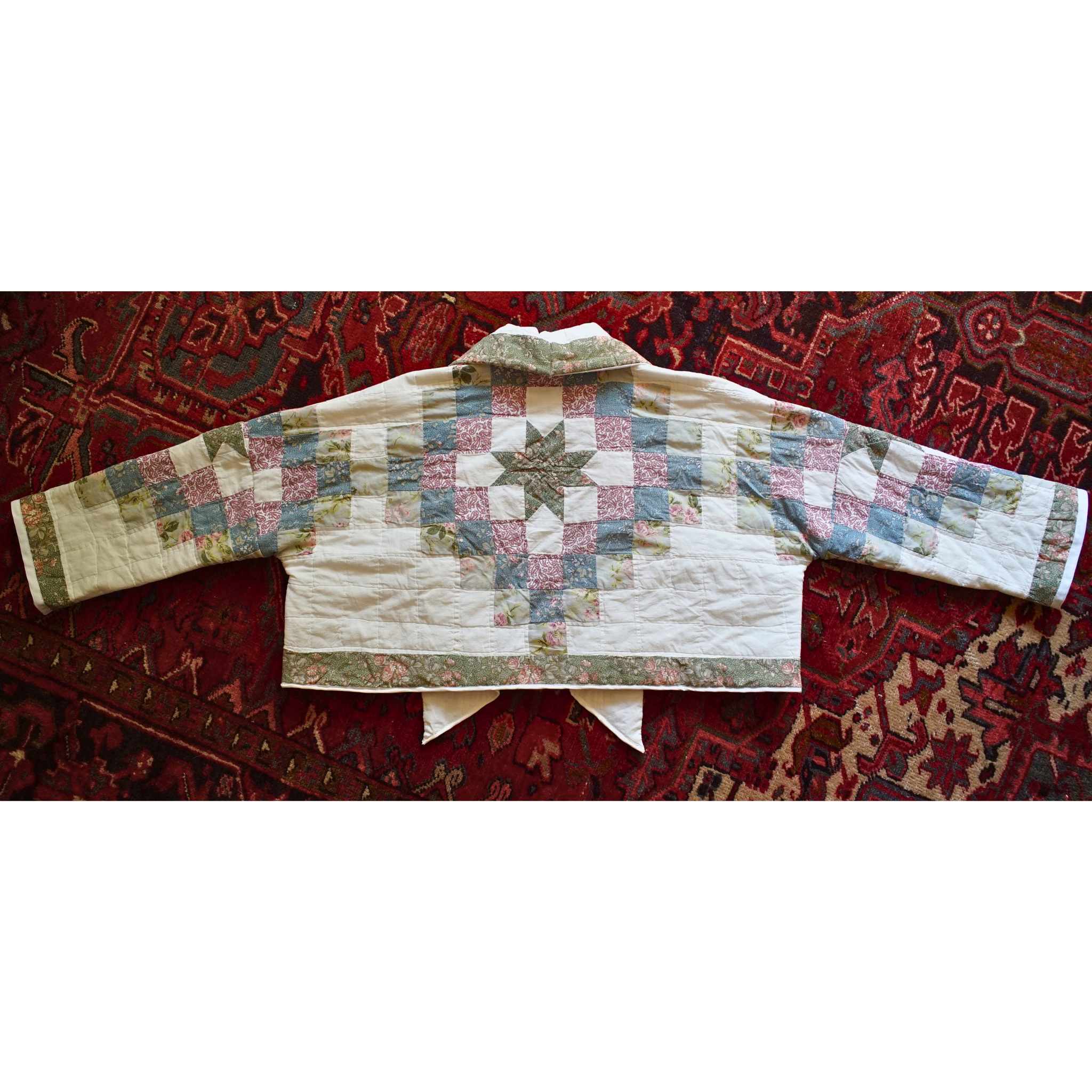
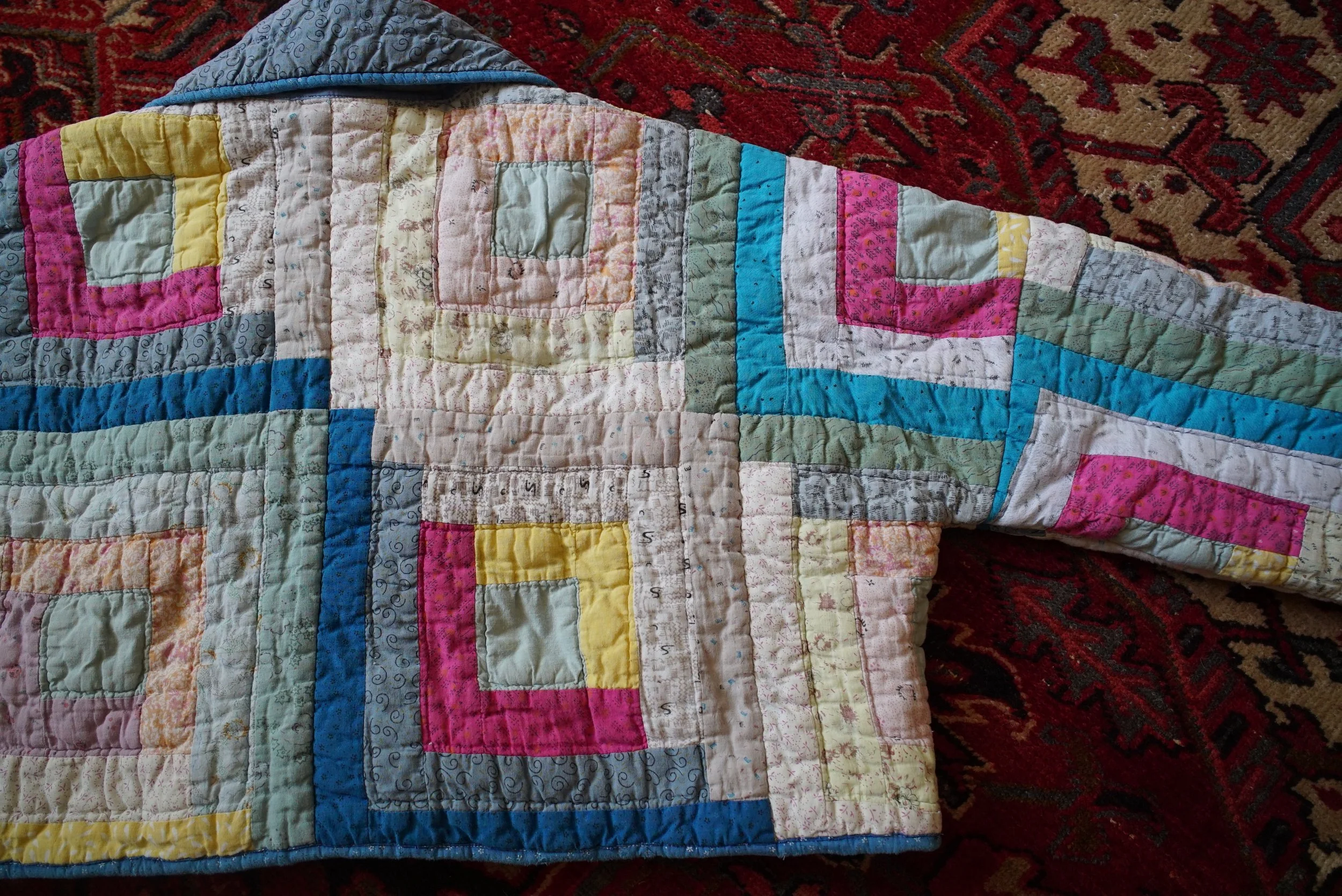
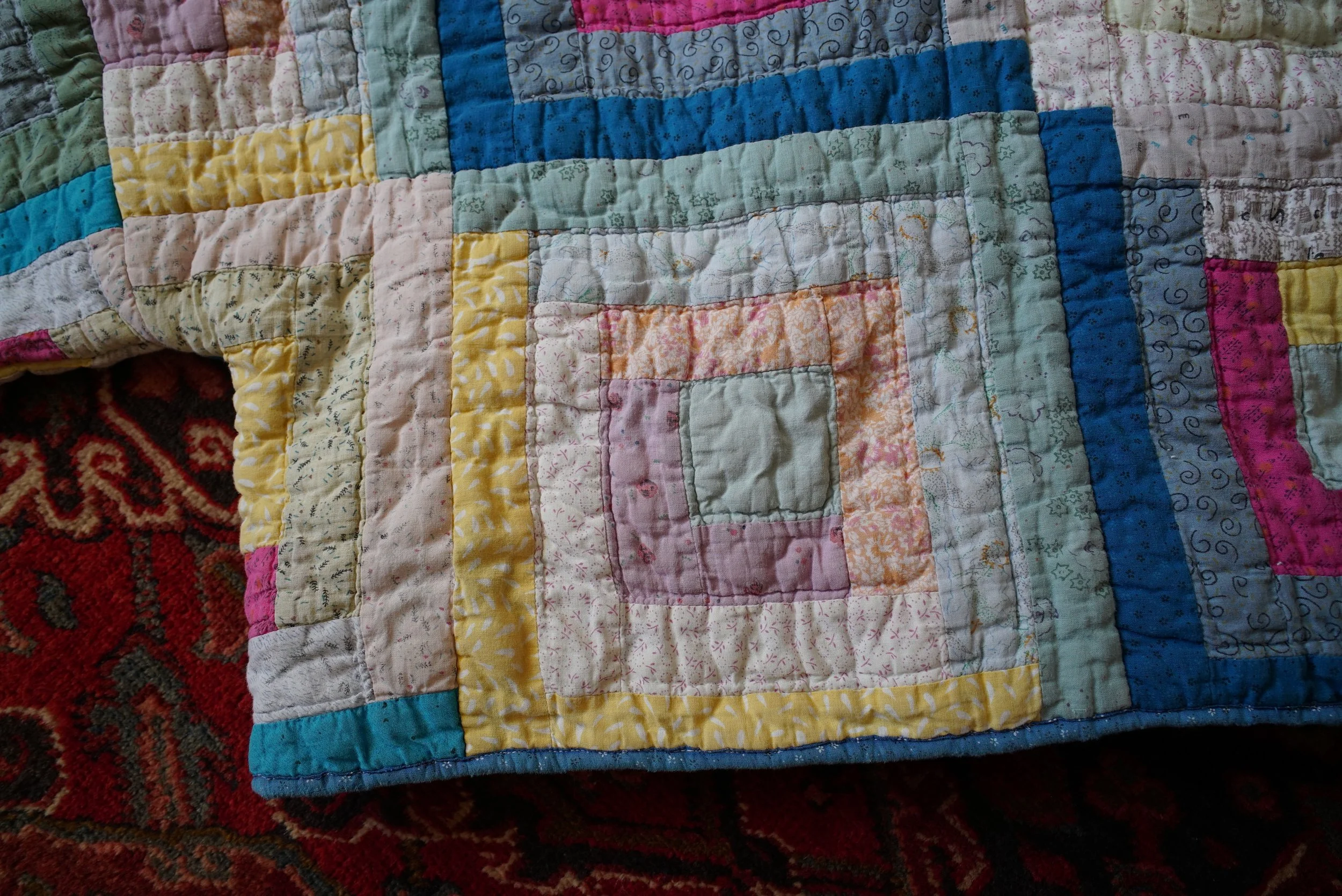
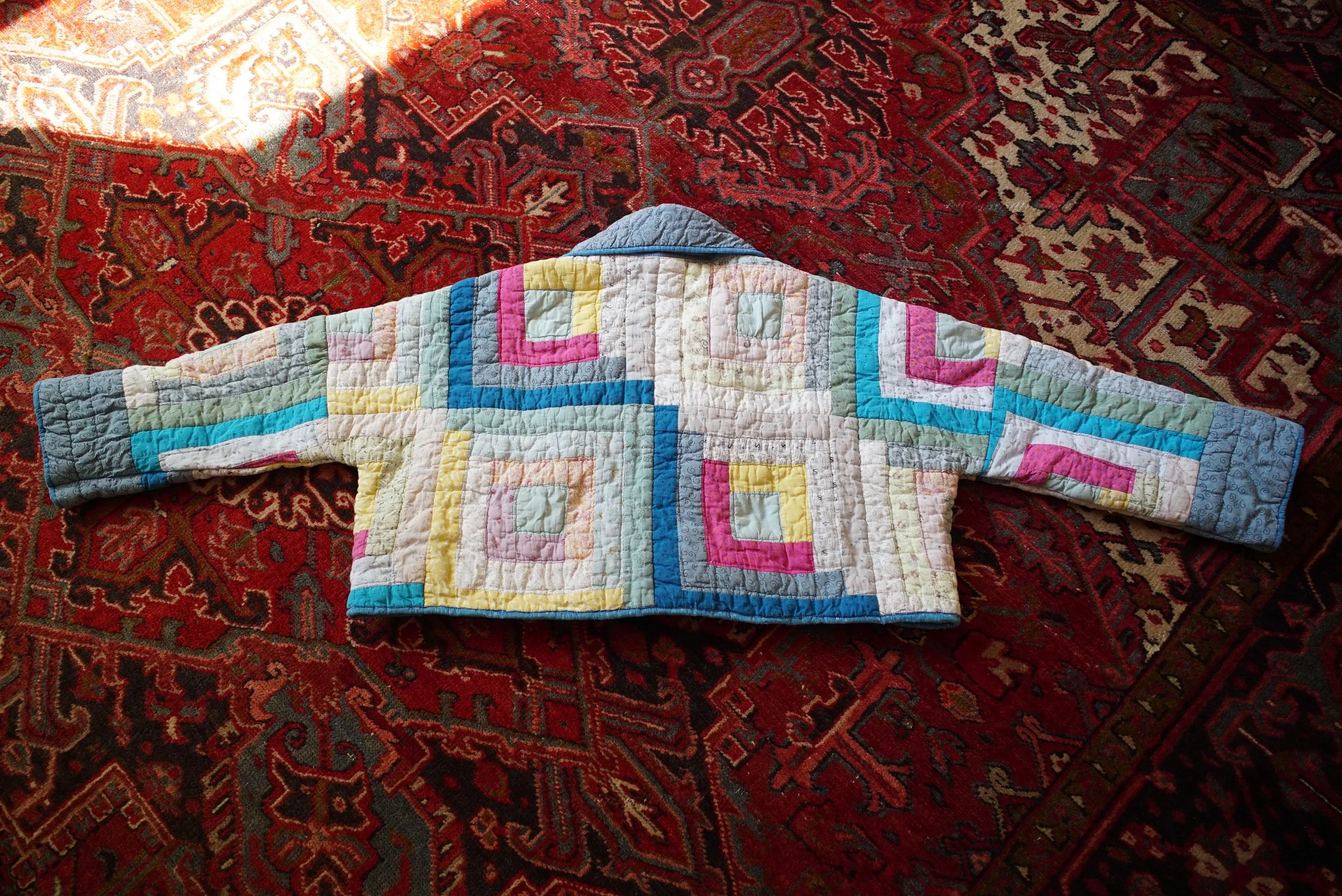
Back panel of a handmade upcycled quilt coat showing the vintage quilt pattern

The back panel

Every coat is sewn from the same pattern: cropped, oversized, open front, with a raglan sleeve that drops the shoulder seam for an easy drape. The back is one uninterrupted piece, so it's where each quilt's pattern shows best. Whatever quilt you choose, this is the view it was cut for.

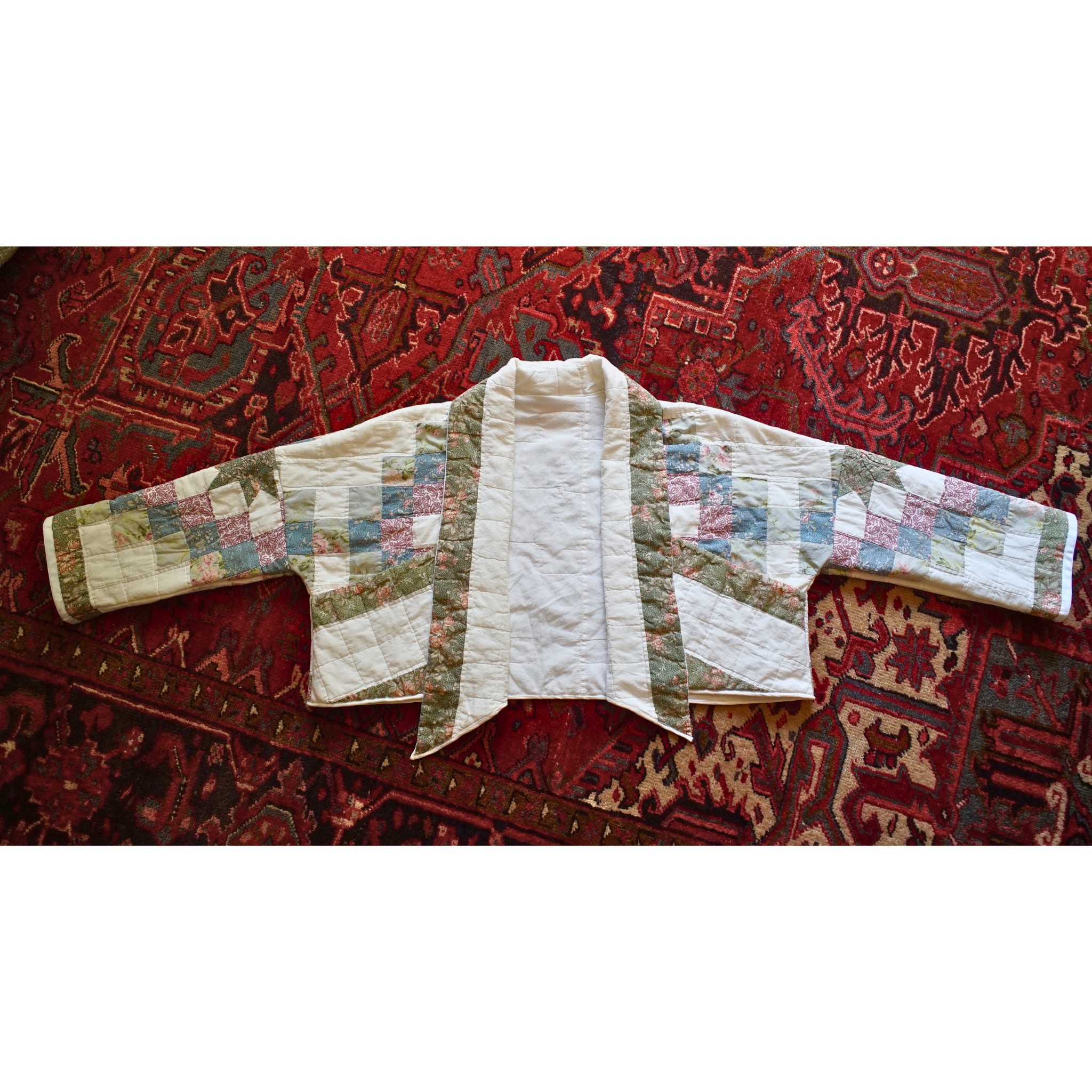
Deep patch pockets on an upcycled patchwork quilt jacket

The pockets

Two deep patch pockets, big enough for a phone and both hands. The top edge is finished one of two ways: with vintage seam binding chosen to work with the quilt's colors, or, when the quilt's original bound edge is in good enough shape, with that edge left intact as the pocket opening, so a piece of the quilt's own finishing carries over to the coat.

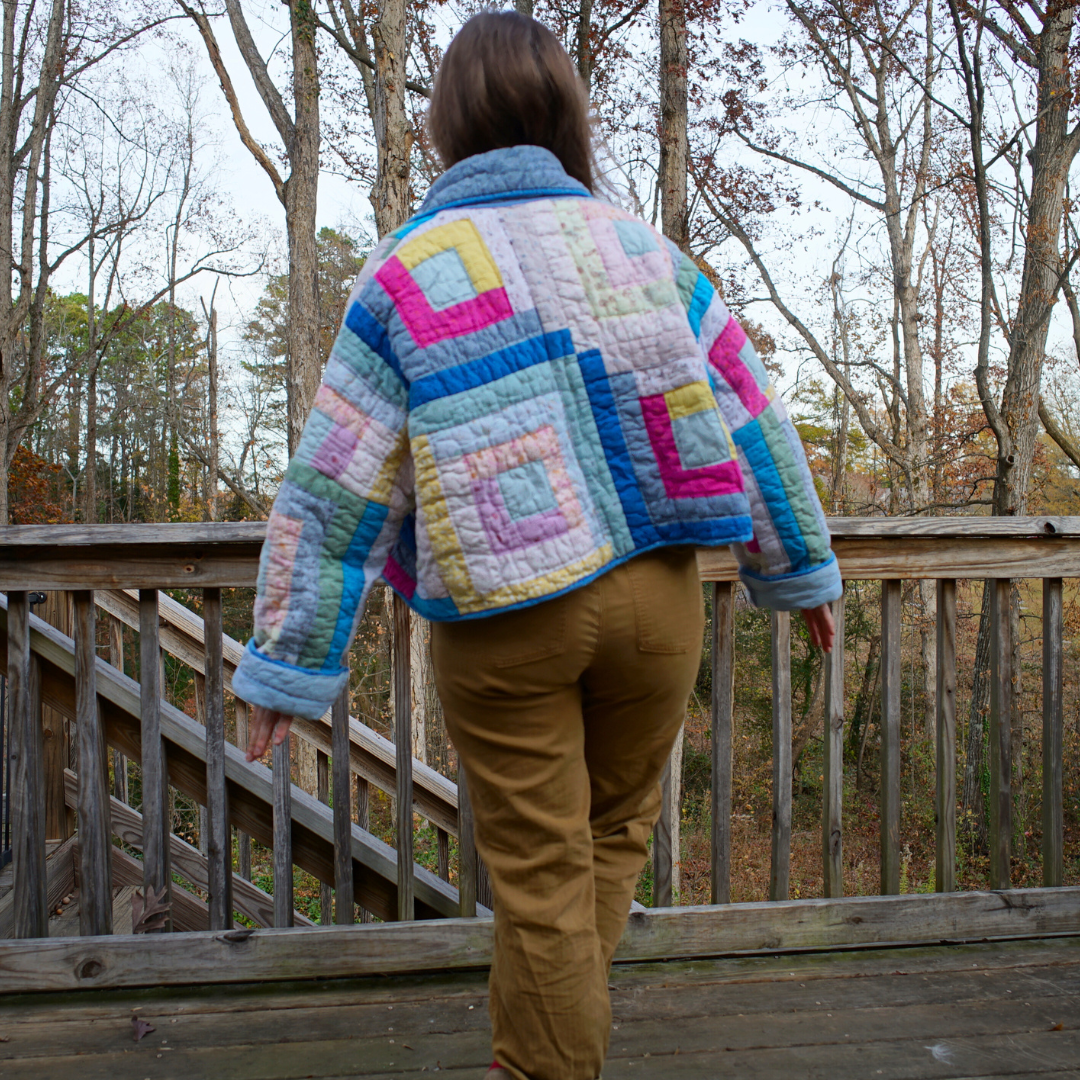
Back view of a quilt coat tie-dyed with Procion fiber-reactive dyes

Dyed coats

Some quilts are tie-dyed with Procion fiber-reactive dyes before cutting, then washed again until the water runs clear. The dye takes differently on every fabric in the quilt, so the original pattern still shows through the color. When a coat has been dyed, the listing photos show the finished result.

At a glance

What you get with this quilt coat

FitCropped and oversized. One size fits most; the oversized look reads best on small or medium.
PocketsTwo deep patch pockets
ShellA vintage patchwork quilt, mostly cotton, rescued from damage
TrimVintage bias tape and seam binding on sleeves, neckline, and visible seams
ThreadCotton
Made inMissoula, Montana, by Ivy Ham

The model is 5'2" and usually wears a size small.

The process

How an old quilt becomes a patchwork quilt jacket

  1. Finding the quilt

    I look in thrift stores, antique shops, estate sales, and from online resellers. Most of what I bring home is a beautiful vintage quilt with a problem: a stain, a tear, a worn-through spot, something that keeps it from working as a blanket anymore.

  2. Washing, deodorizing, and sometimes dyeing

    I'm sensitive to synthetic fragrance, so every quilt goes through several wash cycles before I touch it with scissors. I use Biokleen Free and Clear unscented detergent, borax, white vinegar, baking soda, and an enzyme cleaner as needed. Most scent comes out. Once in a while a faint trace of a previous owner's detergent remains.

    A few quilts get tie-dyed at this stage with Procion fiber-reactive dyes. Dyed quilts are washed again until the water runs clear, since loose dye can bleed onto lighter blocks. When a coat has been dyed, the photos show the finished color.

  3. Layout and cutting

    I spread the quilt on the floor and move the pattern pieces around until the best blocks land where you'll see them and the holes, stains, and thin areas fall in the scrap pile. Then I cut.

  4. Sewing and evening out the batting

    The coat is sewn with cotton thread. Older quilts, especially cotton-batted ones, can feel lumpy where the filling has compacted over the decades. I add a little batting where it helps. Some thin spots can't be fixed without visibly damaging the quilt, so a bit of unevenness is part of the piece.

  5. Binding the edges

    Sleeves, neckline, and any seam visible from the outside get vintage bias tape or seam binding, also sourced secondhand. Their fiber content varies: some are cotton, some rayon, some a nylon and cotton blend, and some arrived without a label, so I can't always say for certain.

  6. Repairs and patching

    When a quilt is damaged enough that some of it has to end up in the coat, I pull matching pieces from the scraps and hand-stitch patches over the weak areas, blending them in so they don't read as patches. Nothing gets thrown out; leftover scraps go into other projects.

Care and questions

Caring for your handmade quilt coat

  • Wash on a gentle cycle, cold water, by itself with no other clothes.
  • Tumble dry on low.
  • Some quilts are older and more delicate than others. Use your judgment, and if a particular coat needs special handling I'll include a note with your order.
  • I don't recommend dry cleaning. The solvents stay in the fabric and sit against your skin the whole time you wear it.

Quilt coat questions

What size is the quilt coat?

It's an oversized fit and one size fits most. In my experience it looks best on a small or medium, since that keeps the roomy, slouchy shape. Exact chest, length, and sleeve measurements are listed above. Message me if you're unsure.

Is this a quilt coat or a quilted jacket?

A quilt coat. It's sewn from a real vintage patchwork quilt, not from new quilted yardage. That's why no two are alike and why the care is gentler than a store-bought quilted jacket.

Allergens, pets, synthetic scents & smoking

My home has pets in it, though they don't typically spend much time in my workspace. My home is also non-smoking. I don't use plug-ins, scent sprays or any other synthetic fragrances.

What detergent do you use?

Biokleen Free and Clear unscented, plus borax, white vinegar, and Arm and Hammer baking soda. I do my best to strip every scent, but a faint trace of a former owner's heavy detergent can linger on some quilts.

Will the coat have any damage on it?

I cut around holes, stains, and thin areas wherever possible. When a quilt is too far gone for that, I hand-patch the weak spots with matching pieces from the same quilt. Any repairs or faint marks are shown in the photos.

Is the coat warm?

That depends on the quilt's batting. Most are a medium weight, comfortable as a fall and spring layer and cozy indoors in winter. The listing notes the batting for each coat.

Can you turn my own quilt into a coat?

Not right now, but I'd like to offer this eventually, for family quilts and anything with sentimental value. If you're interested, contact me. Hearing from people helps me decide how soon to set it up.