Tallow Soap Recipe: Cold Process Beef Tallow Bar Soap
This is the cold process tallow soap recipe I make and sell in my own shop, written out in full with exact weights, temperatures, and timing. It uses two oils, beef tallow and castor, and it produces 10 to 12 hard, creamy bars that last for months in the shower. If you have never made soap before, you can make this batch, because every ingredient is explained and the method takes one unhurried afternoon plus a six week cure.
Key Takeaways
- The recipe: 900 g beef tallow, 100 g castor oil, 330 g distilled water, 132 g sodium hydroxide, 10 g sugar, at a 5.25% superfat.
- Combine the lye solution at 120 to 125°F with oils at 115 to 120°F, pour at light trace, and cut within 6 to 12 hours.
- All real soap is made with lye. A correctly measured batch contains no lye by the time you cut it.
- Cure the bars 6 to 8 weeks. A scale tells you when the cure is done, not a calendar.
This article is an educational overview of my tested recipe. Sodium hydroxide is caustic, so read the safety setup below and the full safety section in the handbook before your first batch.
Set Up for Safety
Make soap in a well-ventilated space: an open window with a fan running, a range hood on high, or an outdoor table. Because you are working with lye, wear protective gear from the first weigh-in through cleanup. Splash goggles sealed around the eyes, nitrile gloves, an N95 mask, long sleeves or protective clothing, and closed shoes cover it. Always add lye to water, never water to lye.
What Is Tallow Soap?
Evidence: strong. Fatty acid profiles of tallow and their effects on soap are established oleochemistry.
Tallow soap is bar soap made by reacting rendered beef fat with sodium hydroxide, a process called saponification. The fat and the lye consume each other completely, leaving soap and glycerin. Tallow was the standard soapmaking fat for most of the craft's history because its fatty acids produce a hard, long-lasting bar with a dense, creamy lather that stays mild on skin.
The glycerin created during saponification stays in a handmade bar and draws moisture toward your skin. Most commercial bars have the glycerin removed and sold off separately, which is a large part of why a handmade tallow bar feels different from anything at the drugstore.
Why Tallow Makes a Better Bar
Evidence: strong. The properties below follow directly from tallow's measured fatty acid composition.
Every oil in soapmaking is chosen for the fatty acids it carries, and tallow's mix is unusually well balanced for a body bar. Roughly 27% palmitic and 14% stearic acid give the bar its hardness and its stable, low-bubble lather. Another 49% is oleic acid, which conditions the skin and keeps the bar from feeling harsh. Palm oil replaced tallow commercially because its profile is nearly identical, but palm carries sourcing problems that beef fat from an animal already raised for food does not.
Tallow on its own lathers thin, so this recipe adds castor oil at 10% of the total. Castor is about 90% ricinoleic acid, which no other common oil supplies in quantity, and it makes the lather denser, wetter, and longer lasting.
Ingredients and Why Each One Is There
Beef tallow, 900 g
Rendered and washed. If you render your own, wash it by simmering in salted water, chilling until the fat cake sets, and straining through cheesecloth. Washing removes the residual beefy scent and makes the saponification value predictable. Store-bought rendered tallow can skip this step. I source mine from Oxbow Cattle Company here in Montana, and any grass-fed butcher or farm can supply suet or rendered tallow.
Castor oil, 100 g
Buy cold pressed castor oil, in glass if you can find it. Castor is unusually good at dissolving things and will pull plasticizers out of a plastic bottle over long storage. The usual advice caps castor at 5% of a recipe, but that assumes coconut oil is present to carry the bubbles. Nothing else here does that work, so castor runs at 10%.
Sodium hydroxide, 132 g
Buy food grade lye labeled 100% sodium hydroxide with nothing else in it. The canning aisle, hardware stores, and farm supply stores often carry it. Never use drain opener, which frequently contains aluminum shavings. Keep the container airtight, because lye pulls water out of the air and an old clumped jar is weaker than its label says.
Distilled or reverse osmosis water, 330 g
Tap water carries minerals that form soap scum inside the bar from day one, plus trace iron and copper that cause the orange rancidity spots that show up months later. A gallon of distilled water costs about a dollar and protects six weeks of work.
Granulated sugar, 10 g
Sugar increases how readily the finished soap dissolves in water, and lather is soap in solution. In a low-bubble tallow bar this is a meaningful improvement for almost no cost. Dissolve it in the water fully before the lye goes in.
The Tallow Soap Recipe
1,000 g total oils · 5.25% superfat · 1,511 g of batter · 10 to 12 bars
- 900 g beef tallow, rendered and washed (90%)
- 100 g castor oil, cold pressed (10%)
- 330 g distilled or reverse osmosis water
- 10 g granulated sugar, dissolved in the water first
- 132 g sodium hydroxide, food grade
- 8 to 10 g clay or powdered colorant, optional
- 30 g essential oils (3%), added at emulsion, optional
Hold these three numbers: lye solution at 120 to 125°F when you combine, oils at 115 to 120°F, and a cutting window of 6 to 12 hours after pouring.
This recipe is tested and works as written. The moment you change anything, such as a different fat or a scaled batch, run it through a lye calculator like SoapCalc before you mix. Tallow saponification values vary between sources, and checking takes two minutes.
How to Make Tallow Soap, Step by Step
A 90% tallow batter moves through trace faster than most recipes, so line your mold and weigh every ingredient before anything combines. Once the lye meets the oils, the clock is running.
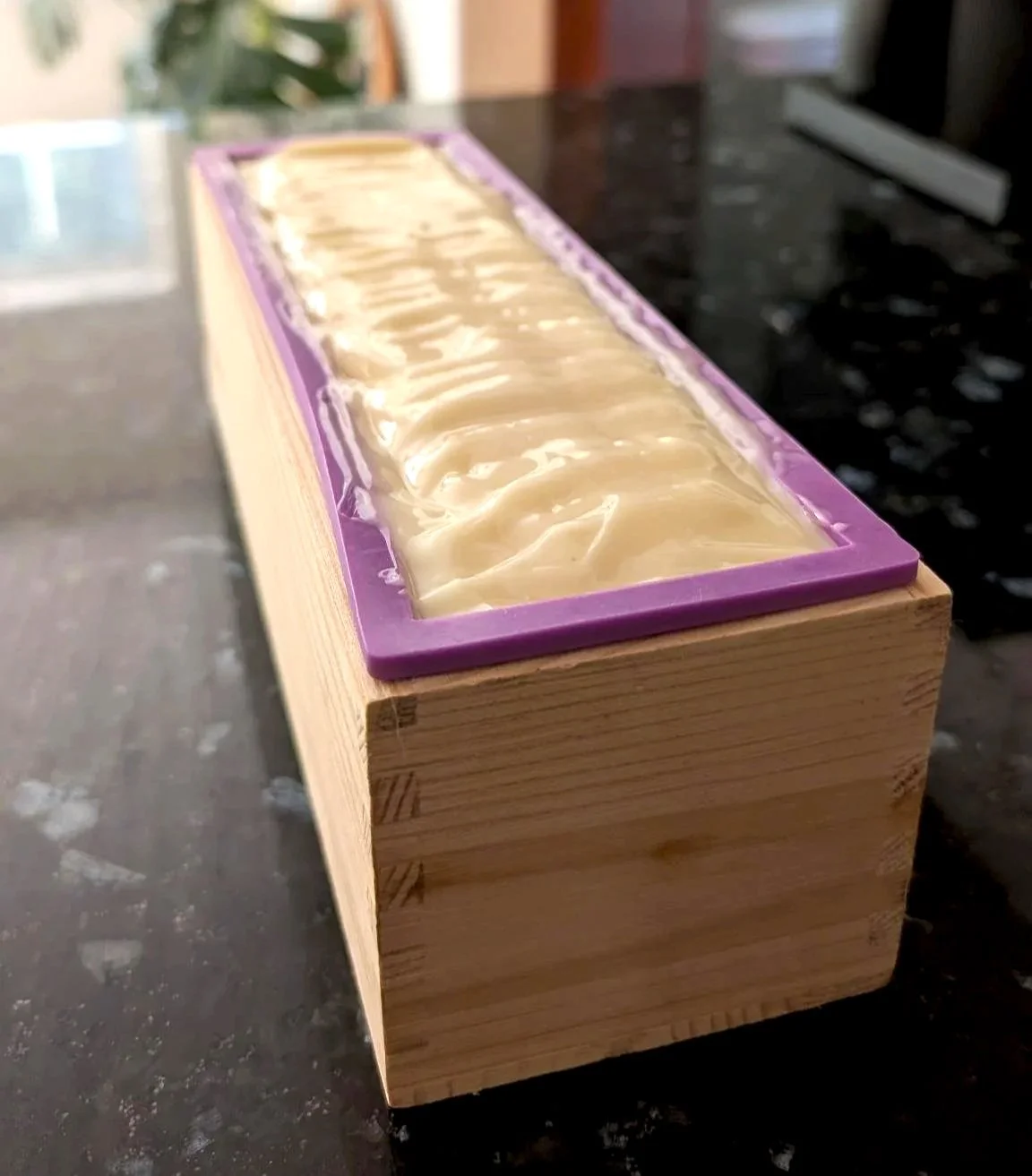
- Line the mold and set it where it will stay. A 3 lb silicone loaf, an 8x8 slab, or two six-cavity molds all fit this batch. Wood molds need freezer paper, shiny side in.
- Weigh everything into its own container, including the water.
- Gear up. Goggles, gloves, long sleeves, closed shoes, ventilation. Children and pets out of the room.
- Dissolve the sugar in the 330 g of water until it runs completely clear. Undissolved crystals scorch when the lye hits them.
- Mix the lye solution. Water goes in the vessel first, every time. Confirm it is there, then add the 132 g of sodium hydroxide in three or four portions with your face turned away. The solution will hiss and climb toward 200°F within seconds, so keep stirring gently until it turns from cloudy to clear.
- Stir in the clay while the solution is hot, then set the pitcher somewhere safe to cool.
- Melt the tallow with the castor oil and bring both liquids to temperature: lye at 120 to 125°F, oils at 115 to 120°F.
- Combine and blend in short bursts with a stick blender, hand-stirring between bursts, until the batter reaches a stable emulsion with no streaks. Add essential oils here.
- Pour at light trace, when a drizzle sits on the surface for about a second. Spritz the top with 91% isopropyl alcohol to prevent soda ash.
- Cut within 6 to 12 hours. Earlier and the loaf will not hold an edge, later and it passes through a brittle stage. Keep gloves on, since fresh soap still holds unreacted lye.
Curing: Why the Wait Matters
Saponification finishes within a day or two, but a fresh bar is roughly a third water by weight. Over 6 to 8 weeks that water leaves through the surface, and the harder bar that remains lathers better and lasts far longer in the shower. The crystal structure also keeps organizing for weeks, and no fan or dehydrator hurries that part.
Judge the cure with a scale rather than a calendar: weigh one bar from the batch weekly and write the number down, and when the weight holds steady across two weighings the cure is finished. In a damp house that can take longer than eight weeks. Cut one bar as your tester and confirm it passes a zap test before anyone uses the batch.
Is Tallow Soap Harder to Master?
Tallow soap has a reputation for being trickier than other soaps. I cannot compare from my own bench, because tallow bars are the only soap I make, but in my batches success comes down to two things: measuring every ingredient by weight to the gram, and combining the lye and oils inside the temperature ranges above. Get those two right, blend to a stable light trace, start with tallow that was properly rendered and washed, and this recipe is hard to mess up. When a batch does come out looking wrong, those are the first places I check.
Specific failures have specific signatures, white specks, a cracked top, a powdery surface film, a bar that zaps, and the handbook's troubleshooting chapter walks through the cause and the fix for each one.
The Cold Process Tallow Soap Handbook
The recipe above is yours free. The handbook is what rescues it the first time a batch misbehaves, and one saved batch pays for it several times over. It is a printable PDF built to sit at the bench, and here is what $5 puts in it:
- The full troubleshooting chapter: cause and fix for eleven failures, from white specks to a bar that zaps
- Safe gram amounts for over 20 essential oils
- Clay and botanical colorant guides
- A sulfur and clove variation recipe you will not find on the site
- Scaling math for any mold, plus a tested 700 g practice batch
- An illustrated chemistry chapter, batch log, and 83-term glossary
Tallow Soap Questions
Can you make tallow soap without lye?
No. All soap made from scratch requires lye, because saponification is the reaction between fat and sodium hydroxide. Products labeled lye-free were either made from a pre-saponified base that someone else made with lye, or they are synthetic detergents. In a correctly measured batch, every molecule of lye is consumed before the soap is cut, so the finished bar contains none.
How do you render tallow for soap making?
Chop or grind beef suet, melt it low and slow with a little water, strain out the solids, and chill. For soap, wash the rendered fat by simmering it in salted water, chilling until the fat cake sets, and straining through cheesecloth. Washing removes the beefy scent and makes the lye calculation predictable.
Where can I buy tallow?
Local butchers and grass-fed beef farms are the best sources for suet or rendered tallow, and many will set it aside if you ask. I use tallow from Oxbow Cattle Company in Montana for the soap and skincare in my shop. Grocery stores rarely carry it, but farm stands and ranch direct-order programs often do.
How long does tallow soap take to cure, and can I speed it up?
Plan on 6 to 8 weeks, and give the curing rack airflow on all sides to help the water loss along. The crystal structure that gives a cured bar its feel develops on its own schedule and cannot be rushed with a fan or dehydrator. Weigh one bar weekly, and when the weight holds steady across two weighings the cure is done.
What is the difference between cold process and hot process soap?
Cold process, used here, lets saponification happen at low temperature over 24 to 48 hours in the mold, which produces a smooth, dense bar. Hot process cooks the batter until saponification completes before molding, trading surface finish for a bar you can technically use sooner, though both benefit from a full cure.
Is tallow soap good for your skin?
Tallow's fatty acid profile is close to the composition of human sebum, and the bar's 49% oleic acid content plus retained glycerin make it one of the milder traditional soaps. The 5.25% superfat in this recipe leaves a small amount of free oil in the finished bar as an extra cushion. Anyone can react to a specific bar, usually because of an essential oil, so patch test a new bar on the inner forearm before using it all over.
- Ham, I. Tallow & Castor Cold Process Soap: Workbench Handbook. IvyHerbal, 2026.
- SoapCalc saponification calculator, soapcalc.net/calculator.
- Majestic Mountain Sage lye calculator, the-sage.com/lyecalc.