
Peppermint
Mentha × piperita · Lamiaceae (mint family)
Also called brandy mint. Related to Bo He in Chinese medicine and pudina in Ayurveda.
Educational content, not medical advice. I am a certified clinical herbalist, not a physician. Nothing on this page diagnoses, treats, or cures any condition, and none of it replaces care from your own healthcare provider. Do not stop or change a prescribed medication based on anything you read here. If you are pregnant, nursing, or taking medication, talk with your doctor or a clinical herbalist before adding herbs to your routine.
Key takeaways
- Peppermint is a hybrid, not a wild species. It combines the oil-rich chemistry of water mint with the milder flavor of spearmint.
- Every Western tradition on record uses it for the same thing: gas, cramping, and an upset stomach.13
- The strongest research is on enteric-coated oil capsules for irritable bowel syndrome. Tea has not been tested the same way.10
- Most of the medicine lives in the volatile oil, which evaporates from an open cup and dissolves better in alcohol than in water.1
- The leaf tea is well tolerated. The concentrated oil carries cautions for reflux, gallstones, young children, and some medications.46
What peppermint is
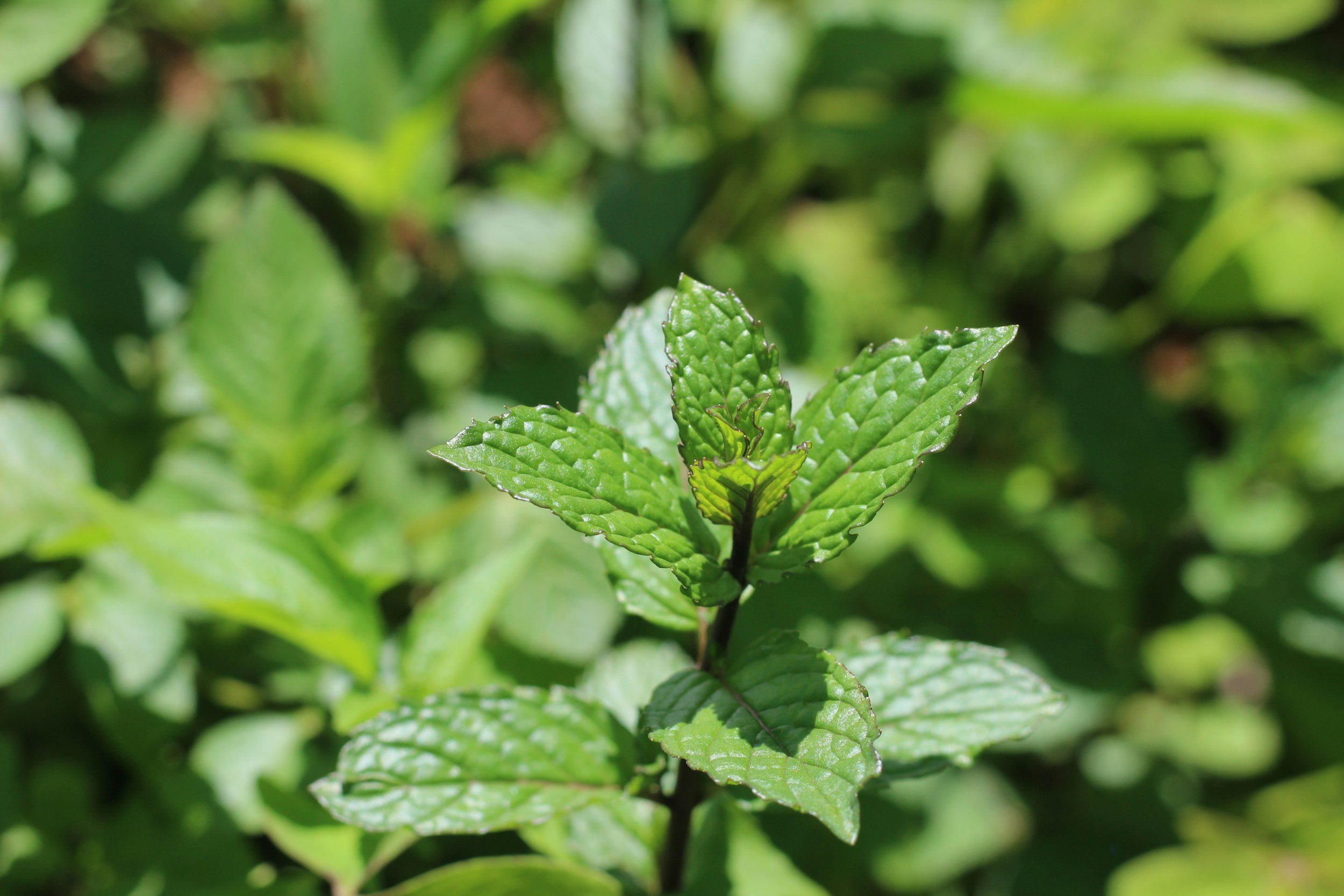
Peppermint is a perennial in the mint family with square stems, dark toothed leaves, and small purple flowers. It is a cross between water mint (Mentha aquatica) and spearmint (Mentha spicata), which is why botanists write the name with a multiplication sign. Hybrids rarely set viable seed, so peppermint spreads by runners and is propagated from cuttings.
Two cultivated varieties matter in commerce. Black mint has purple-tinged stems and gives more oil. White mint has green stems, a more delicate scent, and was the form dried for herbalists.3 Mints have been used since antiquity, and a mint appears in a 13th century Icelandic pharmacopoeia, but the plant we call peppermint was only recognized as separate from other mints in England around 1700.15 Commercial oil distillation in the United States began in New York in 1816 and moved to Michigan by 1835.1
Energetics
Peppermint is pungent and aromatic. The first sensation is cold, from menthol acting on the same nerve receptors that register cool temperatures. A warming, stimulating effect follows. King's American Dispensatory described the taste in 1898 as warm and burning, followed by a feeling of coolness on inhaling.1 Both readings are correct, and the order matters for matching the herb to a person.
- Western herbalism: a diffusive stimulant that moves outward, drying to excess moisture, relaxing to cramped muscle.1
- Ayurveda: cooling, reduces pitta (heat) and kapha (heaviness), and can increase vata (dryness, restlessness) in large amounts.16
- Chinese medicine: the related field mint, Bo He (Mentha haplocalyx), is acrid and cool, used to disperse heat from the head, throat, and skin and to move stuck liver qi.
It suits people who run warm and hold tension in the gut. It is a poor match for someone who is chronically cold, dry, and depleted, and Ellingwood advised against it when the belly is painful to pressure and the tongue is dry and red-tipped.2
Traditional use
The record is unusually consistent. Across 300 years of English and American practice, peppermint shows up for the same short list of complaints.
Eclectic physicians, 1800s and early 1900s
King's American Dispensatory called peppermint a powerful diffusive stimulant, antispasmodic, carminative, stomachic, and weak anodyne. In plain terms: it stimulates and spreads warmth, relaxes cramping muscle, relieves gas, supports the stomach, and dulls minor pain. The Eclectics used it for:1
- Stomach pain, gas, and colic
- Nausea and vomiting
- Cramping caused by strong laxatives
- Covering the taste of other medicines
- Fresh bruised leaves laid over the belly for an upset stomach, or on the forehead for headache
Ellingwood added its use as a warm infusion to raise a sweat in feverish colds, and applied the oil as a local anesthetic for itching.2
British herbalism
Maud Grieve's A Modern Herbal (1931) recommends peppermint for spasms of wind, colic, and diarrhea, and pairs it with elder flower for the early stage of a cold. She insists the infusion be made and kept in a covered vessel so the steam, and the oil with it, cannot escape.3
Modern practice
Germany's Commission E approved peppermint leaf for spastic complaints of the digestive tract, gallbladder, and bile ducts.4 David Hoffmann lists it as a carminative, antispasmodic, aromatic, diaphoretic, antiemetic, and nervine, and reaches for it in nausea, colic, and tension headache.7 Contemporary herbalists also use the cooled infusion or diluted oil on the skin for itching and heat. If digestion is your interest, the gut health articles on this site cover how peppermint fits alongside other carminatives.
Constituents and what they do
Peppermint's chemistry splits into two groups that dissolve in different things. That split decides how you should prepare it, which the preparations section builds on.
| Constituent | Dissolves in | What it has been studied for |
|---|---|---|
| Volatile oil, 1 to 3 percent of the leaf. Mostly menthol (30 to 55 percent of the oil) and menthone, with menthyl acetate, 1,8-cineole, and menthofuran. | Alcohol and fat. Poorly in water. Evaporates with steam. | Menthol triggers cold-sensing nerve receptors and relaxes smooth muscle by blocking calcium entry into the cells, the basis for the gut, headache, and drug interaction research below.912 |
| Rosmarinic acid and related phenolic acids (caffeic, chlorogenic) | Water and alcohol | Antioxidant and anti-inflammatory activity in laboratory work. No human trials on peppermint specifically. |
| Flavonoids: eriocitrin, luteolin, apigenin, hesperidin | Water and alcohol | Antioxidant activity in the lab. Eriocitrin is the marker compound for leaf quality in some pharmacopoeias. |
| Tannins | Water | Mild astringency. King's noted the infusion turns dark green with iron salts, which is how they identified tannin in 1898.1 Tannins can reduce iron absorption if tea is taken with meals. |
What the research shows
Almost every good trial used the concentrated oil in capsules, not the leaf. Keep that in mind when a headline says "peppermint tea" and the study says "0.2 ml enteric-coated oil three times daily."
Enteric-coated peppermint oil and irritable bowel syndrome
Three pooled analyses of randomized trials found peppermint oil better than placebo for overall IBS symptoms and abdominal pain. Khanna and colleagues pooled 9 trials with 726 patients.8 Alammar and colleagues pooled 12 trials with 835 patients.9 The 2022 update by Ingrosso and colleagues pooled 10 trials with 1,030 patients and calculated that about 4 people need to take the oil for one to improve on overall symptoms, and about 7 for one to improve on pain.10
- Preparation used
- Enteric-coated capsules of the distilled oil, usually 0.2 ml, two to three times daily. The coating carries the oil past the stomach into the intestine. Not tea, not leaf.
- Design
- Randomized, placebo-controlled trials, mostly 2 to 12 weeks long, pooled by meta-analysis.
- Weak points
- Trials were small and short, and results varied enough between them that the 2022 authors rated the overall certainty of evidence as very low. Several trials were funded by the companies making the capsules. The largest recent trial, 190 patients over 8 weeks, did not meet its main goal of reducing abdominal pain, though secondary measures improved.11 Heartburn was the most common side effect. Peppermint's strong taste makes blinding imperfect, since some participants can guess which capsule they got.
Topical peppermint oil and tension-type headache
Göbel and colleagues applied a 10 percent solution of peppermint oil in alcohol to the forehead and temples of 41 adults during tension headaches. Pain relief began within 15 minutes and matched the effect of 1,000 mg of acetaminophen.13
- Preparation used
- 10 percent peppermint oil in 90 percent ethanol, applied to skin. Not taken internally.
- Design
- Randomized, double-blind, placebo-controlled crossover, meaning each participant tried every treatment in turn.
- Weak points
- Single small trial at one German clinic in 1996, and it has not been independently repeated at scale. The placebo contained a trace of peppermint oil to mask the smell, so it was not fully inert. The test product was supplied by its manufacturer, Lichtwer Pharma, which is a conflict of interest.
Peppermint oil and drug metabolism
Dresser and colleagues gave 12 healthy volunteers a blood pressure drug, felodipine, with either water, grapefruit juice, or 600 mg of peppermint oil. Peppermint oil raised blood levels of the drug to 140 percent of the water condition, with a wide range between individuals.12 The mechanism is inhibition of CYP3A4, a liver and gut enzyme that breaks down roughly half of prescription drugs.
- Preparation used
- 600 mg of distilled oil in a single dose, about 30 drops. Far above a cup of tea.
- Design
- Randomized four-way crossover in 12 people, plus test tube work on liver cells.
- Weak points
- Tiny sample, single dose, healthy volunteers only. Funded by AvMax Inc., a drug delivery company with a commercial interest in absorption enhancers. A later study using 200 mg of pure menthol found no effect, so the interaction may only matter at high oil doses.14 It is included here because it is the reason for the medication caution below.
Gas, cramping, and nausea
The carminative use appears in King's, Ellingwood, Grieve, Commission E, and every modern Western text.1234 Health Canada accepts "traditionally used to help relieve flatulent dyspepsia" as a lawful label claim on the strength of that record.6 The smooth muscle relaxation seen in the IBS trials gives the tradition a plausible mechanism, but no trial has tested the tea itself for everyday digestive comfort.
Dosing perspectives
Dosing in herbalism is a perspective, not a single number. The ranges below describe how named sources have used peppermint. They are not a recommendation for you. Work with your healthcare provider or a clinical herbalist to decide what fits your situation, especially if you take medication.
| Source | Preparation | Dose |
|---|---|---|
| King's American Dispensatory, Felter and Lloyd, 18981 | Infusion of the leaf | "May be drank freely" |
| King's American Dispensatory, 18981 | Essence: 1 fluid dram of oil in 1 fluid ounce of alcohol | 10 to 60 drops in sweetened water |
| Ellingwood, American Materia Medica, 19192 | Distilled oil | 1 to 15 minims (drops) |
| German Commission E4 | Dried leaf as infusion; tincture | 3 to 6 g leaf daily; 5 to 15 g tincture daily |
| German Commission E, oil monograph, as summarized by Hoffmann7 | Distilled oil; enteric-coated capsules; steam | 6 to 12 drops daily; 0.6 ml daily enteric-coated for IBS; 3 to 4 drops in hot water for inhalation |
| Health Canada monograph, 2026, citing Mills and Bone, ESCOP, and the British Herbal Compendium6 | Dried leaf; distilled oil | Adults: 1.2 to 12 g leaf daily; 60 to 800 microliters oil daily (about 1 to 16 drops). Children 2 to 4 years: 0.2 to 2 g leaf daily |
| David Hoffmann, Medical Herbalism, 20037 | Tincture 1:5 in 40 percent alcohol; infusion | 1 to 2 ml tincture three times daily; 1 heaped teaspoon dried leaf per cup, covered, 10 minutes |
The spread from 1.2 to 12 g is not carelessness. The low end treats peppermint as a flavor and a mild aromatic. The high end is the therapeutic infusion strength used in British practice. Match the amount to the goal.
Preparations, by what you want to extract
King's put it plainly in 1898: peppermint's virtues are taken up by water, and still better by alcohol.1 The volatile oil is where most of the action is, and oil does not dissolve well in water. Each preparation below is ranked by how well it captures the oil.
- Tincture, 1:5 in 40 to 60 percent alcohol. The best home preparation for the oil, and it also pulls the water-soluble phenolic acids and flavonoids. Shelf stable for years. Hoffmann's dose is 1 to 2 ml three times daily.7
- Enteric-coated oil capsules. The form used in nearly all IBS trials. The coating delivers the oil to the intestine rather than the stomach, which is why heartburn is less common than with plain oil. This is a manufactured product, not a home preparation, and it carries the oil cautions in the safety section.
- Covered hot infusion. One heaped teaspoon (about 1.5 g) of dried leaf per cup of just-boiled water. Cover it. Steep 10 minutes. Water pulls the rosmarinic acid, flavonoids, and tannins fully and holds some oil as long as the lid stays on. Grieve and Hoffmann both insist on the cover, and an uncovered cup smells wonderful because the medicine is leaving.3 This is the everyday form and the one that tastes best.
- Steam inhalation. 3 to 4 drops of oil in a bowl of hot water, breathed with a towel over the head. Uses the oil's volatility on purpose.7
- Topical dilution. The headache trial used 10 percent oil in alcohol on the temples.13 Keep it away from the eyes and off the faces of children. Cooled strong infusion on a cloth is a gentler option for itchy, hot skin.
- Skip these. Boiling the leaf as a decoction drives off the oil. Taking undiluted essential oil by mouth outside of an enteric-coated product is a way to get heartburn and, in children, worse.
Safety and cautions
Peppermint tea in food amounts is one of the safest herbs in common use and is on the FDA's Generally Recognized as Safe list. The cautions below mostly apply to the concentrated oil, which is a different substance at a different strength.
- Reflux and heartburn. Menthol relaxes smooth muscle, including the ring of muscle between the stomach and the esophagus that keeps acid down. Heartburn was the most common side effect in the IBS trials, and Health Canada lists reflux as a known adverse reaction to the oil.86 People with reflux or hiatal hernia may feel worse with peppermint, tea included. Chamomile or fennel are traditional alternatives in that case.
- Gallstones and bile duct problems. Commission E says people with gallstones should use the leaf only after talking with a physician, and lists bile duct obstruction, gallbladder inflammation, and severe liver damage as contraindications for the oil, because peppermint increases bile flow.4
- Infants and young children. Never apply the oil or menthol near the face of a baby or small child. Menthol can trigger a spasm of the airway. Commission E and Hoffmann both carry this warning.47 Weak tea is used in older children; Health Canada's ranges start at age 2.6
- Medications. High doses of the oil inhibit CYP3A4, the enzyme that clears many drugs, and raised felodipine levels in one small study.12 A transplant patient's cyclosporine level dropped after drinking a peppermint-containing herbal tea in one case report.14 If you take a medication with a narrow safety margin, including cyclosporine, some blood pressure drugs, or anti-seizure drugs, keep peppermint to occasional tea and ask your prescriber before using oil capsules.
- Iron. The tannins can reduce iron absorption when tea is drunk with meals. Health Canada flags anemia as a reason to ask a practitioner first.6
- Pregnancy and nursing. Tea in normal amounts has a long record of use. The oil in capsule doses has no safety data in pregnancy. Ask your provider.6
- Skin and allergy. Undiluted oil irritates skin. Rare allergic reactions to topical peppermint are recorded. Anyone allergic to the mint family should avoid it.
- Constitution. Peppermint dries and disperses. People who are chronically cold, thin, and depleted tend to do better with warming, moistening herbs.
Frequently asked questions
Does peppermint tea help with digestion?
Peppermint has been used for gas, cramping, and an unsettled stomach in every Western herbal tradition on record. Clinical trials tested oil capsules rather than tea, and they support the smooth muscle relaxing effect. A covered cup after a meal is the traditional way to use the leaf. This is educational information, not medical advice.
Is peppermint good for acid reflux?
Usually not. Menthol relaxes the valve that keeps stomach acid where it belongs, and heartburn is the most common side effect in peppermint oil trials. People with reflux often do better with chamomile, fennel, or ginger. Talk with your healthcare provider about persistent reflux.
Can I drink peppermint tea every day?
Most adults can. Commission E's range is 3 to 6 g of leaf daily, about two to four cups. If you have reflux, gallstones, or take a medication with a narrow safety margin, check with your provider first.
What is the difference between peppermint and spearmint?
Spearmint is one of peppermint's two parents. Its oil is mostly carvone, not menthol, so it tastes sweeter and lacks the cold sting. Spearmint is the culinary mint. Peppermint is the stronger medicinal one.
Is peppermint safe for pets?
Cats and dogs should not be given peppermint essential oil, and cats in particular cannot process the compounds in it. Small amounts of the leaf in a dog's food are generally considered low risk. The holistic pet care section covers which kitchen herbs are appropriate for animals.
Related reading

Ivy Ham, certified clinical herbalist, Missoula, Montana. This monograph is updated as new research and sources become available. Last updated .
Sources
Book links are Amazon affiliate links. If you buy through them, this site earns a small commission at no extra cost to you.
- Felter HW, Lloyd JU. Mentha Piperita (U.S.P.), Peppermint. King's American Dispensatory, 1898. Public domain, hosted at Henriette's Herbal. ↩
- Ellingwood F. Mentha piperita. The American Materia Medica, Therapeutics and Pharmacognosy, 1919. Public domain, hosted at Henriette's Herbal. ↩
- Grieve M. Mints. A Modern Herbal, 1931. Hosted at botanical.com. ↩
- German Commission E. Peppermint leaf monograph. American Botanical Council translation, 1998. Companion monograph: Peppermint oil. ↩
- Blumenthal M, Goldberg A, Brinckmann J, editors. Herbal Medicine: Expanded Commission E Monographs. Integrative Medicine Communications, 2000. [add link] ↩
- Health Canada, Natural and Non-prescription Health Products Directorate. Peppermint, Mentha x piperita monograph. Updated February 27, 2026. Cites Mills and Bone 2005, ESCOP 2003, Bradley 1992, Brinker 2010. ↩
- Hoffmann D. Medical Herbalism: The Science and Practice of Herbal Medicine. (affiliate link) Healing Arts Press, 2003. ↩
- Khanna R, MacDonald JK, Levesque BG. Peppermint oil for the treatment of irritable bowel syndrome: a systematic review and meta-analysis. Journal of Clinical Gastroenterology. 2014;48(6):505-512. ↩
- Alammar N, Wang L, Saberi B, et al. The impact of peppermint oil on the irritable bowel syndrome: a meta-analysis of the pooled clinical data. BMC Complementary and Alternative Medicine. 2019;19:21. DOI: 10.1186/s12906-018-2409-0. ↩
- Ingrosso MR, Ianiro G, Nee J, et al. Systematic review and meta-analysis: efficacy of peppermint oil in irritable bowel syndrome. Alimentary Pharmacology and Therapeutics. 2022;56(6):932-941. ↩
- Weerts ZZRM, Masclee AAM, Witteman BJM, et al. Efficacy and safety of peppermint oil in a randomized, double-blind trial of patients with irritable bowel syndrome. Gastroenterology. 2020;158(1):123-136. ↩
- Dresser GK, Wacher V, Wong S, Wong HT, Bailey DG. Evaluation of peppermint oil and ascorbyl palmitate as inhibitors of cytochrome P4503A4 activity in vitro and in vivo. Clinical Pharmacology and Therapeutics. 2002;72(3):247-255. Funded by AvMax Inc. ↩
- Göbel H, Fresenius J, Heinze A, Dworschak M, Soyka D. Effectiveness of Oleum menthae piperitae and paracetamol in therapy of headache of the tension type. Der Nervenarzt. 1996;67(8):672-681. German language. Test product supplied by Lichtwer Pharma. ↩
- Memorial Sloan Kettering Cancer Center, About Herbs. Peppermint. Institutional summary of interaction reports, including Gelal 2005 (menthol and felodipine) and Nowack 2005 (cyclosporine case). Secondary source. ↩
- Remington JP, Wood HC, editors. Mentha Piperita. Peppermint. The Dispensatory of the United States of America, 1918. Public domain, hosted at Henriette's Herbal. ↩
- Pole S. Ayurvedic Medicine: The Principles of Traditional Practice. (affiliate link) Elsevier, 2006. ↩