
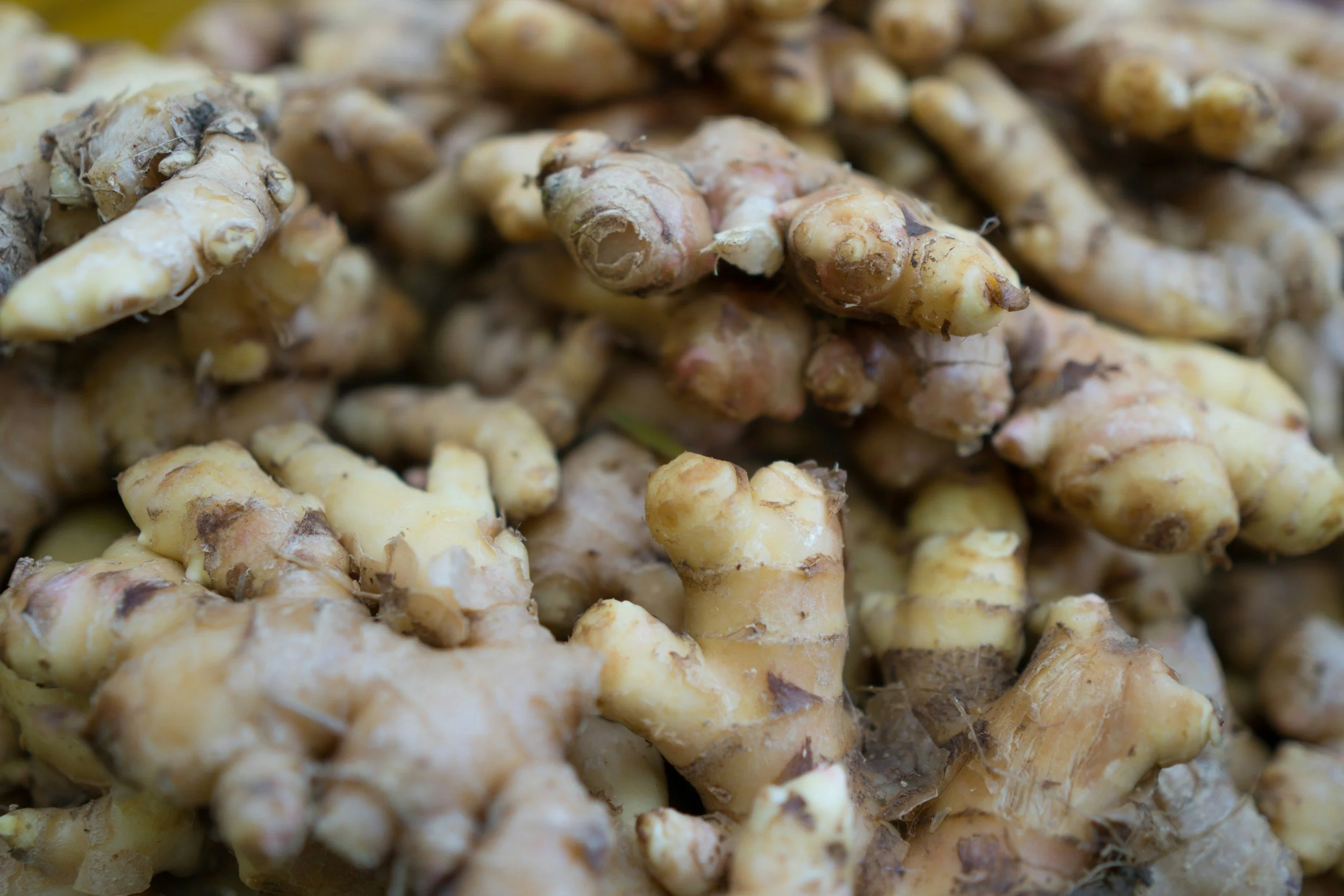
Ginger
Zingiber officinale Roscoe · Zingiberaceae · rhizome, fresh and dried
Also known as Adrakh (fresh) and Sunthi or Sont (dried) in Ayurveda; Sheng Jiang (fresh) and Gan Jiang (dried) in Chinese medicine; Jamaica ginger, African ginger
- Warm (fresh)
- Hot (dried)
- Pungent
- Drying
- Carminative
- Antiemetic
- Diaphoretic
- Circulatory stimulant
Educational content, not medical advice. Nothing on this page is a substitute for care from a qualified healthcare provider. Do not stop or change a prescribed medication based on anything you read here. Ginger in medicinal amounts can interact with medications and health conditions, so talk with your doctor or pharmacist before using it beyond food amounts, especially if you are pregnant or take a blood thinner.
About Ginger
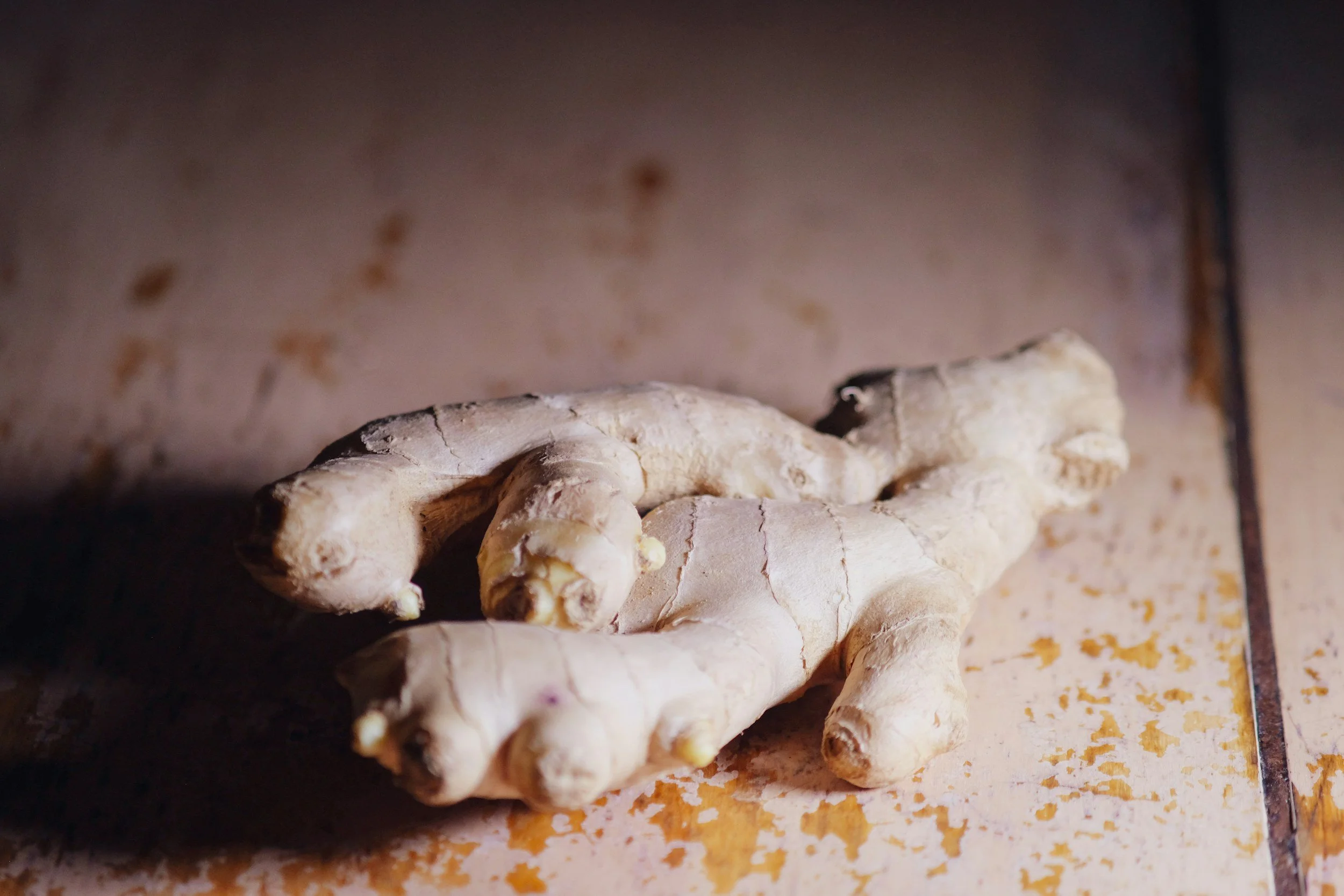
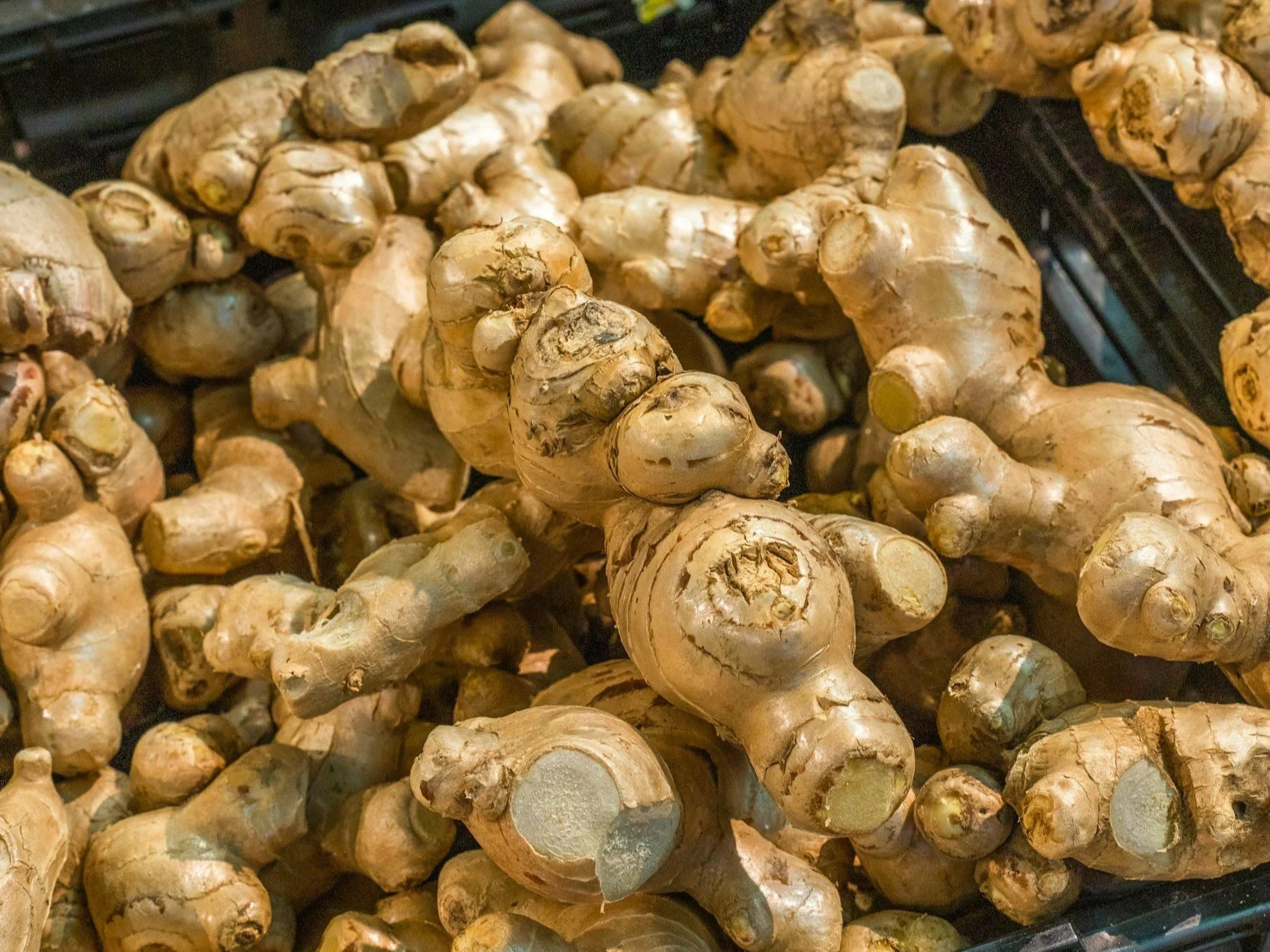
Ginger is the rhizome of Zingiber officinale, a tropical perennial in the ginger family, Zingiberaceae, which it shares with turmeric and cardamom. A rhizome is an underground stem, not a true root, and it is where the plant stores its aromatic oil and pungent resin. King's American Dispensatory records that the native country of ginger is unknown, though presumed to be Asia, and that it was cultivated across tropical Asia, the Americas, and Sierra Leone by the 1890s.1 The plant has been grown by dividing the rhizome for so long that it no longer sets viable seed.
- The plant: annual stems 2 to 3 feet tall wrapped in leaf sheaths, with lanceolate leaves 4 to 6 inches long and a separate flower spike bearing small dingy-yellow flowers with a dark purple lip.1
- Where it grows now: India, Nigeria, and China lead production. King's ranked Jamaica ginger highest for quality, with white Cochin ginger next.1
- Harvest and grades: dug from December to March after the stalks die back. Rhizomes scraped of their outer skin and sun-dried are "white" or uncoated ginger, the official grade; those scalded and dried with the skin on are "black" or coated ginger. Young rhizomes preserved in syrup are candied ginger.1
- Identifying good dried ginger: King's judged it by color, odor, taste, heaviness, and freedom from insect holes, and preferred pieces that cut pale but bright. Age and exposure to air weaken it.1
- Growing conditions: heat, humidity, rich soil, and a long season. King's notes the crop exhausts soil quickly, which is why Jamaican growers rotated fields yearly.1 In cold climates it is a pot plant brought indoors.
Fresh and dried: one plant, two medicines
Drying does more than remove water. Heat and drying convert gingerols, the main pungent compounds of the fresh rhizome, into shogaols, which are sharper and more heating. Every major tradition noticed the difference long before the chemistry was known, and Ayurveda and Chinese medicine gave the two forms separate names and separate jobs.4,5
- Fresh ginger is warming, opens the pores, and pushes circulation toward the skin. Traditions reach for it at the first chill of a cold, and for nausea and cramping.
- Dried ginger is hotter and works deeper in the core. It is the traditional choice for chronic cold digestion and poor central circulation.
Traditional Use
The traditions below describe how practitioners have used ginger. These are historical and clinical records, not instructions. None of this is medical advice.
Energetics
Ginger is pungent, warming to hot, and drying in every system that classifies it. Fresh ginger is diaphoretic, meaning it promotes sweating and moves heat outward to the surface, which is why ginger tea at the first sign of a chill is a near-universal folk practice. Dried ginger concentrates its heat in the digestive core. Sebastian Pole adds one unusual detail from Ayurveda: unlike most pungent herbs, ginger has a sweet post-digestive effect, which makes it gentler on the tissues over time than its heat would suggest.4 In traditional terms, ginger suits cold, damp, sluggish states and aggravates hot, inflamed, acidic ones.
The Eclectics
King's American Dispensatory (1898) calls ginger a stimulant, rubefacient (a substance that reddens the skin by drawing blood to the surface), errhine (a substance that provokes sneezing), and sialagogue (a herb that increases saliva). Taken by mouth it "acts as a stimulating tonic, stomachic, and carminative, increasing the secretion of gastric juice" and dispelling gas. King's records its use in:1
- habitual flatulence, atonic dyspepsia (weak, sluggish digestion), and the "enfeebled and relaxed habits" of old and gouty people
- nausea, pains, and cramps of the stomach and bowels, especially from colds or unripe fruit
- diarrhea and dysentery combined with astringents, and with rhubarb as a cordial for cholera-type illness in children when the surface and limbs are cold
- fevers where saliva is scant and gas moves painfully through the bowel, where it "will assist in producing sedation by re-establishing secretion"
- "ginger tea" for breaking up colds and easing painful menstruation
- externally: a poultice with black willow bark for slow-healing ulcers, a plaster of powder and warm water on the forehead for violent headache, and chewed as a sialagogue for toothache, relaxed uvula, and paralysis of the tongue
- as a vehicle to disguise other drugs and prevent them from griping
The specific indications are one consistent picture of cold, weak digestion: loss of appetite, flatulence, gurgling, spasmodic cramps, painful menstruation, acute colds, cool extremities, and a cold surface in children's illnesses.1 The 1918 U.S. Dispensatory adds a limit the Eclectics shared: in serous diarrhea from a relaxed bowel ginger "is a remedy of much service but should not be employed in the presence of inflammatory conditions."15
Ayurveda: Adrakh and Sunthi
Ayurveda calls ginger the universal medicine and uses fresh and dried forms deliberately. Pole describes fresh ginger (adrakh) as the choice for peripheral circulation, nausea, menstrual cramps, and wet coughs with clear or white mucus, while dried ginger (sunthi) kindles agni, the digestive fire, and clears deep-seated cold.4 Dried ginger is one third of Trikatu, the classical digestive formula it shares with black pepper and long pepper.
Traditional Chinese Medicine: Sheng Jiang and Gan Jiang
Chinese medicine treats the two forms as separate herbs with separate entries.5
- Sheng Jiang, the fresh rhizome, releases the exterior, disperses cold, warms the middle, stops vomiting, and resolves thin phlegm. It appears in cold-and-flu formulas and is a classic antidote herb for seafood reactions.
- Gan Jiang, the dried rhizome, warms the middle and rescues collapsed yang. It is reserved for deeper, more chronic interior cold with weak digestion and cold limbs.
European regulatory monographs
Germany's Commission E approved ginger root for dyspeptic complaints and prevention of motion sickness symptoms.2 The European Medicines Agency's monograph, revised in May 2025, accepts powdered ginger as "well-established use" for preventing nausea and vomiting in motion sickness, and as traditional use for motion sickness symptoms, mild spasmodic digestive complaints including bloating and gas, temporary loss of appetite, minor joint pain, and common cold symptoms.6
Modern clinical use
David Hoffmann, in Medical Herbalism, carries the Eclectic picture into modern Western practice and calls ginger among the best-known herbs for motion sickness, alongside its uses as a carminative, diaphoretic, and warming circulatory stimulant.3 Contemporary herbalists also add a slice of fresh ginger to formulas as a warming carrier that improves taste and eases the stomach, the same role King's described a century earlier.
Constituents and What They Do
The pungent principles sit in an oleoresin, a thick resin-and-oil fraction that alcohol and fats pull well and water pulls only partially. King's chemist J. C. Thresh separated the oleoresin into volatile oil, inert resins, fat, and the active pungent principle he named gingerol, at 0.6 to 1.4 percent of the rhizome.1
| Constituent | Amount and notes | What studies show |
|---|---|---|
| Volatile oil (zingiberene, beta-bisabolene, camphene, phellandrene) | 2 to 3 percent of the rhizome per King's; carries the aroma but is "bland to the taste," so it is not the source of the heat.1 | Responsible for flavor and part of the carminative (gas-relieving) action. Escapes with steam, which is why ginger tea is simmered covered. No human outcome data on the oil alone. |
| Gingerols (6-gingerol and relatives) | The main pungent compounds of fresh ginger, within the oleoresin. Dissolve in dilute and strong alcohol, fats, and only partly in water.1 | Laboratory work shows inhibition of cyclooxygenase and lipoxygenase, two enzyme pathways that make inflammatory prostaglandins and leukotrienes; this is the proposed mechanism behind the menstrual pain trials.8 Also studied for platelet effects in the laboratory, the origin of the blood-thinner caution.12 |
| Shogaols (6-shogaol and relatives) | Formed from gingerols during drying and heating; hotter and more stimulating, which is why dried ginger burns deeper than fresh. | Studied in the laboratory for anti-nausea and anti-inflammatory activity. The trials on this page used dried powder, so their results reflect a shogaol-rich preparation. |
| Starch and polysaccharides | King's reports 13 to 18 percent starch by older analysis and cites a later finding above 50 percent; either way a large share of the dried weight.1 | Bulk and mild soothing character in water preparations. No medicinal claims attach to it. |
| Zingibain (protease enzyme) | A protein-digesting enzyme in fresh rhizome only; destroyed by drying and heat. | The reason fresh ginger curdles milk and tenderizes meat. Not studied as a medicine. |
What the Research Shows
Ginger is one of the most-trialed herbs in the world, and the results cluster around two uses. Nausea has the most consistent trial record, in pregnancy, motion sickness, and after surgery, which matches the traditional use in every system. Menstrual pain has one placebo-controlled trial and one comparison against drugs, both small. The blood-thinning question has laboratory evidence pointing one way, the strongest human trial pointing the other, and a case report in between. Nothing in the trial literature tests the Eclectic uses for cold digestion directly, though the EMA accepted long-standing use as sufficient for that indication.6 Each card below names the preparation, the design, and the weak points.
Nausea and vomiting in pregnancy
- Design: 70 women at or before 17 weeks of pregnancy at Chiang Mai University, Thailand, randomized to 1 g of ginger powder daily (250 mg four times daily) or an identical placebo for 4 days, with nausea scored on a visual scale and vomiting episodes counted.
- Findings: nausea scores fell by 2.1 points with ginger against 0.9 with placebo, vomiting episodes fell by 1.4 against 0.3, and 28 of 32 women in the ginger group reported improvement against 10 of 35 on placebo. No adverse effect on pregnancy outcome was detected.7
- Dose: 1 g dried powder daily for 4 days.
- Limitations: small, 4 days long, one hospital, and the powder was not standardized for gingerol content. Later trials and reviews point the same direction, which raises confidence, but data on rare fetal outcomes remain limited across the whole literature. University-funded; no industry tie declared.
Menstrual pain against placebo
- Design: 120 university students in Tehran with moderate to severe primary dysmenorrhea (period pain with no underlying disease found), assigned by random number table to 500 mg ginger powder or toast-powder placebo three times daily, tested in two protocols a month apart: starting 2 days before the period, or starting on day one. Registered trial IRCT201105266206N3.
- Findings: pain severity fell more with ginger in both protocols (a 1.4 cm and 2.0 cm larger drop on a 10 cm scale), and pain lasted about 11 fewer hours overall. Three ginger users reported heartburn.8
- Dose: 1.5 g dried powder daily for 3 to 5 days.
- Limitations: 13 of 59 placebo participants dropped out without giving a reason. The authors themselves note the reduction sits below the 3 cm change usually treated as clinically meaningful, that the powder was not analyzed for gingerol or shogaol content, and that adherence and blinding were not checked. Funded by Shahed University's herbal research center; no competing interests declared.
Menstrual pain against two drugs
- Design: 150 university students with primary dysmenorrhea, divided into three equal groups by alternation, taking 250 mg ginger powder, 250 mg mefenamic acid, or 400 mg ibuprofen four times daily for the first 3 days of one period.
- Findings: severity, pain relief, and satisfaction were statistically similar across all three groups after one cycle.9
- Dose: 1 g dried powder daily for 3 days.
- Limitations: no placebo arm, so all three treatments could be riding the same expectation effect. Alternation is not true randomization, follow-up covered a single cycle, and pain was self-reported on a verbal scale. Read it alongside the Rahnama trial, which supplies the missing placebo comparison.
Does ginger interact with warfarin?
- Design: 12 healthy men at the University of Sydney took a single 25 mg dose of warfarin alone, after a week of ginkgo, or after a week of ginger at the product's recommended dose (three tablets three times daily, each equivalent to 0.4 g of rhizome ), continuing the herb for a week afterward.
- Findings: ginger changed nothing measurable: INR (a lab measure of how long blood takes to clot), platelet aggregation, and warfarin blood levels and clearance all held steady. The authors concluded that ginger at recommended doses does not affect clotting status or warfarin handling in healthy subjects.10
- Dose: about 3.6 g of rhizome equivalent daily for 14 days.
- Limitations: healthy volunteers rather than patients on long-term anticoagulation, a single warfarin dose, no blinding, and one commercial product. Set against it: a published case of a 76-year-old woman on phenprocoumon whose INR rose sharply with a nosebleed after taking ginger,11 an animal study in the EMA's assessment report in which ginger given with dabigatran raised bleeding measures,16 and Marx's 2015 systematic review, which judged the human platelet evidence mixed and inconclusive.12 The disagreement is why the medication caution below stays in place.
The wide-angle view: 109 randomized trials
- Design: a review team in South Korea gathered 109 randomized controlled trials of ginger in humans across every indication, at doses from under 1 g to several grams daily.
- Findings: the most consistent signals were for nausea and vomiting, digestive function, and modest improvements in blood lipid and glucose markers.13
- Dose: varied by trial; the review does not recommend one.
- Limitations: the trials used widely different preparations, doses, and durations, and many were small. A review this broad shows which uses have the most trial activity behind them. It cannot prove that any single protocol works. Nutrients is an open-access journal that charges authors publication fees; the review itself declares no industry funding.
Dosing Perspectives
Not medical advice. The doses below are educational. They show how different herbalists, traditions, and regulators have approached ginger so you can see where they agree and where they differ. They are not a recommendation for you. Work with your healthcare provider before using ginger beyond food amounts, especially if you are pregnant, have gallstones or an inflamed stomach, or take blood-thinning medication.
| Source | Preparation | Dose (as stated) | Use |
|---|---|---|---|
| King's American Dispensatory (1898) | Powdered rhizome; infusion of 1 ounce powdered or bruised root to 1 pint boiling water; syrup | Powder 10 to 30 grains (roughly 0.65 to 2 g); infusion 1 or 2 fluid ounces; syrup ½ to 4 fluid drachms for children's atonic bowel complaints | Internal; powder plaster on the forehead and poultice external |
| German Commission E (1988) | Dried rhizome, cut or powdered, or equivalent preparations | 2 to 4 g daily | Internal; dyspeptic complaints and prevention of motion sickness |
| European Medicines Agency (2025) | Powdered rhizome; tincture 1:10 in 90 percent ethanol; tincture 1:2 in 90 percent ethanol | Motion sickness: 1 to 2 g one hour before travel (well-established use); 500 to 750 mg half an hour before travel, repeatable every 4 hours up to 2.5 g daily (traditional use); children 6 to 12: 250 to 500 mg. Digestive complaints and appetite: 0.18 to 1 g powder three times daily, or 1.5 to 3 ml of the 1:10 tincture, or 0.25 to 0.5 ml of the 1:2 tincture, three times daily | Internal |
| David Hoffmann, Medical Herbalism (2003) | Tincture; infusion of fresh root | Tincture 1.5 to 3 ml three times daily; about 1 teaspoon of fresh grated root per cup, covered, steeped 5 minutes | Internal |
| Sebastian Pole, Ayurvedic Medicine (2006) | Fresh root as hot tea; dried powder | Fresh ginger tea as needed for cramps, chills, and digestion; dried ginger capped at 2 g daily during pregnancy | Internal |
| Bensky, Chinese Herbal Medicine: Materia Medica (2004) | Sheng Jiang (fresh) and Gan Jiang (dried) in decoction | Sheng Jiang 3 to 9 g; Gan Jiang 3 to 9 g | Internal, in formula |
| Trial protocols | Dried powder in capsules | 1 g daily in divided doses (pregnancy nausea, 4 days; menstrual pain, 3 days); 1.5 g daily (placebo-controlled menstrual pain trial, 3 to 5 days) | Internal |
| Culinary use | Fresh slices, grated root, or ground spice in food | To taste, daily. Food amounts sit below every therapeutic range here. | Internal |
The spread is smaller than it looks. Most sources land between 1 and 4 g of dried rhizome per day, and the trial doses sit inside the traditional ranges. The EMA's lowest digestive dose, 180 mg three times daily, reflects a licensed product's label rather than a clinical judgment. Bensky's 9 g ceiling is a decoction dose inside a multi-herb formula, where much of the pungency is diluted and combined.5 The larger variable is form: a gram of dried ginger is considerably hotter than a gram of fresh.
Preparations by What You Want to Extract
Ginger's medicine sits in an oleoresin that alcohol and fats carry best, while its aroma rides on a volatile oil that leaves with steam. If the extraction methods are new to you, start with my article on decoctions versus infusions.
Solubility of the constituents
- Gingerols and shogaols (the oleoresin): soluble in dilute and strong alcohol, fats, and oils; only partly soluble in water. King's states that "water, proof-spirit, and alcohol take up the virtues of ginger," and the U.S. Dispensatory adds that a tincture made with diluted alcohol comes out turbid and leaves the resin behind, so strong alcohol is preferred.1,14 Hot water gets a working share, which is why simmered ginger tea tastes hot.
- Volatile oil: soluble in alcohol; lost with steam from an open pot.1
- Starch and mucilage: water-soluble; they thicken a strong decoction and make dilute-alcohol tinctures cloudy.14
Preparations that fit the chemistry
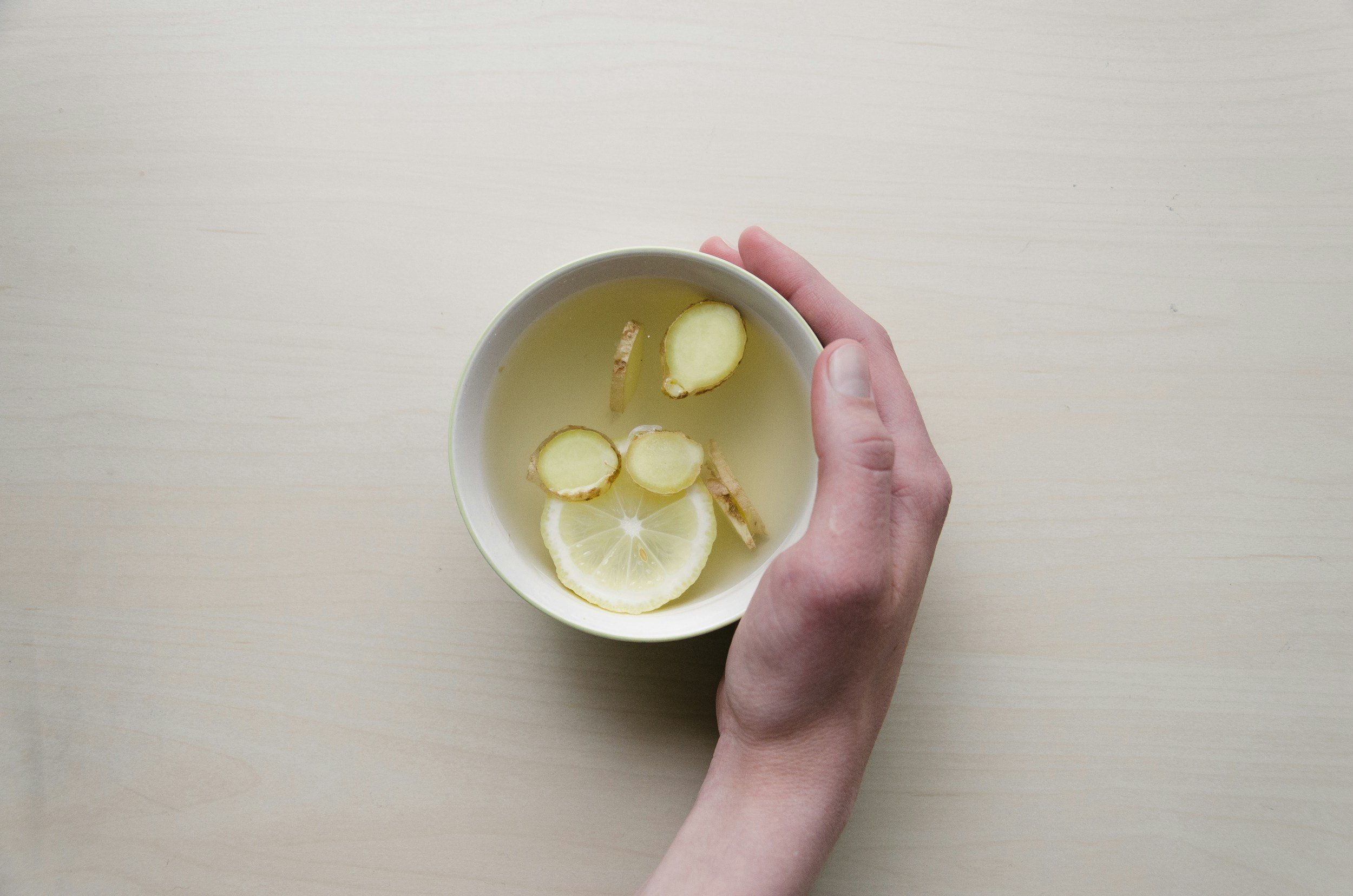
- Fresh ginger decoction. Simmer 4 to 6 thin slices of fresh root per cup of water, covered, for 15 minutes. Covering keeps the volatile oil in the tea instead of in your kitchen air. This is the preparation the Eclectics named for breaking up colds, chills, and painful menstruation.1
- Tincture. Alcohol extracts the full oleoresin, which makes tincture the most complete and shelf-stable preparation. The U.S. Pharmacopoeia tincture in King's was 200 g of powdered ginger to 1,000 ml of alcohol by percolation, and the EMA's registered tinctures use 90 percent ethanol at 1:10 or 1:2.6,14 Hoffmann's range is 1.5 to 3 ml, three times daily.3
- Powder in capsules. The route used in nearly every clinical trial, and the form sources describe for the higher dried-ginger ranges, since few people want to eat that much powder outright.
- Syrup. King's syrup of ginger, made from the fluid extract, was the children's preparation for atonic bowel complaints and a flavoring vehicle for harsher medicines.1 Grated fresh ginger pressed for juice and stirred into raw honey is the traditional home version, used in Ayurvedic practice for coughs with clear, thin mucus.4
- External compress and plaster. A cloth soaked in strong hot ginger tea and applied to the skin uses the rubefacient action, drawing blood to the surface and warming the area. King's records powdered ginger mixed with warm water as a plaster on the forehead for headache, and a poultice with black willow bark for slow-healing ulcers.1
Preparations to skip
- Cold-water infusion of dried ginger. Cold water leaves most of the oleoresin in the marc. Heat it.
- Low-proof tincture. Vodka-strength alcohol pulls the mucilage along with the resin and extracts incompletely; use high-proof spirit and dilute the finished tincture in water at dosing time.14
- Ginger essential oil taken internally. The distilled oil is aroma without heat, since King's found it "bland to the taste"; it lacks the gingerols that every digestive use depends on.1
- Commercial ginger ale as medicine. Most contain flavoring rather than measurable ginger. The Dispensatory also records that cheap "essences of ginger" sold in the early 1900s caused blindness, because they were made with methyl alcohol; buy or make tinctures from food-grade ethanol only.15
Ginger pairs naturally with other warming herbs. It appears with cinnamon in winter teas, with black pepper in the Trikatu formula, and next to its cousin turmeric in the kitchen, where the two rhizomes share a family and a long history of being cooked together. Peppermint is its cooling counterpart in digestive blends.
Safety and Cautions
Not medical advice. Herbs contain active compounds that can interact with medications and health conditions. Ginger is a food in most of the world and a medicine at gram doses, and the two carry different risks. The EMA reports no case of overdose, while King's warns that "a large quantity of ginger, taken internally, might produce serious effects."1,6 Francis Brinker's evidence grades are carried where he is cited: "empirical" means observed in humans, "speculative" means inferred from laboratory, animal, or theoretical work.17 Talk with your healthcare provider or pharmacist before using ginger beyond food amounts if any of the cautions below apply to you.
Side effects at medicinal doses
- Stomach upset. The EMA lists stomach upset, belching, indigestion, heartburn, and nausea as common, meaning they occur in 1 to 10 percent of users.6 In the placebo-controlled menstrual pain trial, 3 of 59 ginger users reported heartburn.8 Several grams of dried powder at once on an empty stomach is the usual cause. Food amounts do not carry this problem.
- Allergy. Hypersensitivity is the EMA's only listed contraindication; skin reactions are reported at unknown frequency.6 Brinker adds occupational allergic contact dermatitis from repeated handling (empirical) and mild digestive reactions after oral use in people allergic to ginger, and advises against topical use in anyone with a known allergy.17
Conditions
- Inflammation and ulcers of the gut, both views. The 1918 U.S. Dispensatory's rule for diarrhea applies generally: ginger serves a relaxed, sluggish bowel and "should not be employed in the presence of inflammatory conditions."15 Brinker lists peptic ulcers as a condition for expert advice only (speculative), then cites rat studies in which ginger extracts reduced stomach lining damage from alcohol, indomethacin, and aspirin, and rabbit work in which extracts lowered acid and pepsin secretion.17 Irritation at high doses in humans and protection at extract doses in animals are both documented, so anyone with an active ulcer, gastritis, or reflux should decide this with their provider rather than from this page.
- Hot constitutions. Pole cautions against ginger where there is already substantial heat: hyperacidity, reflux, ulcers, inflamed joints, heavy sweating.4 The energetics predict this: a hot, drying herb aggravates hot, dry states.
- Gallstones. Commission E advises people with gallstones to consult a practitioner before using ginger.2 Brinker grades the concern speculative and the underlying bile-stimulating (cholagogue) effect empirical, shown in rats.17
- Surgery. Brinker advises avoiding large doses for at least one week before elective surgery because of the theoretical bleeding risk (speculative). Against it he cites 60 surgical patients given 1 g of ginger for nausea with no hemorrhage or other adverse effect reported.17 Tell your surgeon and anesthesiologist about any herb you take.
- Joint pain with swelling, redness, or fever. The EMA says these need a doctor's examination rather than a traditional remedy.6
Medications
- Anticoagulant and antiplatelet drugs. The evidence cuts both ways, as the research section shows. The EMA's 2025 monograph lists interactions as "none known."6 Laboratory work shows gingerols inhibit platelet clumping,12 the strongest human trial found no effect on warfarin or clotting at 3.6 g daily,10 one published case links dried ginger and ginger tea to an INR above 10 with a nosebleed on phenprocoumon,11 and an animal study in the EMA's assessment report found ginger raised bleeding measures with dabigatran.16 Brinker sorts the human data by dose: a single 2 g dose and 4 g daily for 3 months did not change platelet function or clotting, 1 g daily for a week reduced platelet aggregation ex vivo in one study, and a single 10 g dose reduced it significantly. He also cites a 16-week diary study of 171 warfarin patients that recorded seven bleeds during ginger use, with no INR elevation documented and no ginger doses reported. His conclusion: only doses beyond the normal 1 to 4 g range appear to add risk with anticoagulants, and no such incident has been documented in animals or humans.17 Because the cost of getting this wrong is high, the prudent position is unchanged: culinary amounts are considered low risk, and anyone on warfarin, phenprocoumon, dabigatran, or antiplatelet drugs should involve their prescriber before using ginger medicinally and monitor as advised.
- Nifedipine and other calcium channel blockers. In an ex vivo human study, 1 g of ginger daily for a week combined with 10 mg of nifedipine raised platelet inhibition to 69 to 80 percent in healthy subjects, against 20 to 23 percent with nifedipine alone, and to 61 to 64 percent in hypertensive subjects against 19 to 22 percent. Brinker equates ginger's own contribution to 75 mg of aspirin daily and calls the combined effect a possible benefit in high-risk hypertensive patients (speculative).17 Either way, it is an interaction. Anyone on a calcium channel blocker should tell their prescriber before adding gram doses.
- Other oral drugs. A ginger extract increased intestinal absorption of sulphaguanidine in rats, and Brinker speculates the same may apply to other oral medications.17 No human case is documented. Spacing ginger away from narrow-window drugs is a reasonable precaution to discuss with a pharmacist.
- Antacids. Brinker lists a speculative concern that ginger's irritant effect could work against antacids, then notes that water and methanol extracts lowered acid and pepsin secretion in rabbits.17 Unresolved at any dose a person would take.
- Diabetes and blood pressure medication. The 109-trial review found modest changes in blood glucose and lipid markers with ginger.13 No interaction is documented, but anyone on glucose-lowering or antihypertensive drugs who adds gram doses should tell their prescriber so monitoring can account for it.
Documented use alongside medications
Brinker also records trials in which ginger was given with drugs on purpose. These are records of what was studied, not a plan for anyone reading this page.17
- Anesthesia. 1 g of powdered ginger before surgery reduced nausea from thiopental, alcuronium, vecuronium, propofol, fentanyl, and atracurium in two placebo-controlled trials, with less antiemetic drug needed.
- Chemotherapy antiemetics. 1 g of ginger before cyclophosphamide, repeated 6 hours later, controlled nausea and vomiting as well as metoclopramide injections and less well than ondansetron; 0.5 to 1.5 g daily for 3 days before and after chemotherapy reduced nausea beyond ondansetron or granisetron alone; 1 g daily for 5 days matched metoclopramide after cisplatin in a 48-patient crossover.
- NSAIDs in arthritis. Six Danish rheumatoid arthritis patients who added 5 g fresh or 0.5 to 1 g powdered ginger daily stopped their NSAIDs and stayed improved at 3 months; an open study of 56 arthritis and muscle-pain patients on 1 to 2 g daily reported marked relief in 74 percent of rheumatoid and 59 percent of osteoarthritis cases. Brinker's own count includes a 56-patient trial in which a ginger extract was not significantly better than placebo against ibuprofen, so the arthritis record is mixed.
Pregnancy, nursing, and children
Pregnancy is the one place where respected sources openly disagree, so all five positions are laid out. This decision belongs in a conversation with your midwife, doctor, or clinical herbalist, not on a product label or this page.
- Commission E: lists pregnancy as a contraindication, a stance written into its 1988 monograph.2
- Brinker: lists pregnancy as a contraindication on emmenagogue and potential abortifacient grounds (empirical), citing increased embryonic loss in rats given ginger tea regularly, and advises that morning sickness use, especially in large amounts, should have expert guidance. He then summarizes the same trials below, including 250 mg four times daily with reduced nausea and no adverse pregnancy outcome detected.17
- The EMA (2025): reports that data on 300 to 1,000 pregnancies indicate no malformative or fetal toxicity, then still advises avoiding ginger in pregnancy as a precaution, because rodent studies at doses slightly above to a few times the human range showed increased embryo resorption, while another rat study of an alcohol extract showed no harm. It also does not recommend use while nursing, for lack of data.6
- The trial record: randomized placebo-controlled trials, including Vutyavanich's, gave 1 g daily to pregnant women and reported reduced nausea with no detected harm to pregnancy outcomes,7 and Hoffmann points to the long record of traditional use for morning sickness.3
- The traditional middle ground: both Ayurvedic and Chinese practice permit ginger in pregnancy while capping dried ginger at about 2 g per day.4
Children. The EMA does not recommend ginger under 18 for its well-established motion-sickness use, allows 250 to 500 mg for children 6 to 12 under traditional use, and does not recommend it under 6.6 King's used syrup of ginger for children's bowel complaints a century earlier.1 Food amounts are not flagged by any source on this page.
Frequently Asked Questions
Is ginger good for nausea?
Nausea is ginger's most studied area. Randomized trials reported reduced nausea and vomiting in pregnant women taking 1 g of dried powder daily, the EMA accepts ginger as well-established for motion sickness, and trials alongside anesthesia and chemotherapy drugs point the same way. If your nausea is severe, persistent, or paired with other symptoms, see your healthcare provider.
What is the difference between fresh and dried ginger?
Drying converts gingerols into hotter shogaols, so dried ginger is more heating gram for gram. Traditions use fresh ginger for surface conditions like chills, nausea, and cramps, and dried ginger for deep, chronic cold digestion.
Does ginger thin the blood?
Dose decides, and the evidence is mixed. At 1 to 4 g daily, most human studies found no change in clotting, and the strongest trial found no interaction with warfarin. A single 10 g dose reduced platelet clumping, ginger with nifedipine roughly tripled platelet inhibition, and one case report links ginger tea to over-anticoagulation on phenprocoumon. Culinary use is considered low risk. If you take a blood thinner or a calcium channel blocker, talk with your prescriber before using ginger medicinally.
How do I make ginger tea?
Simmer 4 to 6 thin slices of fresh root per cup of water in a covered pot for 15 minutes. The lid matters, because the aromatic oil leaves with the steam.
Can I take ginger while pregnant?
Sources disagree. Trials reported reduced pregnancy nausea at 1 g daily with no detected harm, Commission E and Brinker list pregnancy as a contraindication, the EMA advises avoiding it as a precaution despite reassuring human data, and traditional systems cap dried ginger near 2 g daily. Bring the question to your midwife or doctor.
Are ginger and turmeric related?
Yes. Both are rhizomes in the Zingiberaceae family, along with cardamom. They share warming, circulation-supporting characters and are often cooked together. The turmeric monograph covers its cousin in full.
Does ginger help with menstrual cramps?
In a placebo-controlled trial, students taking 1.5 g of ginger powder daily reported lower pain scores and about 11 fewer hours of pain than those on placebo, though the difference fell short of the size usually called clinically meaningful. A separate trial found relief similar to mefenamic acid and ibuprofen, without a placebo group. The Eclectics used ginger tea for painful menstruation on the same reasoning. Cramps that are severe or worsening deserve a medical workup.
How much ginger is too much?
Regulators put therapeutic ceilings at 2 to 4 g of dried powder daily, and the EMA's motion-sickness limit is 2.5 g. Above that, heartburn and stomach burning become common, a single 10 g dose measurably reduced platelet clumping, and King's warned that large quantities "might produce serious effects." Food amounts sit well below every ceiling.
Sources
- Felter HW, Lloyd JU. Zingiber (U.S.P.), Ginger. King's American Dispensatory, 1898. Public domain, hosted at Henriette's Herbal.
- German Commission E monograph, Zingiberis rhizoma (Ginger root), 1988. In: Blumenthal M, ed. The Complete German Commission E Monographs. American Botanical Council, 1998. ABC Expanded Commission E, Ginger root. ABC is a nonprofit funded in part by industry membership.
- Hoffmann D. Medical Herbalism: The Science and Practice of Herbal Medicine. Healing Arts Press, 2003 (affiliate link). Zingiber officinale entry.
- Pole S. Ayurvedic Medicine: The Principles of Traditional Practice. Singing Dragon, 2006 (affiliate link). Ginger entry.
- Bensky D, Clavey S, Stöger E. Chinese Herbal Medicine: Materia Medica, 3rd edition. Eastland Press, 2004. Entries for Sheng Jiang and Gan Jiang.
- European Medicines Agency, Committee on Herbal Medicinal Products. European Union herbal monograph on Zingiber officinale Roscoe, rhizoma. Final, Revision 1. EMA/HMPC/885789/2022, adopted 7 May 2025.
- Vutyavanich T, Kraisarin T, Ruangsri R. Ginger for nausea and vomiting in pregnancy: randomized, double-masked, placebo-controlled trial. Obstetrics and Gynecology. 2001;97(4):577-582. PMID 11275030. Chiang Mai University.
- Rahnama P, Montazeri A, Huseini HF, Kianbakht S, Naseri M. Effect of Zingiber officinale R. rhizomes (ginger) on pain relief in primary dysmenorrhea: a placebo randomized trial. BMC Complementary and Alternative Medicine. 2012;12:92. DOI: 10.1186/1472-6882-12-92. Shahed University; no competing interests declared.
- Ozgoli G, Goli M, Moattar F. Comparison of effects of ginger, mefenamic acid, and ibuprofen on pain in women with primary dysmenorrhea. Journal of Alternative and Complementary Medicine. 2009;15(2):129-132. DOI: 10.1089/acm.2008.0311.
- Jiang X, Williams KM, Liauw WS, et al. Effect of ginkgo and ginger on the pharmacokinetics and pharmacodynamics of warfarin in healthy subjects. British Journal of Clinical Pharmacology. 2005;59(4):425-432. DOI: 10.1111/j.1365-2125.2005.02322.x. University of Sydney.
- Krüth P, Brosi E, Fux R, Mörike K, Gleiter CH. Ginger-associated overanticoagulation by phenprocoumon. Annals of Pharmacotherapy. 2004;38(2):257-260. DOI: 10.1345/aph.1D225. Single case report.
- Marx W, McKavanagh D, McCarthy AL, et al. The effect of ginger (Zingiber officinale) on platelet aggregation: a systematic literature review. PLOS ONE. 2015;10(10):e0141119. DOI: 10.1371/journal.pone.0141119.
- Anh NH, Kim SJ, Long NP, et al. Ginger on human health: a comprehensive systematic review of 109 randomized controlled trials. Nutrients. 2020;12(1):157. DOI: 10.3390/nu12010157.
- Felter HW, Lloyd JU. Tinctura Zingiberis (U.S.P.), Tincture of Ginger. King's American Dispensatory, 1898. Public domain, hosted at Henriette's Herbal.
- Remington JP, Wood HC, eds. Zingiber. The Dispensatory of the United States of America, 20th edition, 1918. Public domain, hosted at Henriette's Herbal.
- European Medicines Agency, Committee on Herbal Medicinal Products. Assessment report on Zingiber officinale Roscoe, rhizoma. Revision 1. 2025. Source of the dabigatran animal study and the historical posology.
- Brinker F. Herbal Contraindications and Drug Interactions, 4th edition. Eclectic Medical Publications, 2010. Ginger, pp. 166-170. Brinker grades each entry as empirical (observed in humans) or speculative (inferred from laboratory, animal, or theoretical work), and those grades are carried into the text above.
This monograph is updated as new research and sources become available. Last updated September 2026.

Ivy Ham
I'm Ivy Ham, a clinical herbalist dedicated to blending traditional healing wisdom with modern science, and revealing how nature's remedies can enhance everyday wellness. Through my blog, I share insights on herbal solutions, nutrition, and holistic practices to guide you toward a more balanced, vibrant life.
Certified clinical herbalist · Missoula, Montana · Read more about Ivy