
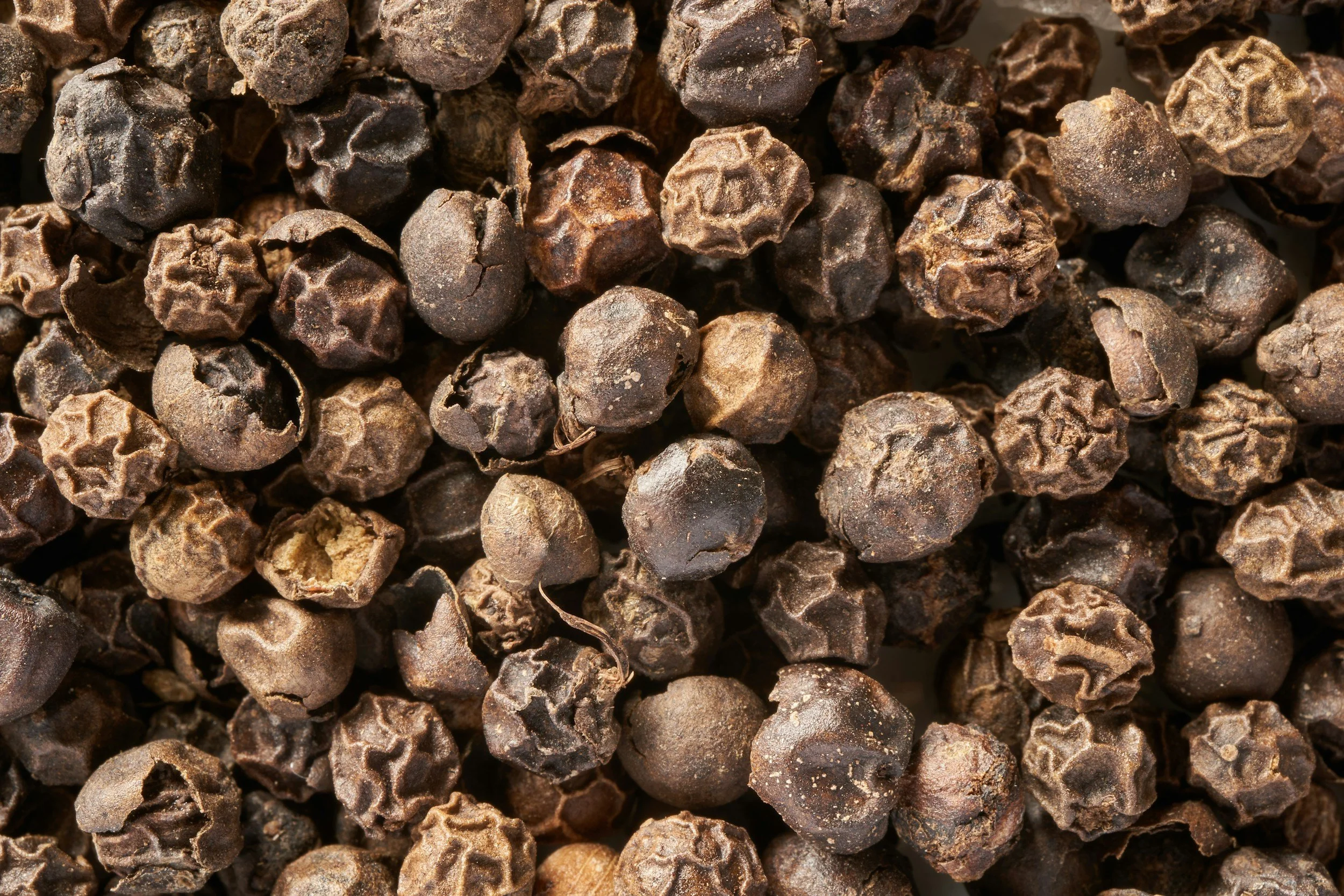
Black Pepper
Piper nigrum · Piperaceae · dried fruit
Also known as Maricha (Ayurveda), Hu Jiao (Traditional Chinese Medicine; white pepper is Bai Hu Jiao), Kalimirch (Hindi)
- Hot
- Pungent
- Drying
- Circulatory stimulant
- Carminative
- Expectorant
- Absorption enhancer
Educational content, not medical advice. Nothing on this page is a substitute for care from a qualified healthcare provider. Do not stop or change a prescribed medication based on anything you read here. Black pepper in medicinal amounts can change how the body handles prescription drugs, so talk with your doctor or pharmacist before using it beyond food amounts if you take medication.
About Black Pepper
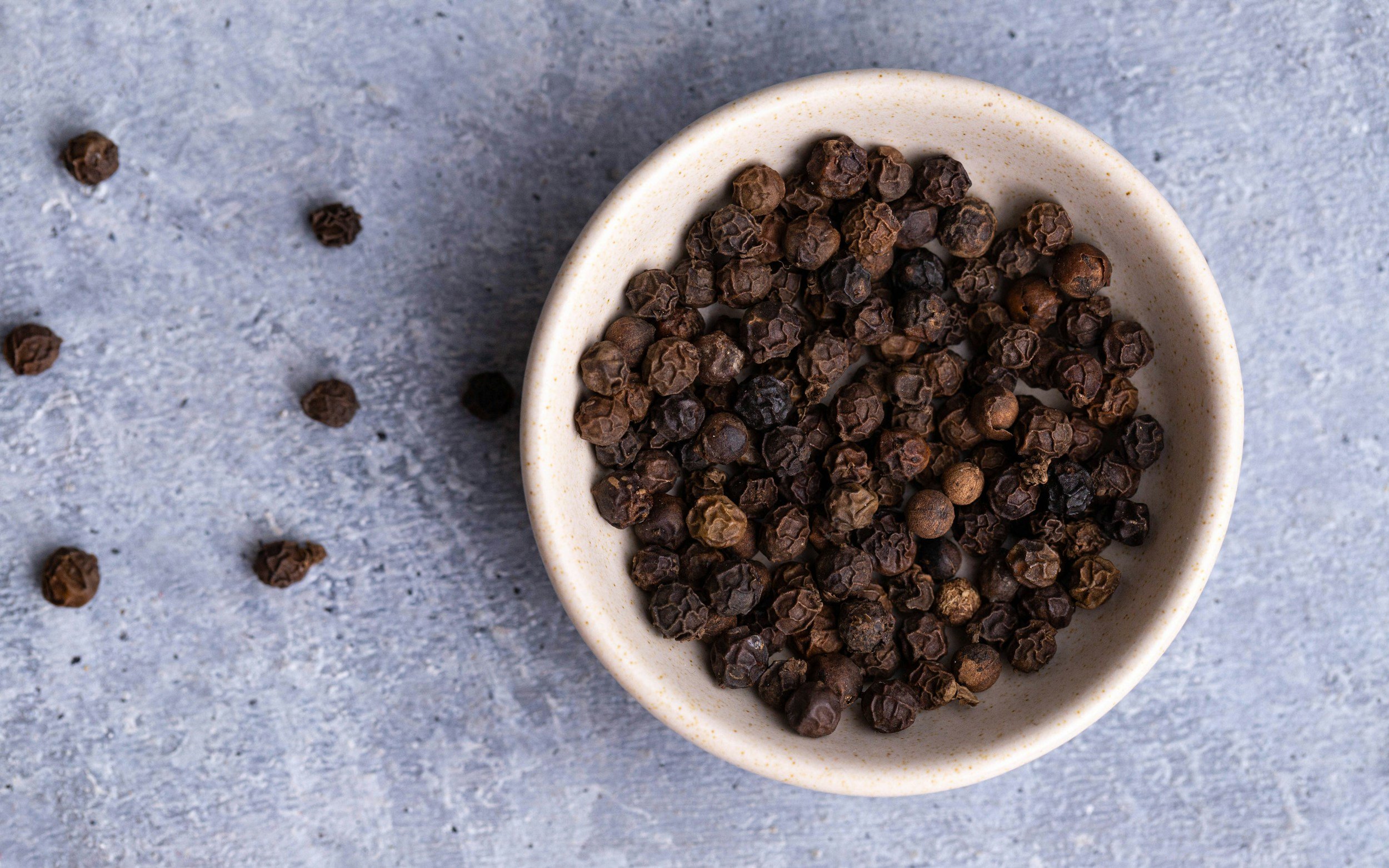
Black pepper is the dried fruit of Piper nigrum, a perennial climbing vine in the Piperaceae family. Each peppercorn is a small drupe (a fruit with a single seed inside a fleshy layer) that grows in hanging spikes 3 to 6 inches long. The fruit starts green, turns red as it ripens, and darkens to black once picked and dried.2
- Native range: the Malabar coast of southern India, where the vine still grows on the hills of Kerala and Karnataka.2
- Where it grows now: Vietnam is the largest producer, with India, Brazil, Indonesia, and Sri Lanka also growing significant crops.
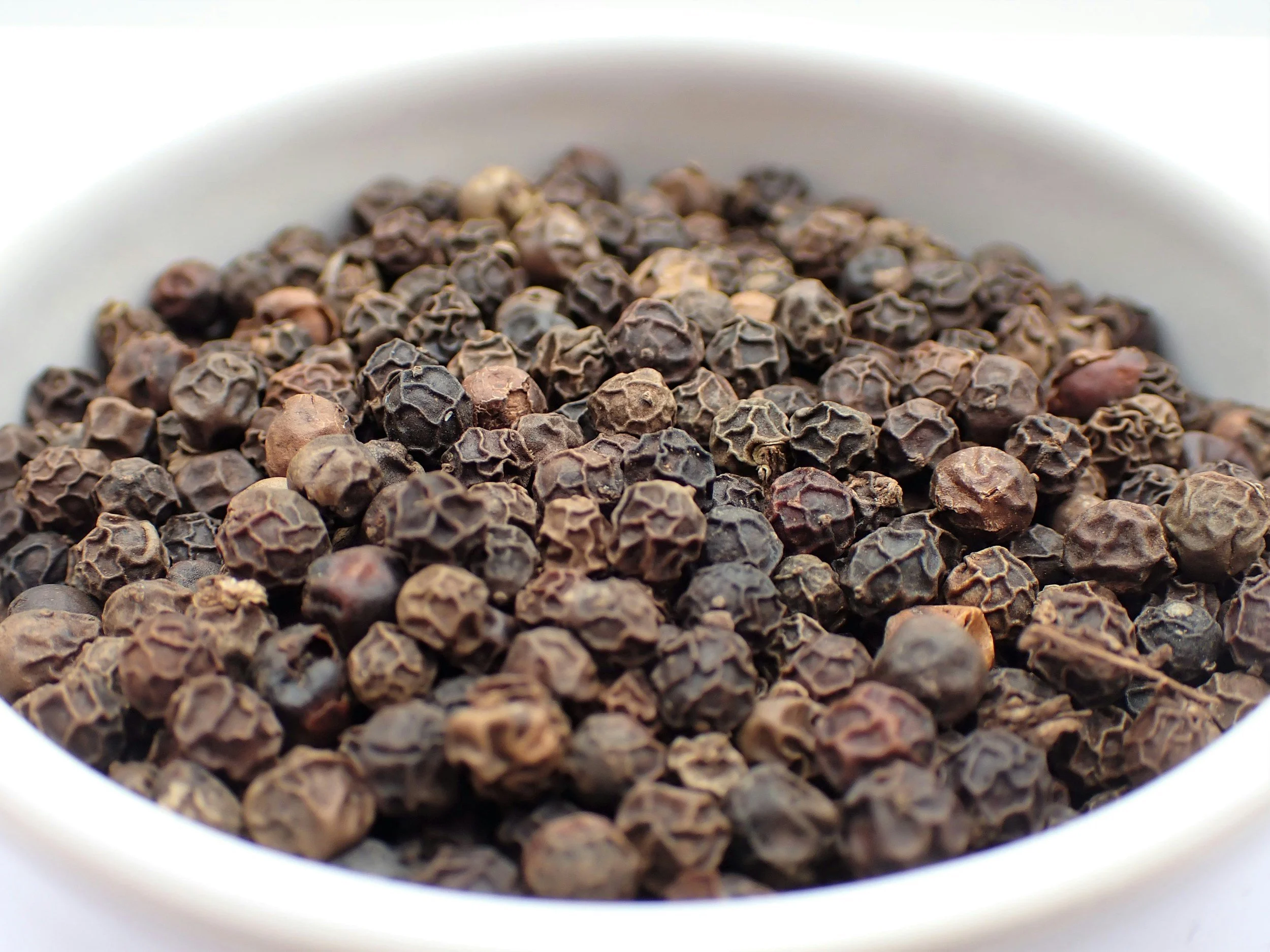
- Identifying the dried fruit: spherical, dark brown to black, deeply wrinkled, about 4 to 5 mm across, with a pungent aromatic taste. Whole berries are rarely adulterated; ground pepper historically was.2
- Growing conditions: warm and humid, ideally 68 to 86°F, with a trellis or host tree for the vine to climb.
Black, white, and green peppercorns
All three come from the same plant. Black peppercorns are harvested while still red and underripe, then dried whole with the outer skin on. That skin holds most of the aromatic oil, which makes black pepper the most complete form and the one used in every tradition on this page. White pepper is the fully ripened fruit soaked in water until the outer layer softens and is rubbed away, leaving the inner seed. It is sharper and less aromatic, and King's American Dispensatory noted it may contain even more piperine than black.2 In Chinese medicine, white pepper (Bai Hu Jiao) is considered the stronger interior-warming form. Green peppercorns are picked early and preserved by brining or quick drying. They are mild and belong more to cooking than to herbal practice.
Who has used it
- Ayurveda calls it Maricha, a Sanskrit name for the sun, and uses it in the classical digestive formula Trikatu.4
- Traditional Chinese Medicine calls it Hu Jiao and files it among the herbs that warm the interior and expel cold.6
- Western herbalism carried it through the Greek and European pharmacopoeias into the American Eclectic physicians of the 1800s, who listed it in King's American Dispensatory and Felter's Eclectic Materia Medica.1,2
Traditional Use
The traditions below describe how practitioners have used black pepper. These are historical and cultural records, not instructions. None of this is medical advice.
Western herbalism and the Eclectics
The Eclectic physicians, a school of American doctors active from the mid 1800s into the 1930s, gave black pepper two specific indications: gastric atony (a weak, sluggish stomach) and congestive chills.1 King's American Dispensatory describes it as a gastro-intestinal stimulant that warms the stomach and lightly quickens circulation. The Eclectics used it:2
- to support digestion and relieve flatulence, often combined with bitter herbs such as goldenseal (hydrastis) for weak digestion
- to correct the griping or nauseating quality of other medicines
- alongside quinine for intermittent fevers, with the plain statement that pepper alone "very often fails" but reliably assists the quinine1,2
- combined with black cohosh (macrotys) for sluggish, painful menstruation
- externally, as an ointment with lard and tar for ringworm of the scalp, and as a powder that reddens and warms the skin2,3
Felter also recorded the limits. Excessive doses produced abdominal burning, thirst, vomiting, and fever, and large doses irritated the urinary tract.2
Ayurveda: Maricha
Ayurveda classifies black pepper as heating, pungent, light, and dry. It reduces kapha (the heavy, damp, cold quality) and vata, and increases pitta (heat).4 Its traditional roles include:
- kindling agni, the digestive fire, and clearing ama, the Ayurvedic term for undigested residue that accumulates when digestion is weak
- supporting the lungs in cold, wet, congested patterns with white sticky mucus, often given with honey to balance its heat
- stimulating circulation and clearing the small channels of the body, which is why small amounts are added to other formulas to carry them
- as one third of Trikatu with long pepper and ginger, the classical formula for weak digestion
- externally, brushed on teeth as a powder or used as a gargle in decoction for toothache, a use recorded as far back as the Charaka Samhita5
Ayurveda also considers Maricha a blood cleanser and one of the tradition's strongest tissue detoxifiers, and its circulatory push has been applied in patterns of heaviness and sluggish flow. In my own clinical training I learned a traditional formula pairing black pepper with amla, haritaki, and ashwagandha that Ayurvedic practitioners have used as supportive care in seizure disorders. I include it as a documented tradition only. Piperine raises blood levels of at least two anticonvulsant drugs, so anyone on seizure medication should not add medicinal pepper without their prescriber's involvement. See the safety section.
Traditional Chinese Medicine: Hu Jiao
Kun-Ying Yen's Illustrated Chinese Materia Medica describes Hu Jiao as hot and acrid, entering the stomach and large intestine channels. Its listed actions are to warm the center, move qi downward, disperse phlegm, and resolve toxins. It is given for cold-type digestive complaints, including abdominal pain, vomiting, and diarrhea driven by interior cold. Yen contraindicates it in "up-flaming yin vacuity fire," the pattern where heat signs come from depleted yin fluids rather than from true cold.6
Constituents and What They Do
Black pepper's medicine sits mostly in one alkaloid and one volatile oil. The percentages below come from King's American Dispensatory and the Srinivasan review.2,12
| Constituent | Amount | What studies show |
|---|---|---|
| Piperine (alkaloid) | 5 to 9 percent by weight | Increased blood levels of curcumin and several drugs in small human trials.7,8,9 Inhibited CYP3A4 and P-glycoprotein, two systems the body uses to clear medications, in lab work.11 Stimulated digestive enzymes and raised body heat production in animal studies.12 Nearly tasteless as a dry crystal; the bite appears once it dissolves in the volatile oil.2 |
| Volatile oil (sabinene, limonene, pinene, caryophyllene, phellandrene) | 1 to 2.3 percent | Carries the aroma and much of the warming, dispersing quality. Contributes to the carminative (gas-relieving) action described across traditions. Human evidence is limited to small aromatherapy trials. |
| Chavicine and related amides | Minor | Structural relatives of piperine that add to pungency. Piperine slowly converts to less pungent forms as pepper ages, which is why old ground pepper loses its bite.2 |
| Starch | Up to 32 percent | No medicinal role. Explains why pepper powder clumps in liquid. |
| Tannins | Absent | Pepper is not astringent, which separates it from many other warming spices.2 |
What the Research Shows
Taken together, the human studies on black pepper point to one well-supported effect: piperine changes how much of certain other substances reach the bloodstream. Every human trial with a measurable outcome tested piperine as an isolated compound, not whole pepper, and every one was small. The digestive and heat-generating effects the traditions describe have been demonstrated in animals and cells but not confirmed in well-designed human trials. The research picture supports pepper as a carrier of other medicines more than as a medicine on its own.
Piperine and curcumin absorption
- Design: healthy volunteers took 2 g of curcumin alone, then 2 g curcumin with 20 mg piperine. Rats received 2 g/kg curcumin with or without 20 mg/kg piperine.
- Findings: in humans, curcumin was undetectable or very low when taken alone. With piperine, blood levels rose sharply in the first hour, a 2,000 percent increase in bioavailability. In rats the increase was 154 percent. No adverse effects were reported.7
- Dose: 20 mg piperine, which matches roughly 220 to 400 mg of ground pepper.
- Limitations: small sample. Three of the six authors, including Majeed, worked for SAMI Chemicals & Extracts, the Indian arm of Sabinsa, which sells piperine as BioPerine, and Majeed holds the patents on piperine as a bioavailability enhancer. The 2,000 percent figure reflects the first hour after dosing rather than total exposure over a full day. Curcumin, not pepper, was the outcome measured.
Piperine with propranolol and theophylline
- Design: crossover study. Six volunteers per drug took a single dose of propranolol 40 mg (a beta blocker) or theophylline 150 mg (an asthma drug) alone, then with piperine 20 mg daily for 7 days.
- Findings: piperine produced earlier and higher peak blood levels and greater total exposure for both drugs, and a longer elimination half-life for theophylline.8
- Dose: 20 mg piperine daily.
- Limitations: six participants per group. Healthy volunteers, not patients. Isolated piperine, not whole pepper. Single-dose drug measurement.
Piperine and phenytoin in people with epilepsy
- Design: patients with uncontrolled epilepsy on steady-state phenytoin (an anticonvulsant) received a single dose of piperine, with blood levels compared against placebo.
- Findings: piperine raised phenytoin blood levels, most likely by increasing absorption. The same team later found a smaller but measurable increase with carbamazepine.9,10
- Dose: a single 20 mg dose of piperine.
- Limitations: small patient group, single dose, isolated piperine. The finding is a drug interaction, not a benefit, and it is the reason for the anticonvulsant caution below.
How piperine blocks drug clearance
- Design: piperine was tested on Caco-2 cells (a human intestinal cell line) and on human liver microsomes (fragments of liver cells that hold drug-processing enzymes).
- Findings: piperine inhibited P-glycoprotein, the pump that pushes drugs back out of intestinal cells, and CYP3A4, the enzyme that breaks down a large share of prescription medications.11
- Dose: concentrations in a dish, not a human dose.
- Limitations: no living participants, so it explains mechanism rather than proving an effect in people. The piperine was supplied by Sabinsa Corporation, maker of BioPerine.
Digestive, thermogenic, and antioxidant effects: a review
- Design: narrative review from India's Central Food Technological Research Institute covering pepper and piperine research through 2007.
- Findings: dietary piperine stimulated pancreatic digestive enzymes, shortened gut transit time, raised heat production, and showed antioxidant activity. The absorption-enhancing effect was the best supported theme.12
- Dose: animal feeding studies often used about five times the average human dietary intake of pepper.
- Limitations: the digestive and thermogenic findings are almost entirely from rats. A review carries the weaknesses of the studies it summarizes. No funding conflicts disclosed.
Dosing Perspectives
Not medical advice. The doses below are educational. They show how different herbalists and traditions have approached black pepper so you can see where they agree and disagree. They are not a recommendation for you. Work with your healthcare provider before using any herb beyond food amounts, especially if you take medication.
| Source | Preparation | Dose (as stated) | Use |
|---|---|---|---|
| Felter, The Eclectic Materia Medica (1922) | Whole pepper, powdered | 1 to 15 grains (about 65 mg to 1 g) | Internal |
| Felter (1922) | Tincture of pepper, 8 ounces pepper to 16 fluid ounces alcohol | 1 to 30 drops | Internal |
| Felter (1922) | Piperin, the isolated compound | 1 to 8 grains (about 65 to 520 mg); Felter judged it less effective than the tincture | Internal |
| King's American Dispensatory (1898), citing Prof. Scudder | Tincture, 8 ounces ground pepper percolated in 1 pint of 98 percent alcohol | 1 to 10 drops | Internal |
| King's American Dispensatory (1898) | Ointment: 4 ounces powdered pepper in lard and tar | Applied to the scalp | External |
| McIntyre and Boudin, Dispensing with Tradition (2012), via Herbal Reality | Dried fruit | 1 to 3 g a day | Internal |
| McIntyre and Boudin (2012), via Herbal Reality | Tincture 1:5 in 70 percent alcohol | 1 to 2 ml daily | Internal |
| Herbal Reality monograph | Powder in ghee or honey; paste or poultice | Small amounts; to the skin as needed | Internal (with ghee or honey) and external (paste) |
| Yen, The Illustrated Chinese Materia Medica | Decoction or powder | 1.5 to 3 g daily | Internal |
| Traditional Ayurvedic home preparation, as taught in my clinical training | 10 whole peppercorns simmered in a cup of milk | One cup as needed | Internal |
| Culinary use | Freshly ground with food | To taste | Internal |
The spread is narrow for a medicinal herb. Every internal source lands between a pinch and about 3 grams a day, and the Eclectic tincture doses are measured in drops. Food amounts already reach the level tested in the absorption research: the landmark trial used 20 mg of piperine, and at 5 to 9 percent piperine by weight that is roughly 220 to 400 mg of ground pepper, between a tenth and a sixth of a teaspoon.7
Preparations by What You Want to Extract
Not every constituent in a plant dissolves in every solvent, so the preparation decides what ends up in the cup. If the extraction methods are new to you, start with my article on decoctions versus infusions.
Solubility of the constituents
- Piperine: dissolves well in alcohol and in fat. It is poorly soluble in water. King's American Dispensatory put it plainly: alcohol or ether extract pepper "completely; water only partially."2
- Volatile oil: dissolves in alcohol and fat, and escapes with steam. Long boiling in an open pot loses much of it.
- Starch: water soluble but medicinally inert. It is the reason pepper tea turns cloudy.
Preparations that fit the chemistry
- Tincture. The Eclectic choice. Use a high proof: Scudder percolated in 98 percent alcohol, and modern practice uses 70 percent (140 proof) or higher at a 1:5 ratio.2,5 Lower proofs such as 80-proof vodka pull piperine less completely. Dosed by the drop.
- Pepper milk. Simmer 10 whole peppercorns in a cup of milk for about 10 minutes, strain, and drink warm. The milk fat carries both piperine and the volatile oil and softens the bite. This is the traditional Ayurvedic preparation for wet, congested coughs. Raw milk from a source you trust works well here.
- With turmeric and fat. A pinch of freshly ground pepper in golden milk, turmeric capsules, or cooked food is the most studied use on this page. Read the turmeric monograph for the other half of that pairing.
- Infused oil or ghee. Warm powdered pepper gently in ghee or a carrier oil to make the base for the traditional external pastes and the nasal or chest applications. Fat is a good solvent for both active fractions.
- Powder in capsules or honey. Ground pepper in size 00 capsules, or mixed into honey, is the practical route to the 1 to 3 g range, since few people will eat that much loose pepper. Honey is the classical Ayurvedic vehicle for lung use.
- Simmered tea. Half a teaspoon of lightly crushed peppercorns simmered covered for 10 minutes, alone or with ginger and cinnamon. Expect a warming, aromatic drink with only partial piperine extraction. Keep the lid on to hold the volatile oil.
Preparations to skip
- Cold water infusion and glycerites. Neither pulls piperine well, and glycerin holds the volatile oil poorly. You get flavor without much medicine.
- Long open-pot decoction. Drives off the volatile oil and still leaves most of the piperine behind.
- Essential oil taken internally. The isolated oil is concentrated and skips the piperine entirely. Not a substitute for the whole fruit.
Safety and Cautions
Not medical advice. Herbs contain active compounds that can interact with medications and health conditions. Black pepper at food amounts has centuries of safe use. The cautions below apply to medicinal amounts and to isolated piperine supplements. Talk with your healthcare provider or pharmacist before using it beyond cooking if any of these apply to you.
Francis Brinker's Herbal Contraindications and Drug Interactions grades each finding by the kind of evidence behind it: empirical observation in people (I), human studies (Ia), animal studies (II), and laboratory or speculative findings (III).14 Those grades are carried below so you can see how strong each item is.
Medication interactions shown in people
Brinker grades these Ia, human studies.14 Piperine is the compound responsible, and black pepper carries about 5 to 7 percent piperine by weight.
- Phenytoin (an anticonvulsant) was absorbed faster and more completely, and cleared more slowly, when taken with 20 mg of piperine. In people with epilepsy taking 300 or 400 mg of phenytoin daily, a single 20 mg piperine dose raised average blood concentration and bioavailability (the share of a dose that reaches the bloodstream).9,14 The same team later found a smaller increase with carbamazepine.10
- Propranolol (a beta blocker) was absorbed faster and more completely and reached a significantly higher peak concentration when combined with 20 mg piperine daily for 7 days.8,14
- Theophylline (an asthma drug) was absorbed more completely and reached a significantly higher peak concentration with piperine.8,14
Practical reading of that evidence: anyone on anticonvulsants should not add medicinal pepper or piperine supplements on their own, and should never adjust a seizure medication without their prescriber. The same interaction pattern applies to heart, blood pressure, and asthma drugs. For any medication with a narrow safe range, keep pepper at culinary amounts. Herbal Reality also lists caution with sedatives, benzodiazepines, and barbiturates.5
Interactions seen in animals
Brinker grades these II. They show the direction an interaction could take, not what happens in a person.14
- Piperine at 30 mg/kg raised the bioavailability of sparteine (from Scotch broom) by over 100 percent in rats, and piperine inhibited liver enzymes that break down drugs, including several cytochrome P-450 forms and UDP-glucuronyltransferase (an enzyme that tags compounds for removal).
- Piperine prolonged hexobarbital sleeping time at 5 mg/kg and zoxazolamine paralysis time at 2.5 mg/kg in rats, and 1 to 30 mg raised blood levels of pentobarbital and rifampicin.
- Piperine at 100 mg/kg slowed the breakdown of benzphetamine and aminopyrine in rats.
- Trikatu (black pepper, long pepper, and ginger in equal parts) increased the bioavailability of sulphadiazine and tetracycline in animal studies.
- 60 mg of piperine increased the pain-relieving and anti-inflammatory activity of 100 mg of nimesulide in mice.
- Trikatu at 500 mg/kg decreased absorption and anti-inflammatory effect of diclofenac sodium in rabbits and rats, which Brinker attributes to a chemical interaction in solution rather than a biological one, since the drug and herbs were mixed before dosing.
- Trikatu at 500 mg/kg reduced absorption, peak concentration, and bioavailability of isoniazid for 4 hours in rabbits, possibly by slowing gastric emptying (speculative).
- Trikatu at 500 mg/kg increased absorption and peak concentration of indomethacin after 4 hours in rabbits, with no change in how the drug was metabolized.
Two of those findings run in opposite directions. Pepper raised some drug levels and lowered others, so the effect depends on the drug and on whether pepper is taken as a single compound or inside a formula.
Laboratory findings
Brinker grades these III, meaning cell or test-tube work with no living participants.14
- Piperine is a nonspecific, potent inhibitor of drug metabolism, including ethylmorphine and 7-ethoxycoumarin, through mixed-function oxidases and several cytochrome P-450 forms.
- Piperine increased membrane transport of digoxin and cyclosporine by inhibiting P-glycoprotein, and reduced metabolism of verapamil by inhibiting CYP3A4. Related compounds in pepper called dipiperamides A, B, and C inhibited CYP3A4 metabolism of nifedipine far more potently than piperine itself.11,14
- Cross-tachyphylaxis (loss of response to one substance after exposure to another) was observed between piperine and capsaicin, the heat compound in cayenne.
Dose limits and irritation
- McIntyre and Boudin advise no more than 5 g daily over long periods because of its heating nature.5
- Excess doses produced abdominal burning, thirst, vomiting, fever, and urinary irritation in the Eclectic record.2
- It can irritate mucous membranes. Avoid medicinal amounts with hyperacidity, gastritis, ulcers, or dryness.5
Constitutional cautions
- Ayurveda: aggravates pitta in excess. People who run hot, with reflux or an inflamed gut lining, should keep to food amounts.4
- Traditional Chinese Medicine: contraindicated in up-flaming yin vacuity fire.6
Pregnancy, nursing, and children
- Brinker lists pregnancy as a contraindication (grade I, empirical) because of an abortifacient effect in large doses, and cites piperine given at 12.5 to 50 mg/kg by injection and by mouth in mice as the animal support.14 Pole and Herbal Reality reach the same place from the traditional side: culinary use in pregnancy has centuries of history, and high doses are avoided.4,5 No safety data exist for medicinal amounts.
- In 13 nursing mothers who ate a curry containing pepper, piperine appeared in breast milk at levels the authors judged too low for the infant to taste.13 No data exist for supplemental piperine while nursing.
- Children: food amounts only.
Where the interaction can be useful
Brinker files one item under "complementary adjuncts" (grade Ia): 20 mg of piperine raised serum concentrations of curcumin, the poorly absorbed compound in turmeric, within the first hour and increased its bioavailability by 2,000 percent in a human study, or 154 percent at 20 mg/kg in rats.7,14 The mechanism that causes the drug cautions above is the same one that makes pepper a traditional carrier for other herbs.
Frequently Asked Questions
Is black pepper good for you?
In food amounts it supports digestion, circulation, and the absorption of other nutrients and herbs, and every major herbal tradition uses it. The main caution applies to people on prescription medication, because piperine can raise drug levels in the blood.
Where does black pepper come from?
It is native to the Malabar coast of southern India. Vietnam is now the largest producer, with India, Brazil, Indonesia, and Sri Lanka also growing significant crops.
What is the difference between black and white pepper?
Same fruit, different processing. Black pepper is picked red and underripe and dried with its skin on. White pepper is the fully ripe fruit soaked until the outer layer comes off, leaving a sharper, less aromatic inner seed.
Does black pepper help you absorb turmeric?
In one small industry-connected trial, 20 mg of piperine raised curcumin blood levels by 2,000 percent in the first hour. That amount of piperine is found in roughly a sixth of a teaspoon of ground pepper, so a pinch in food or golden milk reaches the tested dose.
Is black pepper anti-inflammatory?
Animal and cell studies show anti-inflammatory activity from piperine. The stronger human evidence is for pepper as an absorption enhancer of anti-inflammatory herbs such as turmeric, which is why the two are traditionally combined.
Does black pepper go bad?
Whole peppercorns hold their potency for years in a sealed container away from light. Ground pepper fades within months as the volatile oil escapes and the piperine converts to less pungent forms. Grind fresh for both flavor and medicine.
Sources
- Felter HW. Piper Nigrum. The Eclectic Materia Medica, Pharmacology and Therapeutics, 1922. Public domain, hosted at Henriette's Herbal.
- Felter HW, Lloyd JU. Piper (U.S.P.). King's American Dispensatory, 1898. Public domain, hosted at Henriette's Herbal.
- Felter HW, Lloyd JU. Unguentum Piperis Nigri, Ointment of Black Pepper. King's American Dispensatory, 1898.
- Pole S. Ayurvedic Medicine: The Principles of Traditional Practice. (affiliate link) Pole is a co-founder of Pukka Herbs, a tea company.
- Herbal Reality. Black pepper (Piper nigrum) monograph. Dosage and safety figures there are drawn from McIntyre A, Boudin B, Dispensing with Tradition, 2012. Herbal Reality is a UK charity founded by Sebastian Pole of Pukka Herbs; it is herbalist-written and does not sell products.
- Yen KY. The Illustrated Chinese Materia Medica: Crude and Prepared. SMC Publishing, 1992.
- Shoba G, Joy D, Joseph T, Majeed M, Rajendran R, Srinivas PS. Influence of piperine on the pharmacokinetics of curcumin in animals and human volunteers. Planta Medica. 1998;64(4):353-356. DOI: 10.1055/s-2006-957450. Three authors affiliated with SAMI Chemicals & Extracts (Sabinsa).
- Bano G, Raina RK, Zutshi U, Bedi KL, Johri RK, Sharma SC. Effect of piperine on bioavailability and pharmacokinetics of propranolol and theophylline in healthy volunteers. European Journal of Clinical Pharmacology. 1991;41(6):615-617. DOI: 10.1007/BF00314996.
- Pattanaik S, Hota D, Prabhakar S, Kharbanda P, Pandhi P. Effect of piperine on the steady-state pharmacokinetics of phenytoin in patients with epilepsy. Phytotherapy Research. 2006;20(8):683-686. DOI: 10.1002/ptr.1937.
- Pattanaik S, Hota D, Prabhakar S, Kharbanda P, Pandhi P. Pharmacokinetic interaction of single dose of piperine with steady-state carbamazepine in epilepsy patients. Phytotherapy Research. 2009;23(9):1281-1286. DOI: 10.1002/ptr.2676.
- Bhardwaj RK, Glaeser H, Becquemont L, Klotz U, Gupta SK, Fromm MF. Piperine, a major constituent of black pepper, inhibits human P-glycoprotein and CYP3A4. Journal of Pharmacology and Experimental Therapeutics. 2002;302(2):645-650. DOI: 10.1124/jpet.102.034728. Piperine supplied by Sabinsa Corporation.
- Srinivasan K. Black pepper and its pungent principle-piperine: a review of diverse physiological effects. Critical Reviews in Food Science and Nutrition. 2007;47(8):735-748. DOI: 10.1080/10408390601062054.
- Drugs and Lactation Database (LactMed). Black Pepper. National Institute of Child Health and Human Development. Updated January 2025.
- Brinker F. Herbal Contraindications and Drug Interactions, Plus Herbal Adjuncts with Medicines, 4th ed. Eclectic Medical Publications, 2010. Black Pepper entry, pp. 68-69.
This monograph is updated as new research and sources become available.

Ivy Ham
I'm Ivy Ham, a clinical herbalist dedicated to blending traditional healing wisdom with modern science, and revealing how nature's remedies can enhance everyday wellness. Through my blog, I share insights on herbal solutions, nutrition, and holistic practices to guide you toward a more balanced, vibrant life.
Certified clinical herbalist · Missoula, Montana · Read more about Ivy