
Rosemary
Salvia rosmarinus (syn. Rosmarinus officinalis) · Lamiaceae · leaf and flowering tops
Also known as dew of the sea, romero, romarin. Reclassified into the sage genus in 2017.
- Warming
- Drying
- Pungent
- Bitter
- Aromatic
- Carminative
- Circulatory stimulant
- Nervine
- Emmenagogue
Educational content, not medical advice. I am a certified clinical herbalist, not a physician. Nothing on this page diagnoses, treats, or cures any condition, and none of it replaces care from your own healthcare provider. Do not stop or change a prescribed medication based on anything you read here. Rosemary leaf and rosemary essential oil are different substances at different strengths. The oil is not for internal use, and therapeutic doses of the leaf are not recommended in pregnancy, so talk with your doctor or a clinical herbalist before using rosemary beyond food amounts.
About Rosemary
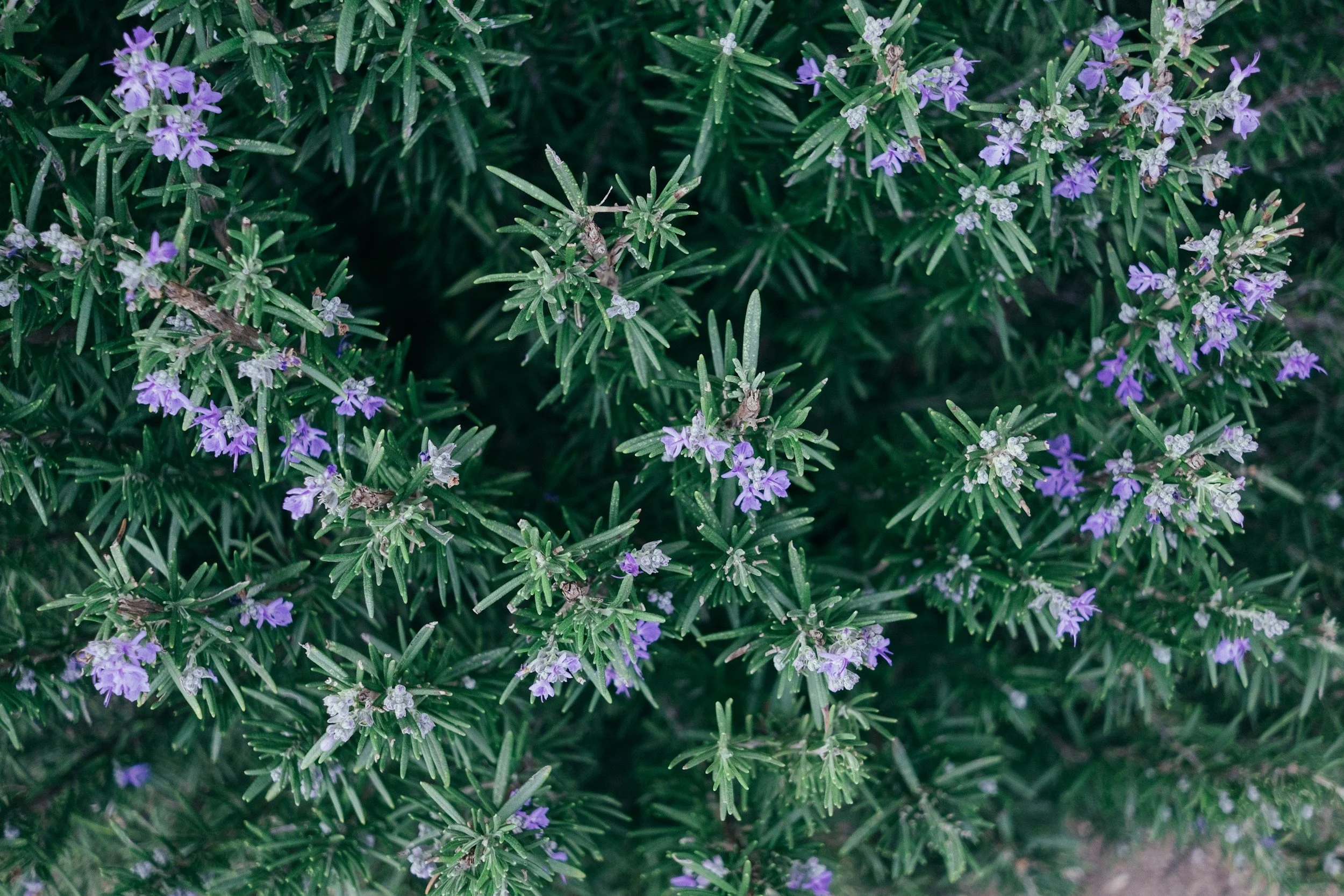
Rosemary is an evergreen shrub in the mint family, Lamiaceae, with needle-shaped leaves that are dark green on top and pale and downy underneath, and small blue to white flowers along the stems. King's American Dispensatory describes it as 2 to 4 feet tall, native to the countries around the Mediterranean, and grown in nearly every garden for its scent.1 It tolerates drought, poor soil, and salt air, which is where the old name "dew of the sea" comes from.
- Native range: the dry, stony coasts of the Mediterranean, from Spain to Greece. The 1918 US Dispensatory records the town of Grasse in southern France producing 20,000 to 25,000 kilograms of the oil a year in the 1880s.2
- Where it grows now: warm, dry climates worldwide. In the United States it lives outdoors in roughly USDA zones 8 to 10 and in containers everywhere else.15
- Identifying the dried leaf: King's gives leaves just over an inch long, about 2 lines (a sixth of an inch) wide, edges rolled under, firm, dark and shining above, whitish beneath, with a strong balsamic scent and a warm, bitter, camphor-like taste.1
- Part used: the leaf, with or without the flowering tops. The essential oil is distilled from the fresh flowering tops.2
- Harvest: sprigs can be cut through the growing season. Dried rosemary holds its oil far better on the stem than as crushed leaf, so strip only what you need. See the Growing section for details.
The name change
Linnaeus placed rosemary in its own genus, Rosmarinus, in 1753. A 2017 DNA study by Drew and colleagues found that Rosmarinus and four other small genera sit inside the sage genus, and the authors concluded that folding them all into Salvia served the botanical community best.9 The accepted name is now Salvia rosmarinus. Books, labels, and most research still say Rosmarinus officinalis, and both names mean the same plant. Rosemary is therefore a close relative of garden sage , and the two share several compounds, including camphor and rosmarinic acid.
Traditional Use
The traditions below describe how practitioners have used rosemary. These are historical and clinical records, not instructions. None of this is medical advice.
Energetics
Warming, drying, pungent and bitter. Rosemary moves blood toward the surface and the head, warms cold digestion, and dries damp, stagnant conditions. Cook's Physiomedical Dispensatory calls the leaves diffusively stimulating and relaxing, with a warm infusion acting as a mild diaphoretic (promotes sweating) and nervine (acts on the nervous system).3 It suits people who run cold, with sluggish digestion, cold hands, low energy, and a foggy head. It is a poor match for people who run hot, with irritability, flushing, or dry, inflamed tissue.
Western herbalism
- Memory and the head. Rosemary has been tied to memory since ancient Greece, where students wore it while studying. Grieve records the oil as a nervine and stomachic used for headache, and describes rosemary wine, made by steeping fresh sprigs in white wine and taken in small amounts for a weak heart with palpitation.4
- Digestion. Grieve calls the oil carminative (relieves gas) and an excellent stomachic (digestive tonic).4 Commission E approved the leaf internally for dyspeptic complaints (indigestion), and the EMA's 2024 leaf monograph carries the same traditional indication for dyspepsia and mild gut spasm.5,6
- Hair and scalp. Grieve says spirit of rosemary was used chiefly in hair lotions to stimulate the hair bulbs and prevent premature baldness, and that a cold infusion of leaf and flower was one of the best hair washes known, effective against dandruff.4 The 1911 British Pharmaceutical Codex still listed a rosemary hair lotion. I cover the modern version of this use, along with nutrition and other herbs, in Herbs and Supplements for Healthy Hair and Faster Growth .
- Joints and circulation. Hungary Water, a distilled rosemary spirit dating to at least the 1300s, was rubbed into stiff limbs and gouty hands and feet.4 Commission E approved the leaf externally as supportive therapy for rheumatic complaints and circulatory problems, and both EMA monographs list minor muscle and joint pain and minor peripheral circulatory complaints as traditional external uses.5,6,7
- Menstruation. Cook used the warm infusion for menses suppressed by exposure to cold and for painful menstruation.3 King's lists rosemary as an emmenagogue (a substance that promotes menstrual flow).1 This use is the reason therapeutic doses are avoided in pregnancy.
The Eclectics
The Eclectic physicians of the 1800s used rosemary less than their European counterparts. King's American Dispensatory records it as stimulant, antispasmodic, and emmenagogue, "seldom used in this country, except as a perfume for ointments, liniments, embrocations," with the oil dosed at 3 to 6 drops.1 Spirit of rosemary was used as a nerve stimulant and applied externally to ease local pain.1
The Physiomedicalists
William Cook's 1869 dispensatory gives a fuller picture of internal use than King's. He describes the warm infusion for cold, sluggish states: suppressed menses, painful periods, flatulent colic, and nervous headache, and notes the plant's action on the scalp.3 His framing of rosemary as a diffusive stimulant that also relaxes is the clearest energetic description in the older American literature.
European regulatory monographs
Germany's Commission E approved rosemary leaf internally for dyspeptic complaints and externally as supportive therapy for rheumatic complaints and circulatory problems, and listed pregnancy as a contraindication.5 The European Medicines Agency revised its rosemary monographs in May 2024. The leaf monograph accepts the tea as a traditional product for dyspepsia and mild gut spasm, and the leaf bath for minor muscle and joint pain and minor peripheral circulatory disorders.6 The oil monograph accepts 6 to 10 percent rosemary oil in creams and ointments for the same external uses, adults only.7
Modern clinical use
David Hoffmann lists rosemary as carminative, antispasmodic, antidepressant, rubefacient (draws blood to the skin), antimicrobial, and emmenagogue, and uses it for depression with weakness, tension headache, and poor circulation, as well as externally in liniments.8 Contemporary herbalists reach for it when a person is cold, foggy, and low, and pair it with peppermint and lemon balm in teas, where the cooler mints balance its strong flavor.
Constituents and What They Do
Rosemary carries two chemically different groups. One leaves with steam and dissolves in alcohol and oil. The other is water soluble. That split decides how you prepare it, which the preparations section builds on.
| Constituent | Amount and solubility | What studies show |
|---|---|---|
| Volatile oil: 1,8-cineole, camphor, alpha-pinene, camphene, borneol, bornyl acetate | About 1 to 2.5 percent of the dried leaf; the 1898 yield figures run 1.4 to 2 percent.2 Dissolves in alcohol and fat, poorly in water, and evaporates with steam. | The scent and the warming, carminative action. The 1918 US Dispensatory identifies the oil as stimulant and rubefacient, used chiefly in liniments.2 Camphor and 1,8-cineole are also the compounds behind the internal-use caution: the oil concentrates them far beyond anything in the leaf. |
| Rosmarinic acid and other phenolic acids (caffeic, chlorogenic) | Water soluble; extracts well in hot water and in alcohol. Shared with lemon balm and sage. | Antioxidant and anti-inflammatory activity in laboratory work. A concentrated phenolic extract reduced iron absorption from a meal in humans.13 No trial has tested rosemary tea for the antioxidant claims. |
| Carnosic acid and carnosol (diterpenes) | Fat soluble, concentrated in the leaf. Extract in alcohol and oil, not water. | Most current laboratory interest in rosemary as an antioxidant and nerve-protective plant centers on these two, in cell and animal models using isolated compounds. Mechanism data only; no human outcome trial. |
| Flavonoids: apigenin, diosmin, luteolin, and their glycosides | Water and alcohol soluble. | Antioxidant activity in the laboratory. Diosmin is studied elsewhere for vein tone, but not as a rosemary preparation. |
| Triterpenes: ursolic acid, oleanolic acid | Fat and alcohol soluble. | Studied for skin and hair applications in cell and animal work. No human trial of a rosemary preparation isolates their effect. |
| Tannins and a bitter principle | Water soluble. Noted by King's as the source of the astringent, bitter taste.1 | Mild astringency. Tannins can reduce iron absorption when tea is taken with meals, a separate mechanism from the phenolic extract above. |
Nearly all of the rosmarinic acid and carnosic acid research is laboratory or animal work using isolated compounds or concentrated extracts. It describes mechanisms. It does not show what a cup of rosemary tea does in a person.
What the Research Shows
Rosemary has far more laboratory data than human data. The four trials below are the strongest human work available, and none is large. Read together: a low dose of leaf powder improved one memory measure in older adults while a high dose impaired it, a month of capsules improved self-reported memory and mood in students, rosemary oil on the scalp matched 2 percent minoxidil for hair count over six months in a trial with no placebo group, and a rosemary extract cut iron absorption from a meal by about a fifth. The traditional digestive and circulatory uses have no trial behind them at all and rest on consistency across sources.
Low-dose leaf powder and memory speed in older adults
- Design: 28 adults with an average age of 75. Each person received plain tomato juice and juice with 750, 1,500, 3,000, or 6,000 mg of dried rosemary leaf powder on separate days, with a 7-day washout between visits and computerized cognitive testing at 1, 2.5, 4, and 6 hours after the drink.10
- Findings: participants scored better on speed of memory after the 750 mg dose than after placebo. After 6,000 mg they scored worse. Other cognitive measures were impaired at several doses, less consistently.
- Dose: 750 mg of leaf powder, a single dose, which is under half a teaspoon. Whole dried leaf, not an extract.
- Limitations: 28 people, single doses, effects measured over one afternoon. Mixed results across measures make this a signal for low doses rather than proof. The full text is distributed by the McCormick Science Institute, the research foundation of the McCormick spice company, so treat the funding as industry-linked. Co-author Keith Wesnes developed the commercial Cognitive Drug Research test system used in the trial.
Oral rosemary and memory, mood, and sleep in students
- Design: 68 university students in Iran took 500 mg of rosemary in capsules twice daily for one month, or placebo capsules.11
- Findings: the rosemary group reported better prospective and retrospective memory, lower anxiety and depression scores, and better sleep quality than the placebo group after one month.
- Dose: 1,000 mg daily, in two capsules. Whether the capsules held dried leaf or an extract is not stated in the abstract.
- Limitations: every outcome was a self-reported questionnaire rather than an objective test. Healthy young adults over four weeks. Unclear plant material. No industry funding is stated; the work came from a university herbal medicine research center.
Rosemary oil versus 2 percent minoxidil for pattern hair loss
- Design: 100 people with androgenetic alopecia (hormone-related pattern hair loss) were randomly assigned to rosemary essential oil or 2 percent minoxidil solution on the scalp for six months, with microphotographic hair counts at baseline, three months, and six months.12
- Findings: neither group changed at three months. At six months both groups had a significant increase in hair count, with no difference between them. Scalp itching was reported more often with minoxidil.
- Dose: rosemary essential oil, a concentrated preparation. Not a leaf rinse. The dilution used is not stated in the abstract.
- Limitations: no placebo group, so the trial cannot show that either treatment beat doing nothing. It compared against 2 percent minoxidil rather than the 5 percent strength more often used. One trial, not yet repeated at this size. No industry funding is stated. I discuss this trial and how to use rosemary on the scalp in the hair growth article .
Rosemary extract and iron absorption
- Design: healthy women ate the same test meal with and without a rosemary extract, with iron absorption measured using radiolabeled iron.13
- Findings: nonheme iron absorption (the plant form of iron) fell by 21 percent when the rosemary extract was present. Green tea extract in the same study reduced it by 28 percent.
- Dose: a concentrated antioxidant extract of the kind added to processed foods, in a single meal.
- Limitations: the extract is not leaf or tea, so the size of the effect from culinary or tea use is unknown. Funded by the Danish Ministry of Education, with no industry sponsor stated. Included because it is the basis of the iron caution in Safety.
Dosing Perspectives
Not medical advice. The doses below are educational. They show how different herbalists, traditions, and regulators have approached rosemary so you can see where they agree and where they differ. They are not a recommendation for you. Work with your healthcare provider or a clinical herbalist before using rosemary beyond food amounts, especially if you are pregnant, have low iron, have a gallbladder or liver condition, or take medication.
| Source | Preparation | Dose (as stated) | Use |
|---|---|---|---|
| King's American Dispensatory (1898) | Essential oil; spirit of rosemary | Oil 3 to 6 drops; spirit 1 fluid drachm | Internal (historical; internal oil use is not recommended today); spirit applied externally for local pain |
| US Dispensatory (1918) | Essential oil | 3 to 6 minims (0.2 to 0.4 ml) | Internal (historical); notes a fatal poisoning from the oil |
| Cook, Physiomedical Dispensatory (1869) | Warm infusion of the leaves | Drunk freely as a warm infusion | Internal; cold infusion as a hair wash, external |
| Grieve, A Modern Herbal (1931) | Essential oil; Spirit B.P.; cold infusion of leaf and flower | Oil 1/2 to 3 drops; spirit 5 to 20 drops | Internal (historical); infusion as a hair rinse, external |
| German Commission E | Dried leaf, or equivalent preparation | 4 to 6 g daily | Internal for dyspeptic complaints; external for rheumatic and circulatory support |
| European Medicines Agency, leaf monograph (2024) | Dried leaf as herbal tea; bath additive | Tea: 1 to 2 g in 150 to 250 ml boiling water, 2 to 3 times daily, 2 to 6 g per day. Bath: 50 g decocted in 1 liter of water or added directly, 2 to 3 times a week | Internal (tea), adolescents and adults, not under 12; external (bath), 35 to 38°C for 10 to 20 minutes |
| European Medicines Agency, oil monograph (2024) | Essential oil in creams and ointments | 6 to 10 percent, 2 to 3 times daily | External only, adults; not under 18 |
| David Hoffmann, Medical Herbalism (2003) | Infusion; tincture 1:5 in 40 percent alcohol | 1 to 2 teaspoons dried herb per cup, covered, 10 to 15 minutes, three times daily; tincture 1 to 2 ml, three times daily | Internal |
| Pengelly trial (2012) | Dried leaf powder | 750 mg, single dose | Internal; the dose that improved memory speed. 6,000 mg impaired it |
The regulatory sources and Hoffmann agree on a daily leaf dose of a few grams, which is one to three cups of tea. The one dose-ranging trial in humans found the low end helpful and the high end harmful to the measure it tested, so the evidence favors the low end of these ranges. The oil rows are a separate scale and are listed for the historical record. Two of the oldest sources dosed the oil by the drop internally, and the same 1918 text that gives a dose also records a death from it, which is why no modern source on this page recommends swallowing the oil.
Preparations by What You Want to Extract
King's notes that rosemary "yields its properties to water or spirits, but more fully to alcohol."1 The volatile oil and rosmarinic acid come out in hot water. Carnosic acid, carnosol, and the triterpenes come out in alcohol and oil. Match the preparation to the goal. If the methods are new to you, start with my article on decoctions versus infusions.
Solubility of the constituents
- Volatile oil (cineole, camphor, pinene): alcohol and fat. Poorly soluble in water. Leaves with the steam from an open cup.
- Rosmarinic acid and flavonoids: water and alcohol. A hot infusion pulls these fully.
- Carnosic acid, carnosol, ursolic acid: alcohol and oil. Water leaves most of them in the leaf.
- Tannins: water. Longer steeps pull more, which is why a long-brewed cup tastes drier.
Preparations that fit the chemistry
- Covered infusion. One to two teaspoons of dried leaf, or a 3-inch fresh sprig, per cup of just-boiled water. Cover and steep 10 to 15 minutes.8 The lid keeps the volatile oil in the cup. This is the preparation for digestion, a foggy head, and a warming winter tea. Peppermint and lemon balm balance the strong flavor.
- Tincture. 1:5 in 40 percent alcohol per Hoffmann;8 a higher proof, 60 percent or above, pulls more of the fat-soluble diterpenes. Tincture is the practical way to include rosemary in a circulatory or nervine formula at small doses, and it is the only home preparation that carries every constituent group.
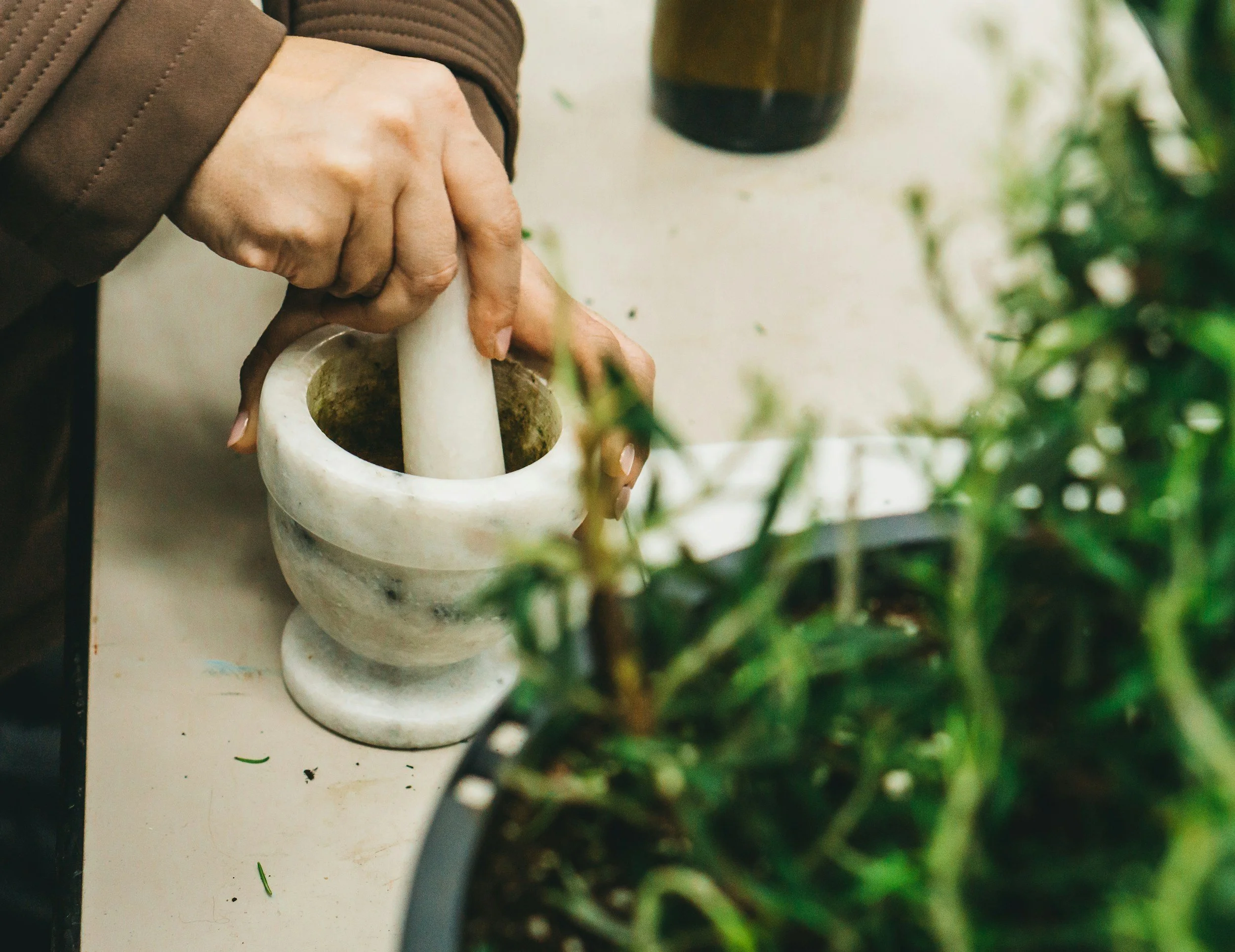
- Infused oil. Dried leaf steeped in olive or jojoba oil for four weeks, then strained. This carries carnosic acid and the volatile oil and is the base for scalp oils, salves, and massage oils for stiff joints. It is not the same thing as the essential oil and is far milder.
- Hair rinse and salt spray. A strong infusion, cooled, poured over the hair after washing and left in. Grieve's version added borax;4 a splash of apple cider vinegar does the same job of cutting residue. For a leave-in styling version, my rosemary salt spray recipe combines the infusion with pink Himalayan salt for texture. The hair trial used the essential oil, a stronger preparation, so a rinse or spray should be expected to do less.
- Bath. The EMA's 50 g decocted in a liter of water and added to a warm bath, 2 to 3 times a week, for tired muscles and cold extremities.6 Water plus heat pulls enough oil for the skin and the nose, which is the point of a bath.
- Culinary. Fresh or dried leaf with roasted vegetables, meat, bread, and beans. Daily culinary use delivers a low dose in the range the memory trial found helpful, along with fat, which improves extraction of the diterpenes.
- Essential oil, diluted, on the skin. The EMA range is 6 to 10 percent in a cream or salve, adults only.7 For inhalation, a few drops in a bowl of hot water. Keep it away from the eyes and off mucous membranes. See Safety.
Preparations to skip
- Essential oil by mouth. Two 19th-century sources dosed it by the drop, and the 1918 US Dispensatory records a fatal poisoning.2 The whole leaf as tea or tincture gives the internal use without the concentrated camphor. No modern source on this page supports swallowing the oil.
- Long decoction. Simmering the leaf for 20 minutes drives off the oil and leaves a bitter, tannic cup. The EMA's decoction is for the bath, not the teapot.6
- Glycerite as the main preparation. Glycerin extracts the oil and diterpenes poorly. It works as a sweet carrier for a tincture, not as a substitute for one.
- Water infusion for the carnosic acid claims. If the laboratory work on carnosic acid is what interests you, tea will not deliver it. Tincture, infused oil, or the leaf cooked in fat will.
Growing Your Own Rosemary
Rosemary is one of the easiest medicinal herbs to grow in the United States, and one of the easiest to kill with too much care. It comes from stony, dry Mediterranean hillsides and wants those conditions reproduced. Most losses come from wet roots, not cold.
- Sun and soil. University of Maryland Extension recommends full sun and well-drained soil with a pH between 6.5 and 7.0.15 Avoid heavy clay. In the ground, plant on a slight mound or in a raised bed. In pots, use a cactus mix or a standard potting mix with about a third coarse perlite or grit added. Skip peat-heavy mixes, which hold water and push the pH down.
- Watering. Toronto Master Gardeners advise letting the soil become nearly dry between waterings and never leaving the plant waterlogged.16 Water deeply, let the excess run out, and empty the saucer. Rosemary does not wilt when overwatered. The needles stay upright while the roots rot, and the plant fails suddenly.
- Hardiness. In the ground, rosemary is a reliable perennial in roughly USDA zones 8 to 10. In zone 7 it may survive against a south-facing wall with mulch. Cultivars sold as cold-hardy, 'Arp' being the most widely available, tolerate more cold than the standard type. Here in Missoula (zone 5b) it is a container plant that comes indoors for winter.
- Containers. Use a pot with drainage holes, ideally unglazed terracotta, which breathes. Toronto Master Gardeners note that digging a rosemary out of a bed to pot it up rarely works, so a plant you intend to overwinter should be container-grown from the start.16 Repot every two or three years in spring, one size up.
- Overwintering indoors. Bring the pot in before the first hard frost. University of Wisconsin Extension recommends a cool, bright spot under 65°F, away from heat registers and radiators, since warm dry indoor air dries out the needles.17 A south or west window with at least 6 hours of sun, or a grow light, is enough. Water only when the top two inches are dry. Good air circulation and watering the soil rather than the leaves help prevent the powdery mildew that often shows up on indoor rosemary.16 In spring, after frost danger passes, move it outside gradually over a week.
- Feeding. Light. Rosemary in the ground usually needs no fertilizer. For containers, Toronto Master Gardeners suggest a balanced fertilizer after flowering, paired with a trim to keep the plant bushy.16 Too much nitrogen produces soft growth that attracts pests.
- Propagation. Cuttings are the practical route. University of Maryland notes seed can be slow to germinate, and cuttings root quickly when taken in spring during active growth.15 Take 4-inch tips of soft new growth, strip the lower needles, and root them in damp perlite or sand in bright shade. Expect some to fail, so take twice as many as you need.
- Harvest and drying. Cut sprigs any time during the growing season, taking no more than a third of the plant at once. Dry the sprigs whole in a warm, dark place with airflow, then strip the needles into a jar as you use them.
Safety and Cautions
Not medical advice. Herbs contain active compounds that can interact with medications and health conditions. Culinary rosemary has a long safety record, and the EMA reports no overdose ever recorded for the leaf or for the oil used on the skin.6,7 The cautions below apply to therapeutic doses of the leaf and to the essential oil, which is a different substance at a different strength. Talk with your healthcare provider or pharmacist before using rosemary beyond tea if any of them apply to you.
Pregnancy and nursing
King's and Cook both record rosemary as an emmenagogue.1,3 Commission E lists pregnancy as a contraindication for the leaf,5 and both EMA monographs state that safety in pregnancy and lactation has not been established and do not recommend use.6,7 Brinker's Herbal Contraindications and Drug Interactions says to avoid rosemary in pregnancy on two grounds: its emmenagogue and abortifacient reputation, which he grades as empirical (traditional observation rather than trial data), and the toxic side effects of essential oil constituents.18 Culinary amounts are not the concern. Therapeutic doses and the essential oil are. Bring the question to your midwife or doctor.
The essential oil
- Not for internal use. The oil concentrates camphor and 1,8-cineole. The 1918 US Dispensatory records a fatal poisoning from oil of rosemary and gives an internal dose of only 3 to 6 minims.2 I do not use rosemary essential oil internally and I do not recommend it.
- Seizures. A 1999 review in the Journal of Neurology lists rosemary among the camphor- and cineole-rich plant oils reported to trigger seizures in susceptible people, including children exposed through the skin or by inhalation.14 Anyone with a seizure history should avoid the oil and keep it away from children.
- On the skin. The EMA accepts 6 to 10 percent in creams and ointments for adults, and does not recommend it under 18 for lack of data. Keep it out of the eyes and off mucous membranes, and never on broken or irritated skin.7 Patch-test any scalp oil first.
- Allergic reactions. Contact dermatitis is reported for both leaf and oil at an unknown frequency, and the oil monograph adds asthma as a hypersensitivity reaction.6,7
Medications and nutrients
- Iron. A concentrated rosemary extract reduced nonheme iron absorption from a meal by 21 percent in a study of 14 women.13 Brinker attributes the effect to the extract's phenolic components, carnosol, carnosic acid, and rosmarinic acid, which totaled 32.7 mg per test meal, and advises against taking iron at the same time as rosemary preparations rich in phenolic compounds. He grades this interaction Ia, meaning it rests on a human study, and the avoidance advice as empirical.18 The effect of ordinary tea has not been measured, and the leaf's tannins act by a second route. People with low iron, and anyone taking iron supplements, may want to keep rosemary and iron a couple of hours apart and raise it with their provider.
- Drug interactions. Both EMA monographs report none.6,7 Some reference sites list theoretical interactions with anticoagulants, blood pressure medication, and diuretics based on laboratory or animal data. No human interaction has been documented. If you take a medication with a narrow dosing window, involve your prescriber before using rosemary at therapeutic doses.
- Chemotherapy and antibiotics, laboratory only. Brinker records test-tube findings that he grades as speculative (his class III and IIb): a rosemary methanol extract increased the buildup of doxorubicin and vinblastine inside human breast cancer cells by blocking the P-glycoprotein pump that expels drugs from resistant cells, while the isolated compounds carnosic acid, carnosol, and rosmarinic acid did not; ursolic acid increased the cell-killing effect of thalidomide and bortezomib in myeloma cells; and carnosic acid and carnosol increased the activity of tetracycline and erythromycin against drug-resistant Staphylococcus aureus.18 None of this has been tested in a person. It is listed so that anyone receiving chemotherapy knows to mention rosemary supplements to their oncologist, not as a reason to use them.
Conditions
- Gallbladder and liver. The EMA leaf monograph lists bile duct obstruction, cholangitis, liver disease, gallstones, and other biliary disorders as conditions that require medical supervision before oral use.6 Rosemary stimulates bile flow, which is the reason for the caution.
- High blood pressure and the bath. The EMA advises people with hypertension to use a full hot rosemary bath with care, and anyone with heart or kidney failure to consult a doctor first. Joint pain with swelling, redness, or fever should be examined by a doctor rather than bathed.6
- Children. The EMA does not recommend the leaf as a medicine under 12, or the oil under 18, because there is no adequate data.6,7 Food use is fine.
- High doses. The one human dose-ranging trial found 6,000 mg of leaf powder impaired memory speed in older adults.10 Large amounts are also reported to irritate the stomach. Keep doses at the low end of the ranges above.
Energetic caution
Rosemary is warming and drying. People who run hot, with flushing, irritability, or dry, irritated tissue, tend to tolerate it poorly at higher doses. Cook's framing of it as a diffusive stimulant for cold, sluggish states describes the constitution it fits.3 Cooling, moistening herbs suit the opposite pattern better.
Frequently Asked Questions
Does rosemary help hair grow?
One trial found rosemary essential oil on the scalp matched 2 percent minoxidil for hair count over six months, with less itching, in people with pattern hair loss. It had no placebo group, so it does not show rosemary beats doing nothing. Traditional sources used a leaf infusion as a hair rinse for dandruff and scalp health. For the full picture, including nutrition and other herbs, read Herbs and Supplements for Healthy Hair and Faster Growth . Hair loss with a sudden onset or patchy pattern deserves a medical workup.
How do I make rosemary water for my hair?
Simmer a handful of fresh or dried rosemary in water, cool, strain, and use it as a rinse or in a spray bottle. My rosemary salt spray recipe walks through a leave-in version with pink Himalayan salt for texture and optional aloe or jojoba. Keep it in the fridge if your house runs warm.
Is rosemary good for memory?
The tradition says yes, and two small trials point the same direction at low doses: 750 mg of leaf powder improved memory speed in older adults, and 500 mg twice daily improved self-reported memory in students. High doses did the opposite in the older adults. Treat rosemary as supportive, not as a treatment for memory loss.
Can I drink rosemary tea every day?
Regulatory sources give a daily leaf dose of 2 to 6 grams, which is one to three cups of tea, for adults who are not pregnant. The EMA suggests checking with a practitioner if digestive symptoms last more than two weeks. If you have low iron, separate the tea from iron-rich meals or supplements.
Can I take rosemary while pregnant?
Cooking with it is fine. Therapeutic doses and the essential oil are not recommended by Commission E, the EMA, or Brinker because the plant has a traditional history as an emmenagogue and there is no safety data. Bring the question to your midwife or doctor.
Is it safe to ingest rosemary essential oil?
No. The oil concentrates camphor and cineole, historical pharmacy texts record a fatal poisoning, and camphor-rich oils are linked to seizures in susceptible people. Use the whole leaf as tea or tincture for internal use. Reserve the oil for inhalation and diluted skin use in adults.
Why is my rosemary plant dying?
Wet roots, almost every time. Rosemary needs fast-draining soil and should dry out between waterings. Indoors, add dry heated air and low light to the list. See the Growing section above for the fixes.
Is rosemary a type of sage?
Since 2017, yes. DNA evidence placed rosemary inside the genus Salvia, so its accepted name is Salvia rosmarinus. Most labels still use Rosmarinus officinalis. Both names mean the same plant.
Sources
- Felter HW, Lloyd JU. Rosmarinus (Rosemary). King's American Dispensatory, 1898. Public domain, hosted at Henriette's Herbal. Companion entries: Oil of Rosemary and Spirit of Rosemary.
- Remington JP, Wood HC, eds. Oleum Rosmarini (Oil of Rosemary). The Dispensatory of the United States of America, 1918. Public domain, hosted at Henriette's Herbal.
- Cook WH. Rosmarinus officinalis. The Physiomedical Dispensatory, 1869. Public domain, hosted at Henriette's Herbal.
- Grieve M. Rosemary. A Modern Herbal, 1931. Hosted at botanical.com.
- German Commission E monograph, Rosmarini folium (Rosemary leaf). In: Blumenthal M, ed. The Complete German Commission E Monographs. American Botanical Council, 1998. ABC Expanded Commission E, Rosemary. ABC is a nonprofit funded in part by industry membership.
- European Medicines Agency, Committee on Herbal Medicinal Products. European Union herbal monograph on Rosmarinus officinalis L., folium. Final, Revision 1. EMA/HMPC/513940/2021, adopted 29 May 2024. Source of leaf dosing, bath dosing, contraindications, precautions, and adverse effects.
- European Medicines Agency, Committee on Herbal Medicinal Products. European Union herbal monograph on Rosmarinus officinalis L., aetheroleum. Final, Revision 1. EMA/HMPC/513893/2021, adopted 29 May 2024. Source of external oil dosing and the under-18 precaution.
- Hoffmann D. Medical Herbalism: The Science and Practice of Herbal Medicine. Healing Arts Press, 2003 (affiliate link). Rosmarinus officinalis entry.
- Drew BT, González-Gallegos JG, Xiang CL, et al. Salvia united: the greatest good for the greatest number. Taxon. 2017;66(1):133-145. DOI: 10.12705/661.7.
- Pengelly A, Snow J, Mills SY, Scholey A, Wesnes K, Butler LR. Short-term study on the effects of rosemary on cognitive function in an elderly population. Journal of Medicinal Food. 2012;15(1):10-17. DOI: 10.1089/jmf.2011.0005. Full text distributed by the McCormick Science Institute; co-author Wesnes developed the commercial test system used.
- Nematolahi P, Mehrabani M, Karami-Mohajeri S, Dabaghzadeh F. Effects of Rosmarinus officinalis L. on memory performance, anxiety, depression, and sleep quality in university students: a randomized clinical trial. Complementary Therapies in Clinical Practice. 2018;30:24-28. DOI: 10.1016/j.ctcp.2017.12.007.
- Panahi Y, Taghizadeh M, Marzony ET, Sahebkar A. Rosemary oil vs minoxidil 2% for the treatment of androgenetic alopecia: a randomized comparative trial. Skinmed. 2015;13(1):15-21. PubMed. No placebo group.
- Samman S, Sandström B, Toft MB, et al. Green tea or rosemary extract added to foods reduces nonheme-iron absorption. American Journal of Clinical Nutrition. 2001;73(3):607-612. DOI: 10.1093/ajcn/73.3.607. Funded by the Danish Ministry of Education.
- Burkhard PR, Burkhardt K, Haenggeli CA, Landis T. Plant-induced seizures: reappearance of an old problem. Journal of Neurology. 1999;246(8):667-670. DOI: 10.1007/s004150050429. Case reports and review.
- University of Maryland Extension, Home and Garden Information Center. Rosemary.
- Toronto Master Gardeners. How to Grow Rosemary: A Toronto Master Gardeners Guide.
- University of Wisconsin-Madison Extension, Kenosha County. Holiday Rosemary. December 2020.
- Brinker F. Rosemary. In: Herbal Contraindications and Drug Interactions, 4th edition. Eclectic Medical Publications, 2010, pages 276-277. Evidence grades as printed: pregnancy caution empirical; iron interaction class Ia (human study); chemotherapy and antibiotic findings classes III and IIb (in vitro).
This monograph is updated as new research and sources become available.

Ivy Ham
I'm Ivy Ham, a clinical herbalist dedicated to blending traditional healing wisdom with modern science, and revealing how nature's remedies can enhance everyday wellness. Through my blog, I share insights on herbal solutions, nutrition, and holistic practices to guide you toward a more balanced, vibrant life.
Certified clinical herbalist · Missoula, Montana · Read more about Ivy
Meet the Other Salvias
Rosemary joined the genus Salvia in 2017. Salvia holds nearly a thousand species in the mint family (Lamiaceae), and two others have entries in this library. Neither is interchangeable with rosemary.
Garden Sage
Salvia officinalis
The astringent, drying kitchen sage. Traditionally used as a mouth and throat rinse and to reduce excess sweating. Contains thujone, so its safety section covers dose limits.
Read the sage monographRed Sage (Dan Shen)
Salvia miltiorrhiza
A Chinese medicine root, not a culinary herb. Traditionally used to move blood and clear heat, and studied for cardiovascular support. Carries a documented warfarin interaction.
Read the red sage monograph