What Is NAC Made From? Human Hair, Feathers, and Better Options
Key Takeaways
- NAC is made by acetylating L-cysteine, and industrial L-cysteine has traditionally been extracted from keratin sources: human hair collected in China, duck feathers, and hog bristles.
- Supplement labels almost never disclose which source was used.
- NAC has strong evidence as an antidote for acetaminophen poisoning and as a mucus thinner, with moderate evidence for compulsive behaviors like hair pulling.
- Dr. Ray Peat argued against cysteine supplementation, citing thyroid suppression and animal studies where NAC accelerated cancer spread.
- Fermentation-derived NAC made from corn sugar exists. Look for "vegan certified" or "produced by fermentation" on the label, since these cannot come from hair or feathers.
This article is for educational purposes only and is not medical advice. Do not stop or change any prescribed medication without talking to your doctor. NAC interacts with nitroglycerin and some blood thinners, so check with your healthcare provider before starting it.
What Is NAC?
NAC stands for N-acetylcysteine. It is the amino acid L-cysteine with an acetyl group attached, which makes it more stable and easier to absorb than plain cysteine. Once you swallow it, your body strips the acetyl group off and uses the cysteine to build glutathione, the main antioxidant your cells make for themselves.
Cysteine is the bottleneck in glutathione production. Your liver usually has plenty of the other two building blocks, glutamate and glycine, so raising cysteine tends to raise glutathione. That single mechanism explains most of what NAC is marketed for.
NAC does not occur in food. Cysteine does, in eggs, meat, dairy, and garlic, but the acetylated form only comes from a factory. That matters more than most people realize, and I will get to why below.
What Is NAC Used For?
People take NAC for liver support, lung congestion, immune function, fertility, and mental health. The evidence behind those uses varies a great deal, so I have sorted them by how solid the research actually is.
Strong evidence Established medical use
NAC is the standard hospital antidote for acetaminophen (Tylenol) overdose, where it restores the liver's glutathione fast enough to prevent fatal damage. It has held that role since the 1970s. It is also an approved mucolytic, meaning it breaks the disulfide bonds in thick mucus and thins it, which is why it shows up in treatment for chronic bronchitis and COPD.
Moderate evidence Human trials, mixed or small
A placebo-controlled trial at the University of Minnesota found that 1,200 to 2,400 mg of NAC daily reduced hair pulling in adults with trichotillomania, with 56 percent of the NAC group much improved versus 16 percent on placebo. Smaller trials show similar signals for skin picking and OCD, likely through NAC's effect on glutamate signaling rather than glutathione. Results in children have been weaker.
Preliminary evidence Animal and cell studies
Claims around longevity, fertility, blood sugar, and general detox rest mostly on rodent and cell work. Interesting, not proven, and worth holding loosely.
What Is NAC Made From? Hair, Feathers, and Bristles
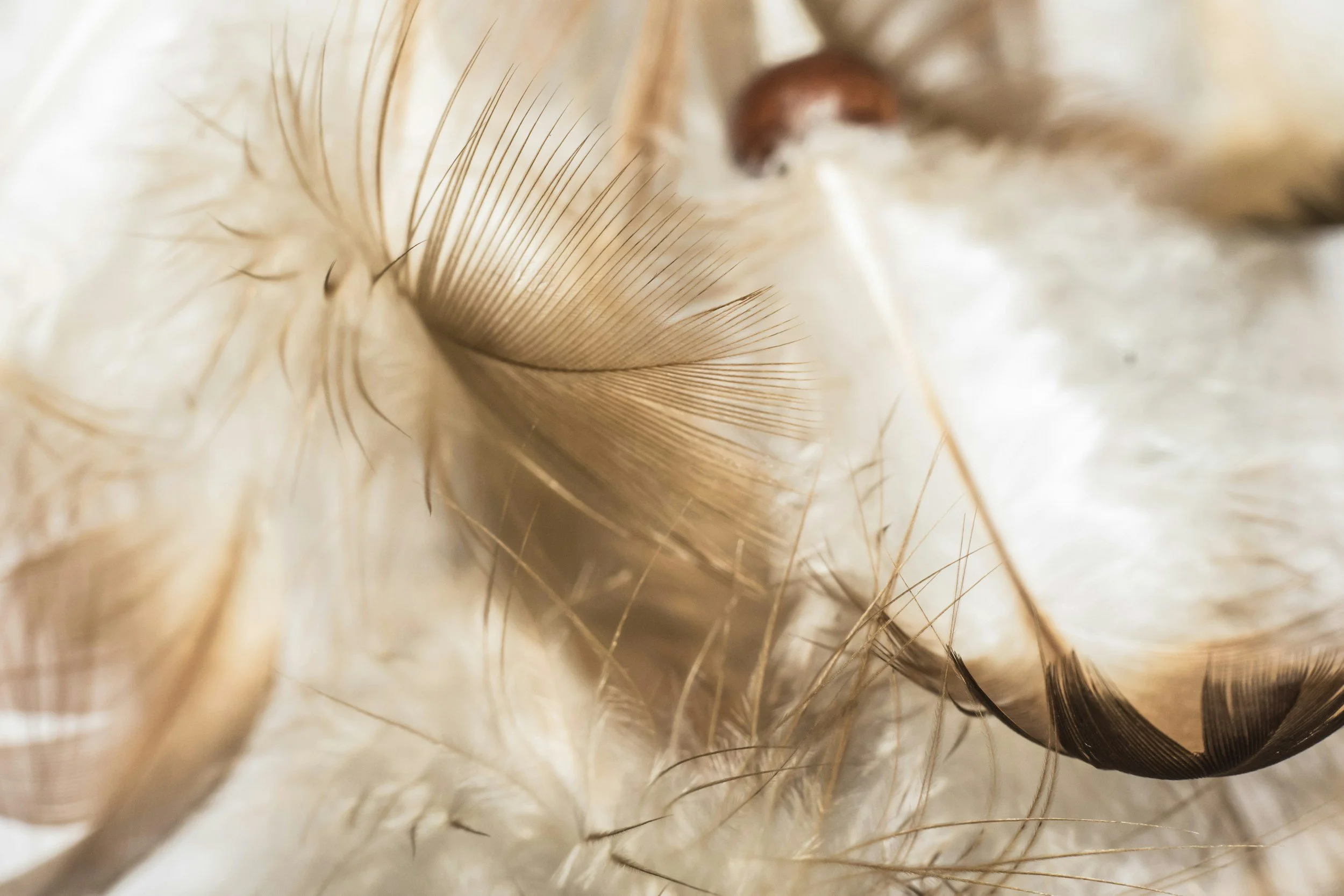
NAC starts as L-cysteine, and industrial L-cysteine has a supply chain most supplement companies would rather not print on the label. Cysteine is sulfur-rich and concentrated in keratin, the protein that makes up hair, feathers, hooves, and horns. The cheapest way to get it at scale is to collect keratin waste and boil it in hydrochloric acid, then purify the cysteine out through electrolysis.
The keratin itself comes from three main places. Human hair swept from the floors of barbershops and salons in China. Duck feathers from poultry processing. Hog bristles from slaughterhouses. The Vegetarian Resource Group, an independent nonprofit that interviews ingredient suppliers directly, has tracked this for decades. Their 2007 report estimated duck feathers at roughly 80 percent of supply. Their 2011 follow-up got conflicting answers, with one supplier naming hog hair as 90 percent of Chinese production and a competing manufacturer stating the major source was human hair, with feathers and hog hair as backup when the hair supply ran low. The takeaway is that the mix shifts with price and availability, and human hair remains in the supply chain because it yields more cysteine per pound than feathers do.
China produces most of the world's L-cysteine. Once the powder reaches a supplement manufacturer, its origin is invisible. A white crystalline ingredient is a white crystalline ingredient, and no US labeling rule requires the source to be disclosed. Unless a company states otherwise, there is no way to know whether the NAC in a given bottle began as hair, feathers, or bristles.
There is a second path. In 2001, the German chemical company Wacker developed a microbial fermentation process that grows cysteine from corn sugar, with no animal or human input. Fermentation-derived cysteine costs more, so the keratin route still dominates food and commodity supplement production. This is why the fix in the last section of this article works: fermentation is the only way to make a product that can carry vegan certification.
What Dr. Ray Peat Said About Cysteine
Sourcing is not the only reason to think twice. Dr. Ray Peat argued for years that supplementing cysteine works against a high metabolic rate, and his objections deserve space here.
His first concern was the thyroid. Peat wrote that muscle catabolism releases large amounts of cysteine, and that cysteine, methionine, and tryptophan suppress thyroid function, citing lab work by Carvalho and colleagues showing that cysteine inhibits thyroid peroxidase, the enzyme that attaches iodine during thyroid hormone production. In his article on gelatin, stress, and longevity, he recommended balancing muscle meats with gelatin and glycine partly to dilute the cysteine load. For a supplement, that logic runs in reverse: NAC is a concentrated cysteine dose taken on purpose.
His second concern was cancer. Peat pointed to Tannenbaum and Silverstone's 1949 feeding studies, where adding cystine to the diet increased tumor incidence in mice, and he argued that indiscriminate antioxidant supplementation can protect tumor cells from the oxidative stress that would otherwise limit them. Later research backed that direction. A 2014 study in Science Translational Medicine found NAC accelerated lung cancer progression in mice, and a 2015 follow-up from the same group found NAC doubled melanoma metastasis to lymph nodes without affecting the primary tumor. These are animal studies, so I am labeling them preliminary for humans, but they are the reason researchers now caution people with existing cancer against antioxidant supplements.
Peat's position was that glutathione status is better supported by adequate protein, sugar, and thyroid function than by loading one amino acid. Whether or not you follow him all the way there, the days of treating NAC as harmless are over.
What to Do Instead
The food-first route
If your goal is glutathione, the raw materials are already in food. Eggs, dairy, and well-raised meat supply cysteine in its natural context, packaged with the other amino acids your body expects alongside it. Following Peat's framing, I pair muscle meats with gelatin or bone broth so glycine and cysteine arrive together rather than cysteine alone. Glycine is the other rate-limiting glutathione precursor, and it supports thyroid function instead of working against it.
If you still want to take NAC
Buy fermentation-derived. Several brands now sell NAC made from L-cysteine grown by microbial fermentation on corn sugar, and these carry third-party vegan certification precisely because no hair, feather, or bristle input is possible in that process. On the label, look for the words "vegan certified," "fermented," or "produced by fermentation." Plain "vegetarian capsule" only describes the capsule shell, not the cysteine inside it, so do not accept it as an answer. When a label says nothing about the source, email the company and ask directly whether their L-cysteine is keratin-derived or fermentation-derived. Companies using the clean process are quick to say so, because it costs them more and they want credit for it.
Keep doses modest, take it with food to spare your stomach, and skip it entirely if you have an active cancer diagnosis unless your oncologist signs off, given the animal data above.
FAQ
When should I take NAC, morning or night?
Timing has little research behind it. Most trials dosed it two or three times daily with meals. Some people report vivid dreams or restlessness when taking it late, so if that happens to you, move it to the morning.
Is NAC good for your liver?
In an emergency, yes, and it is the proven hospital treatment for acetaminophen poisoning. As a daily supplement for general liver support, the human evidence is thin, and adequate protein does most of the same work.
Is NAC vegan?
Only if the label says so. Unlabeled NAC is likely made from keratin, meaning human hair, duck feathers, or hog bristles, none of which qualify. Vegan-certified NAC is fermentation-derived.
How much NAC per day?
Clinical trials commonly used 600 to 1,800 mg daily in divided doses, with the trichotillomania trial going up to 2,400 mg. Start low, and clear it with your doctor if you take nitroglycerin, blood thinners, or blood pressure medication.
Sources
- Vegetarian Resource Group. "Everything You Ever Wanted to Know About L-Cysteine." Vegetarian Journal, 2008. Independent supplier survey.
- Vegetarian Resource Group. "L-Cysteine in Bread Products Still Mostly Sourced from Human Hair, Duck Feathers, Hog Hair." VRG Blog, March 2011. Independent supplier survey.
- Carvalho DP, et al. Inhibition of thyroid peroxidase by amino acids. 2000. VERIFY DOI BEFORE PUBLISH.
- Tannenbaum A, Silverstone H. "Effects of varying proportion of protein in the diet." Cancer Research 9, 162, 1949.
- Sayin VI, et al. "Antioxidants accelerate lung cancer progression in mice." Science Translational Medicine, 2014;6(221):221ra15. doi:10.1126/scitranslmed.3007653. VERIFY DOI BEFORE PUBLISH.
- Le Gal K, et al. "Antioxidants can increase melanoma metastasis in mice." Science Translational Medicine, 2015;7(308):308re8. doi:10.1126/scitranslmed.aad3740. Confirmed via PubMed.
- Grant JE, et al. "N-acetylcysteine, a glutamate modulator, in the treatment of trichotillomania." Archives of General Psychiatry, 2009;66(7):756-763. VERIFY DOI BEFORE PUBLISH.
- Ray Peat, PhD. "Gelatin, stress, longevity." raypeat.com.