Herbal Medicine Books: 4 Titles a Clinical Herbalist Keeps
Working herbalists keep reference books within reach because no one remembers every dose and every interaction. A home practitioner needs the same. The six herbal medicine books below are the ones I would buy first, in the order I would buy them, and each one is on my own shelf and gets used.
As an Amazon Associate, Ivy Herbal earns from qualifying purchases at no extra cost to you. Shopping with my link helps support the costs of maintaining this site. Thank you for your support.
This article is for educational purposes. It is not medical advice. Herbs can interact with medications and health conditions. Talk with a qualified healthcare provider before using herbs, especially for children, during pregnancy, or alongside prescriptions.
What makes a herbal medicine book worth shelf space
Evidence: practitioner experience
A useful reference tells you what to use and how to prepare it. Books that list herbs without dosing, preparation, or safety notes send you searching elsewhere at the moment you need an answer. Look for author credentials, a safety section, and an index you can scan without effort.
1. Healing with the Herbs of Life by Lesley Tierra
Evidence: published reference text; author is a licensed acupuncturist and registered herbalist (AHG)
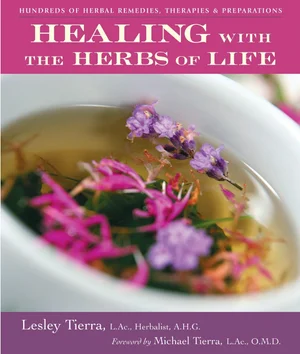
This is the one general herbal I would buy first, and the one I hand to anyone who tells me herbalism is new to them. Tierra breaks down how the body works, what goes wrong in common complaints, and which herbs and foods help, in language that assumes no prior training. The monograph section covers Western, Chinese, and Ayurvedic herbs side by side, which is rare in a single volume, and every herb listed comes with dosing and cautions. You will open this book more than any other on the list.
Buy on Amazon (affiliate link)
2. Medical Herbalism by David Hoffmann
Evidence: published reference text; author is a founding member of the American Herbalists Guild
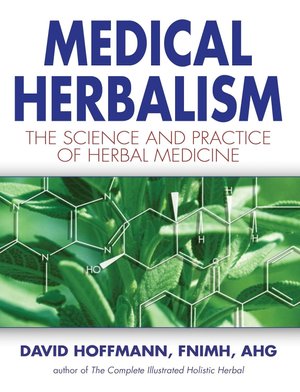
This is the textbook used in many clinical herbalism programs. Hoffmann covers plant chemistry, how the body absorbs and clears different constituents, and how to build a formula for a specific person rather than a general complaint. The body-systems chapters walk through each organ system with the herbs that act on it and the research behind them. It is a dense read, so come to it after Tierra, when you want to understand why a remedy worked.
Buy on Amazon (affiliate link)
3. Herbal Contraindications and Drug Interactions by Francis Brinker
Evidence: published safety reference; author is a naturopathic physician
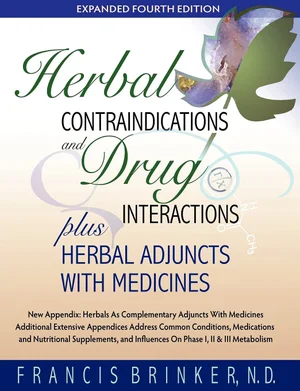
Brinker devotes an entire book to the safety information most herbals cover in a paragraph. Each entry lists the conditions an herb should not be used with, the medications it can interfere with, and the published evidence behind each warning, graded by how strong that evidence is. Pregnancy and lactation cautions are included for every herb. Anyone who takes a prescription, or gives herbs to someone who does, should check this book before starting a new plant. It is the reference I open first when a client sends me their medication list.
Buy on Amazon (affiliate link)
4. The Herbal Medicine-Maker's Handbook by James Green
Evidence: published reference text; author is a practicing herbalist and educator
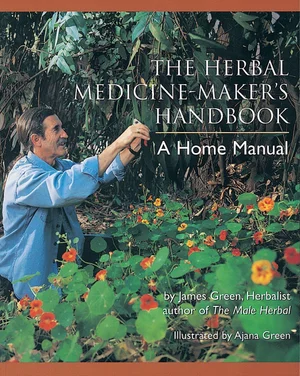
Green covers how to turn plant material into a preparation that works. Infusions, decoctions, tinctures, infused oils, salves, syrups, and hydrosols each get step-by-step instructions. The part most beginners skip, and the reason this book stays on my shelf, is his explanation of which method extracts which constituents from each plant part. Water pulls some compounds from a root that alcohol will not, and the reverse is also true, so choosing the wrong solvent can leave the active constituents behind in the jar. If you plan to make your own remedies rather than buy them, read this one early. My guide to herbal preparation types is a shorter starting point if you want an overview first.
Buy on Amazon (affiliate link)
5. Natural Healing for Babies and Children by Aviva Jill Romm
Evidence: published reference text; author is a physician, midwife, and herbalist

Many herbs that are fine for a parent are not appropriate for a toddler, and adult doses do not scale down cleanly. Romm, an MD and midwife, wrote this book for that gap. It covers colic, earache, fever, digestive upset, and other everyday complaints with child-specific remedies and dosing guidance. The book is short enough to find an answer at 2 a.m. without reading a chapter. Pair it with a pediatrician's advice for anything that lasts past 48 hours.
Buy on Amazon (affiliate link)
6. Where There Is No Doctor by David Werner, Carol Thuman, and Jane Maxwell
Evidence: published health manual; free digital edition from the publisher
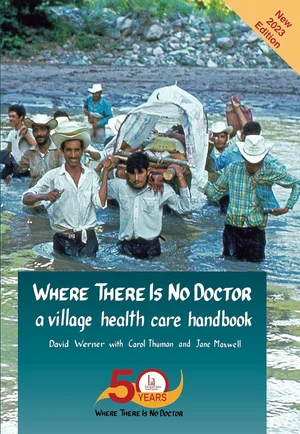
This is a plain-language first aid and primary care manual rather than a herbal. It was written for village health workers who may be hours from a clinic, and it covers how to recognize common illnesses, what to do in an emergency, and when a situation needs a hospital regardless of what is on hand. The illustrations make it usable under stress. Hesperian Health Guides, the nonprofit publisher, offers the full text online at no cost through its HealthWiki. A printed copy is still worth owning for when the power is out.
Buy on Amazon (affiliate link)
How to build this library on a budget
Evidence: practitioner experience; publisher policy
Every title here has been in print for over 20 years, so used copies are common and cheap. Check the used listings on Amazon or a site like ThriftBooks before paying new-book prices, and remember that local booksellers can order any of them. Where There Is No Doctor costs nothing to read online.
Your public library likely has several of these. When it does not, ask about interlibrary loan. Most library systems will pull a copy from a partner library at no charge.
Which book to read first
Evidence: practitioner experience
I would start with Tierra, especially if you're new to herbalism. It lays out how herbs act in the body in plain terms, and every other book on this list assumes you already have some basic knowledge. After that, I'd say the Herbal Contraindications and Drug Interactions would be the next one to prioritize as most books don't go in-depth as much as Brinker does on interactions. Move to Hoffmann when you want the chemistry behind a remedy, and to Green when you are ready to make your own preparations. Keep Romm and Werner as references rather than cover-to-cover reads.
Sources
- Tierra L. Healing with the Herbs of Life. Crossing Press.
- Hoffmann D. Medical Herbalism: The Science and Practice of Herbal Medicine. Healing Arts Press.
- Brinker F. Herbal Contraindications and Drug Interactions. Eclectic Medical Publications.
- Green J. The Herbal Medicine-Maker's Handbook: A Home Manual. Crossing Press.
- Romm AJ. Natural Healing for Babies and Children. Storey Publishing.
- Werner D, Thuman C, Maxwell J. Where There Is No Doctor: A Village Health Care Handbook. Hesperian Health Guides. Free digital edition: en.hesperian.org