Herbs for Bee Stings and Bug Bites: Plantain, Yarrow, and First Aid
Though we are nearing the end of summer, I'm still seeing plenty of mosquitos and other biting insects around here, so I figured it would be a good time to share what I use for my family to repel bugs and to take care of bites and stings when they happen. I've also included what the research says about each plant, since a lot of what gets passed around online about herbs for stings has never been tested.
Key takeaways
- Get the stinger out, wash the area, and put something cold on it before reaching for any herb.
- Plantain leaf is what I use most often for bee stings and mosquito bites, and it grows in almost every yard.
- Yarrow, sage, and lady's mantle have a long history as leaf poultices, but none of them have been studied on stings in people.
- In a 2023 lab study of 20 essential oils, clove and cinnamon gave the longest protection from mosquito bites and tick crossings.
- Trouble breathing, swelling of the face or throat, or a venomous snake bite means emergency care. Herbs are not part of that.
Please keep in mind that none of the information in this article is medical advice. This is what I use for my family, shared for educational purposes only. I'm a certified clinical herbalist, not a doctor. Seek emergency care for any allergic reaction, and check with a qualified provider before using herbs on children, during pregnancy, or alongside medication.
What to do first for a bee sting or bug bite
Evidence: general first aid, no herbs involved.
If you've been stung by a bee, scrape the stinger out sideways with a fingernail or the edge of a card, wash the spot with soap and water, and hold something cold on it for about ten minutes. Wasps and hornets don't leave a stinger behind, so you can go straight to washing and cooling. For mosquito bites, wash the area and try not to scratch, since scratching is usually what turns an itchy bump into an infected one. Once the bite is clean and cooled off, that's when I put a leaf poultice on it.
It's also important to keep an eye on the person who was stung, especially for the first half hour. Hives spreading away from the sting, swelling of the lips or tongue, wheezing, dizziness, or a tight feeling in the throat are signs of a whole-body allergic reaction. If you see any of those, call emergency services and use an epinephrine auto-injector if one has been prescribed. None of the herbs in this article are a substitute for that.
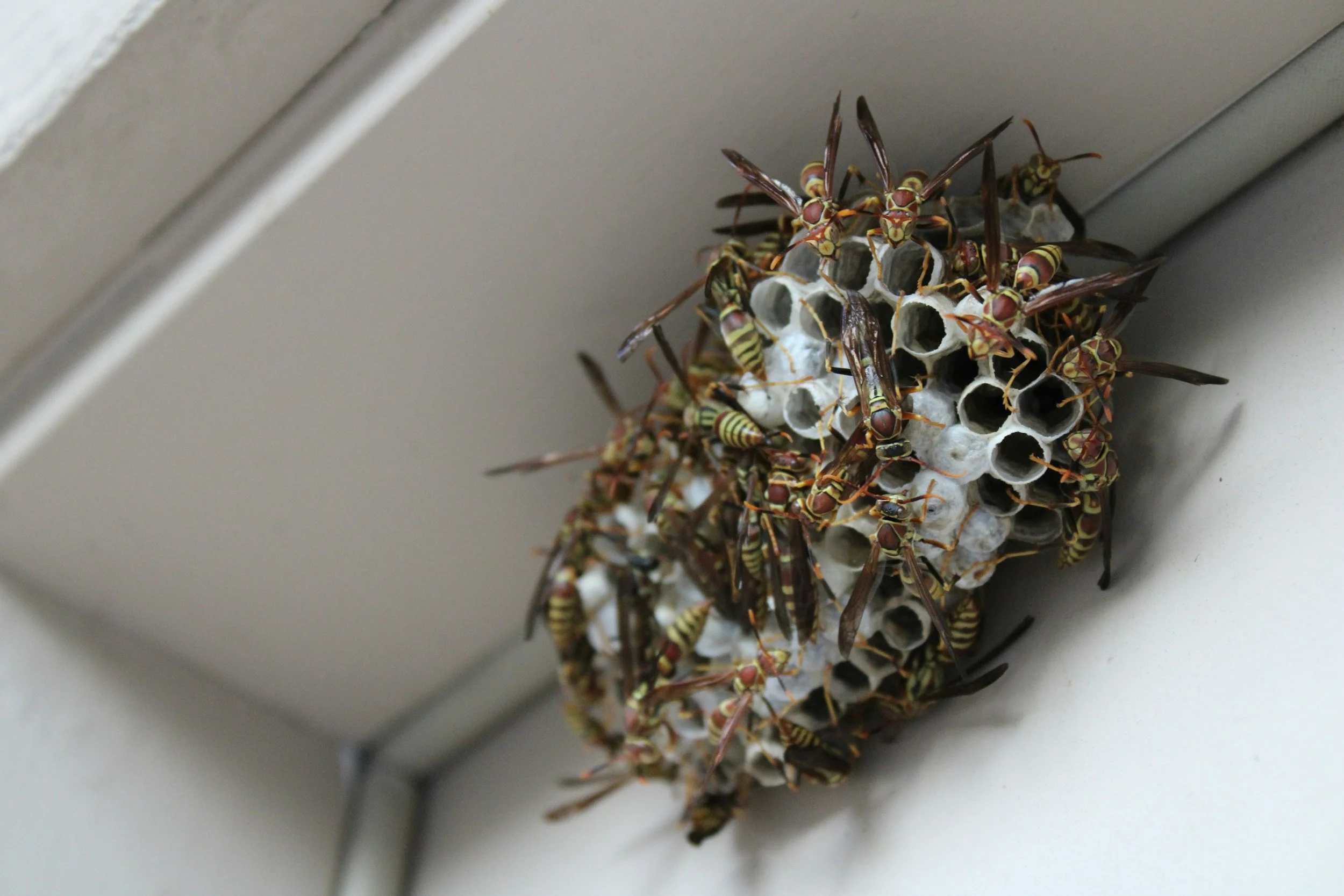
Herbs for bee stings and bug bites
Evidence: traditional use for every herb here. Lab and animal studies for plantain, tobacco, and echinacea, plus one human field study for tobacco. No human trials on stings for any of them.
Plantain (Plantago major, Plantago lanceolata)
Broadleaf and ribwort plantain are my first choice, partly because they grow in nearly every lawn and along every trail. Plantain leaf has been used on wounds and skin irritations in Europe, Asia, and the Americas for centuries. A 2000 review in the Journal of Ethnopharmacology went through the research on it and found anti-inflammatory and wound-related activity in leaf extracts, which the authors linked to its polysaccharides, iridoid glycosides, and caffeic acid compounds.1 None of those studies looked at stings, so I can only tell you what I've seen at home. A crushed plantain leaf on a fresh mosquito bite calms the itch for me and my kids, and it's free.
To use it, pick a clean leaf, chew it or crush it until the juice comes out, press it onto the washed bite, and hold it in place with another leaf or a bandage for about twenty minutes. If the itch comes back, put on a fresh leaf.
Tobacco (Nicotiana tabacum)
A chewed tobacco leaf on a sting is a folk remedy across the American South and much of Latin America, and it's one I still use. A small spit poultice of tobacco takes the pain down faster than plantain does for me. I keep it to a single leaf on the sting itself, and I use plantain instead for my kids, since nicotine does pass through skin and children have a lot less body weight to spread it across.
Tobacco is also a traditional antiparasitic herb, which is the main reason I keep it in the garden. Nicotine acts on the same nicotinic receptors in worms that commercial dewormers like levamisole and pyrantel target. In the lab, tobacco leaf extract killed the sheep nematode Marshallagia marshalli,2 and feeding tobacco leaves to sheep lowered their worm counts.3 In people, a 2014 study of Aka foragers in the Congo basin found that the heaviest smokers carried the lowest worm burdens, and that treating men with albendazole lowered their nicotine intake afterward, which the authors read as unconscious self-medication.4 None of that research is about skin, and none of it is a reason to skip getting a suspected parasite diagnosed, but it's the background for why I don't worry about a leaf on my arm.
Yarrow (Achillea millefolium)
Yarrow leaf is astringent and aromatic, and it was traditionally used on minor wounds and bites the same way as plantain. Its essential oil has been tested in a lab against blacklegged ticks and American dog ticks, where it both repelled and killed them,8 which is why you'll see it again in the prevention section. For a sting, I use whichever of the two is growing closer to where I'm standing.
Sage (Salvia officinalis) and lady's mantle (Alchemilla vulgaris)
Both of these are tannin-rich leaves that were used in European folk medicine as cooling poultices. The tannins tighten the skin surface and the aromatic oils in sage give a slight numbing feeling. You can crush fresh leaves and apply them like plantain, or make a strong tea, let it cool in the fridge, and use it as a compress over a cluster of bites.
Echinacea (Echinacea angustifolia, Echinacea pallida)
Echinacea root shows up in older American herbals for spider and insect bites, and there's a bit of lab research behind that tradition that I think is worth explaining. In 1993, Italian researchers found that caffeoyl esters in Echinacea angustifolia root, including echinacoside, inhibited an enzyme called hyaluronidase in a test tube.5 Hyaluronidase is an enzyme many venoms use to spread through tissue. In brown recluse venom, it was shown in rabbit skin to make the wound from the venom's main toxin larger.6 Nobody has tested whether echinacea on skin does anything to that enzyme in a living person, so I see this as a nice overlap between tradition and chemistry, not a reason to skip a doctor's visit for a spider bite. One detail worth knowing: echinacoside is concentrated in the roots of E. angustifolia and E. pallida, and there's only a trace of it in the more common E. purpurea.
Purslane and spiderwort
Purslane (Portulaca oleracea) is a succulent garden weed whose juicy leaves were traditionally used for caterpillar stings and nettle rash. Spiderwort (Tradescantia virginiana) was used by several Native American nations as a crushed-leaf poultice for insect bites. Both are traditional use only. I wasn't able to find any lab or clinical research on either one for bites.
How to prevent bug bites naturally
Evidence: lab repellency studies for essential oils and yarrow. The habitat advice is standard mosquito control.
Deal with standing water
Mosquitos lay their eggs in stagnant water, and you can often see the larvae wriggling in the bottom of a planter, a bird bath, or a puddle. I dump out anything that's been holding water for more than a few days. Around the property I also try to make things inviting for dragonflies, bats, and spiders, since they eat mosquitos at every stage of life. I leave the spider webs alone and keep some tall perennials around for the dragonflies to land on.
Mosquito dunks and bits
For water you can't dump, like a stock tank, a rain barrel, or a low spot that never dries out, a lot of people use mosquito dunks or bits. These contain a soil bacterium called Bacillus thuringiensis israelensis, or Bti, which produces proteins that are toxic to the larvae of mosquitos, black flies, and fungus gnats once the larvae eat it. It's sold as safe for pets, birds, and fish, and it's approved for use in organic growing. What I haven't been able to find is good independent research on what it does to a whole pond or trough over time. Other insects drink that water, birds and deer drink it, and the microorganisms living in it are part of a food web that nobody has really mapped. I use dunks in the one trough I can't drain, and I skip them anywhere I can just tip the water out.
Yarrow leaf on your skin
Rubbing a fresh yarrow leaf over your forearms and ankles leaves a little of its volatile oil on your skin. In the 2023 tick study, yarrow oil repelled blacklegged tick nymphs, but at concentrations much higher than a rubbed leaf gives you,8 so think of this as light protection for a trip to the garden rather than an afternoon in the brush. If you're headed into real tick country, I wrote a separate natural tick repellent guide.
Essential oil spray
Essential oils are still the most popular natural bug repellent, and they do work. In a 2023 New Mexico State University study, researchers tested 20 essential oils from the EPA's minimum-risk pesticide list using an arm-in-cage mosquito test and a standard tick-crossing test. Clove and cinnamon oil, at 10 percent in a lotion, gave the longest complete protection from both mosquito bites and tick crossings.7 Both of those oils are irritating to skin at that strength, so I keep my own spray weaker and put most of it on my clothes.
The bottle I keep by the front door is 4 ounces of distilled water with 8 drops cinnamon leaf, 8 drops lemongrass, 6 drops peppermint, and 4 drops clove. Shake it before each use, spray your socks, cuffs, and hat, and mist the backs of your hands. Reapply after an hour or so. I'm phasing essential oils out of most of my routine because of the sustainability and safety issues I go into in my essential oil article, but I'll probably keep using them this way outdoors. Don't use them on children under two, on broken skin, or during pregnancy without talking to a qualified practitioner first.
Why I prefer plants over DEET and permethrin
Evidence: lab and animal toxicology. This section makes no claims about cancer or disease in people.
When I was in elementary school I did a book report on Rachel Carson, whose 1962 book Silent Spring helped get DDT banned. DDT was applied directly to skin and clothing during and after World War II, and it took decades for the health and environmental problems to be taken seriously. Ever since that book report I've wondered how people kept bugs off before these chemicals existed, and that curiosity is a big part of why I lean toward plants first.
DEET is the most studied repellent on the market and it does work. My hesitation comes from a 2009 study in BMC Biology, where researchers found that DEET inhibited cholinesterase, an enzyme involved in nerve signaling, in both insect and mammalian nerve tissue, and that it made carbamate insecticides more toxic when the two were combined.9 The authors published a correction in 2012 about solvent concentrations in some of the experiments, and the main finding stood. This is lab research, not a study of health outcomes in people, so I read it as a reason to keep DEET off my kids and off myself when a plant-based option will do the job.
Permethrin is a synthetic pyrethroid sold for treating clothing and gear rather than skin. A 1994 National Research Council review of permethrin-treated military uniforms estimated that a small portion of the applied dose reaches the skin and gets absorbed, and it summarized the animal toxicology that existed at the time.10 Treating your clothes instead of your skin keeps exposure lower. If you're going into heavy tick habitat, permethrin on your boots and pant cuffs is a reasonable trade-off, and my tick repellent article covers where the plant oils fall short.
Spider bites, snake bites, and allergic reactions
Evidence: clinical reviews and a systematic review of first aid. This section is about what to do, and none of it involves herbs.
Brown recluse and other venomous spiders
A bite from a brown recluse or hobo spider can turn into a spreading, open wound over several days. Wash it, put cold on it, keep the limb still, and have it looked at, since early evaluation matters if the lesion starts growing. I'd also take a photo of it every day so a clinician can see how it's changing. The echinacea research I mentioned above is lab chemistry and is not a replacement for that visit.
Snake bites
Antivenom given through an IV is the only specific treatment for a venomous snake bite.11 A 2016 systematic review of snakebite first aid found no evidence to support suction devices, cutting the wound, tourniquets, or traditional topical remedies, and found that several of them caused harm.12 Keep the person calm and still, take off rings and anything tight near the bite, keep the limb about level with the heart, and get to a hospital. Please don't put a poultice, clay, or any herb on a snake bite.
Anaphylaxis
A whole-body allergic reaction to a sting can close someone's airway within minutes, and epinephrine is the treatment. I don't know of any herb that works fast enough or strongly enough to stand in for it. If anyone in your household has ever reacted to a sting with anything beyond local swelling, it's worth talking to their provider about carrying an auto-injector.
Frequently asked questions
Quick answers, with links back to the full sections.
What is the best herb to put on a bee sting?
Fresh plantain leaf, crushed and pressed onto the washed sting, is the easiest to find and has the longest record of use on skin. Get the stinger out and cool the area first. See herbs for stings and bites.
Does plantain help with mosquito bites?
Plantain has a long tradition of use on itchy bites, and its leaf extracts show anti-inflammatory activity in lab studies. It hasn't been tested on mosquito bites in people, so what we have is tradition plus lab data.
Is tobacco good for bee stings?
A chewed tobacco leaf is a long-standing folk remedy for sting pain, and I use it myself. Tobacco also has documented antiparasitic activity in lab and animal studies. I use plantain for children because nicotine absorbs through skin. See herbs for stings and bites.
Which essential oil works best against mosquitos?
In a 2023 comparison of 20 oils, clove and cinnamon at 10 percent gave the longest complete protection from mosquito bites. Both are irritating at that strength, so dilute them more and focus on clothing. See prevention.
Are mosquito dunks safe?
They contain Bti, a bacterium that kills mosquito, black fly, and fungus gnat larvae, and they're labeled safe for pets, fish, and birds. Their effect on the rest of the life in a pond or trough over time hasn't been well studied. Dump water where you can and save dunks for what you can't drain.
Can herbs treat a snake bite?
No. Antivenom is the only specific treatment, and topical remedies were among the first aid practices a systematic review found unsupported or harmful. Keep still and get to a hospital. See emergencies.
Thank you for taking the time to read my article. Let me know in the comments if you learned something new, or if there's a plant you use for bites that I didn't mention.
Sources
- Samuelsen AB. The traditional uses, chemical constituents and biological activities of Plantago major L. A review. J Ethnopharmacol. 2000;71(1-2):1-21. doi:10.1016/s0378-8741(00)00212-9. PMID 10904143. Narrative review. ↩
- Nouri F, Nourollahi-Fard SR, Foroodi HR, Sharifi H. In vitro anthelmintic effect of tobacco (Nicotiana tabacum) extract on parasitic nematode, Marshallagia marshalli. J Parasit Dis. 2016;40(3):643-647. doi:10.1007/s12639-014-0550-3. PMID 27605759. In vitro. ↩
- Iqbal Z, Lateef M, Jabbar A, Ghayur MN, Gilani AH. In vitro and in vivo anthelmintic activity of Nicotiana tabacum L. leaves against gastrointestinal nematodes of sheep. Phytother Res. 2006;20(1):46-48. PMID 16397920. Sheep study. ↩
- Roulette CJ, Mann H, Kemp BM, et al. Tobacco use vs. helminths in Congo basin hunter-gatherers: self-medication in humans? Evol Hum Behav. 2014;35(5):397-407. doi:10.1016/j.evolhumbehav.2014.05.005. Field study with a small randomized albendazole arm. ↩
- Facino RM, Carini M, Aldini G, et al. Direct characterization of caffeoyl esters with antihyaluronidase activity in crude extracts from Echinacea angustifolia roots by fast atom bombardment tandem mass spectrometry. Farmaco. 1993;48(10):1447-1461. PMID 8117383. In vitro. ↩
- Ferrer VP, de Mari TL, Gremski LH, et al. A novel hyaluronidase from brown spider (Loxosceles intermedia) venom (Dietrich's Hyaluronidase): from cloning to functional characterization. PLoS Negl Trop Dis. 2013;7(5):e2206. doi:10.1371/journal.pntd.0002206. PMID 23658852. Rabbit skin model. Competing interests: none declared. ↩
- Luker HA, Salas KR, Esmaeili D, Holguin FO, Bendzus-Mendoza H, Hansen IA. Repellent efficacy of 20 essential oils on Aedes aegypti mosquitoes and Ixodes scapularis ticks in contact-repellency assays. Sci Rep. 2023;13(1):1705. doi:10.1038/s41598-023-28820-9. PMID 36717735. Laboratory arm-in-cage and tick-crossing assays. ↩
- Pickett LJ, Amiro M, Hawboldt C, Faraone N. Common yarrow (Achillea millefolium) essential oil and main components as potential repellents and acaricides against Ixodes scapularis and Dermacentor variabilis (Acari: Ixodidae) ticks. Exp Appl Acarol. 2023;89(2):287-303. doi:10.1007/s10493-023-00782-7. PMID 36905473. Laboratory. ↩
- Corbel V, Stankiewicz M, Pennetier C, et al. Evidence for inhibition of cholinesterases in insect and mammalian nervous systems by the insect repellent deet. BMC Biol. 2009;7:47. doi:10.1186/1741-7007-7-47. PMID 19656357. Laboratory. Correction published BMC Biol 2012;10:86. ↩
- National Research Council Subcommittee to Review Permethrin Toxicity from Military Uniforms. Health Effects of Permethrin-Impregnated Army Battle-Dress Uniforms. Washington (DC): National Academies Press; 1994. NBK231556. Commissioned by the U.S. Army. ↩
- Gutiérrez JM, Calvete JJ, Habib AG, Harrison RA, Williams DJ, Warrell DA. Snakebite envenoming. Nat Rev Dis Primers. 2017;3:17063. doi:10.1038/nrdp.2017.63. PMID 28905944. Clinical review. ↩
- Avau B, Borra V, Vandekerckhove P, De Buck E. The treatment of snake bites in a first aid setting: a systematic review. PLoS Negl Trop Dis. 2016;10(10):e0005079. doi:10.1371/journal.pntd.0005079. Systematic review. ↩