Natural Deodorant Recipe: A Primally Pure Dupe, Kitchen-Tested
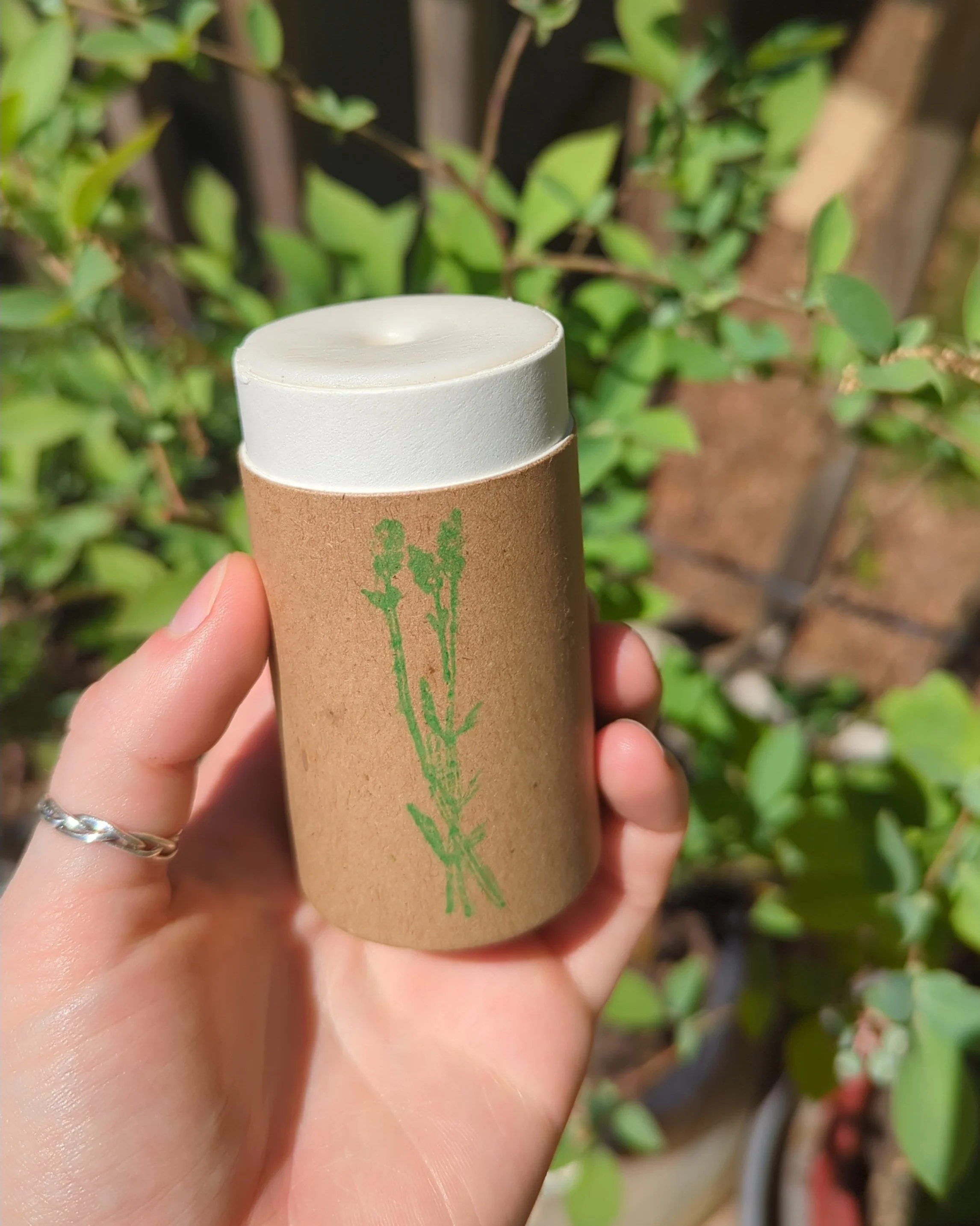
I switched to homemade deodorant after reading the labels on the natural brands at the store and finding the same synthetic fragrance and preservatives I was trying to avoid. This recipe makes one 2.5 oz stick from eight ingredients you can name and source yourself, and it uses the same ingredient list as Primally Pure's unscented deodorant at a fraction of the price. The formula below is the one I use in my own bathroom.
Key Takeaways
- One batch fills a 2.5 oz tube using eight ingredients, all weighed on a kitchen scale.
- The ingredient list matches Primally Pure's unscented stick. Scent it however you want, or leave it plain.
- Essential oils are optional. I explain below why I skip them, with a link to the full safety article.
- Expect an adjustment period when moving off antiperspirant. Give it a month.
This article is for educational purposes only and is not medical advice, diagnosis, or treatment. If you have a skin condition or a reaction to any ingredient, stop use and talk with a qualified practitioner.
Why I Make My Own
Evidence: personal experience and product label reading.
Store-bought natural deodorant was supposed to be the easy fix. Most brands I tried still listed undisclosed fragrance and preservatives, and the formulas I trusted came with boutique price tags. Making it myself solved both problems. I control every ingredient, and the price per stick dropped to pocket change.
What I Avoid and Why
Evidence: federal labeling regulation and in vitro studies. No disease claims are made in this section.
Antiperspirants use aluminum salts to plug sweat ducts, which is what separates them from deodorants. In the United States they are regulated as over-the-counter drugs, and the labeling rules require a printed warning telling people with kidney disease to ask a doctor before use.1 I am not claiming these products cause illness in healthy users. My reasoning is simpler than that. Sweating is a normal body function, and I would rather manage odor than block sweat.
Parabens show up in many commercial sticks as preservatives. In laboratory cell studies they display weak estrogen-like activity.2 Researchers still debate whether that activity matters at the exposure levels from personal care products, and the question is not settled. A homemade stick needs no preservative at all, so I skip the debate entirely.
The word "fragrance" on a label can stand in for dozens of undisclosed compounds. A recipe you mix yourself has no mystery ingredients.
The Adjustment Period
Evidence: anecdotal reports and my own experience. Not formally studied.
Many people notice stronger odor during the first weeks after dropping antiperspirant. A plausible explanation is that the bacterial community under your arms has been living beneath aluminum plugs and preservatives, and it needs time to find a new balance once those are gone. I want to be clear about the limits here. That is a reasonable explanation, not a proven mechanism, and the popular claim that your body is purging stored toxins through the armpit has no research behind it, which is why you will not find a detox protocol in this article.
What worked for me was patience. Wash daily with plain soap, reapply the deodorant as needed, and give the recipe a month before judging it.
What Goes Into This Recipe
Evidence: formulation experience, with in vitro research noted where cited.
Arrowroot Powder
Arrowroot is the largest ingredient by weight. It absorbs moisture and gives the stick a dry, smooth finish close to a commercial product. Cornstarch behaves nearly the same way and can substitute, though I choose arrowroot because stored corn is prone to mold contamination.
Coconut Oil
Coconut oil gives the stick its glide and melts on skin contact. Lauric acid, its dominant fatty acid, slowed the growth of several odor-relevant bacteria in early laboratory work.3 If you want a scent without essential oils, infuse the oil with lavender, lemon balm, or chamomile before you begin.
Baking Soda
Baking soda does the odor work. It raises the pH at the skin surface, and the bacteria responsible for underarm smell grow poorly in an alkaline environment. Some people find it irritating, so start with the amount in the recipe and adjust in future batches.
Grass-Fed Tallow
Tallow firms the stick at room temperature and carries a fatty acid profile close to the oils your skin produces on its own, which is why it spreads and absorbs so well. Render your own from suet or buy it from a ranch you trust. Mine comes from a regenerative operation here in Montana.
Beeswax
Beeswax holds the stick together so it works in a push-up tube. Reduce it and you get a softer paste for jar application.
Non-Nano Zinc Oxide
Zinc oxide has a long history in skin preparations for its soothing, drying character, and it helps neutralize odor compounds directly. Non-nano means the particles are too large to pass into skin. Buy it labeled non-nano and uncoated.
Kaolin Clay
Kaolin is the gentlest of the cosmetic clays. It adds a small amount of extra absorbency and gives the finished stick a silky slip.
Vitamin E Oil
Vitamin E is here as an antioxidant. It slows the oils in the stick from going rancid, which extends shelf life without any preservative.
One handling note: arrowroot, baking soda, zinc oxide, and kaolin are all fine powders. Measure them gently and avoid stirring up dust you would breathe in.
Essential Oils (Optional)
I list essential oils as optional, and I no longer recommend them by default. A published case series linked lavender and tea tree oil products to breast tissue growth in young boys that reversed once the products were stopped.4 Producing a single bottle also requires an enormous quantity of plant material, and the industry gives buyers little visibility into sourcing or purity. My view is that these oils are less safe than their marketing suggests. If you use them, keep the amounts small. Herb-infused coconut oil is my preferred way to scent this recipe.
I wrote a full breakdown of the essential oil research, including the sourcing and transparency problems the industry does not advertise.
Read the essential oil safety articleNontoxic Deodorant Recipe
Evidence: my kitchen-tested formula.
This recipe makes one 2.5 oz (70 g) stick. Weigh your ingredients on a kitchen scale instead of using measuring cups or spoons, because even small variations change the texture.
Ingredients
- 20g Arrowroot Powder, 28% (I used Micronutrients)
- 17.5g Coconut Oil, 25% (Kirkland Signature, 84 fl oz), infused with herbs if desired
- 10.5g Baking Soda, 15% (Arm & Hammer 13.5 lb bag from Costco)
- 8.5g Grass-Fed Tallow, 12%
- 7g Beeswax, 10% (I used Sky Organics)
- 3.5g Non-Nano Zinc Oxide, 5%
- 2.8g Kaolin Clay, 4%
- 0.7g Vitamin E Oil, 1% (about 20 drops)
- Optional: 5-15 drops Essential Oils (Mountain Rose Herbst)
Tools & Supplies
- Kitchen scale
- Small whisk or metal fork
- Heat source to melt your fats and wax
- Heat-safe bowl
- Cooking pot to heat water for the double boiler
- Spatula
- 2.5 oz deodorant containers, the paper push-up tubes I used (affiliate link)
- Metal spoon
Instructions
- Melt: Combine the coconut oil, tallow, and beeswax in a double boiler over low heat. Stir until fully melted and clear. A microwave also works if that is easier.
- Prepare Containers: Ready your deodorant containers by ensuring they are clean and dry.
- Mix Dry Ingredients: Remove from heat and stir in the arrowroot powder, baking soda, zinc oxide, and kaolin clay until smooth and free of clumps.
- Add Vitamin E: Stir in the vitamin E oil, along with essential oils if using, and mix well.
- Pour and Set: Stir once more so the powders stay suspended, then pour into the containers. Let sit for 2-3 minutes before moving to a cool place to firm up.
Notes and Adjustments
Evidence: formulation experience.
You can adjust any ingredient in this recipe up or down to change the texture or performance. For a jar formula applied by hand instead of a tube, reduce the beeswax and add a little more coconut oil. For stronger odor control, add another gram or two of baking soda, a little at a time, then test the hardened texture on a spoon from the freezer. You can always remelt a finished batch and adjust it.
The microwave works in place of the double boiler. Heat the coconut oil, tallow, and beeswax in short increments, stirring between each, then proceed with the rest of the recipe as written.
This recipe is my dupe for Primally Pure's unscented deodorant. It uses the same eight ingredients, in the same order they appear on their label, with the ratios worked out from that order and my own testing. Their unscented stick runs about $18 for the same 2.5 oz this batch makes. Scent yours however you prefer, or keep it plain like theirs.
Troubleshooting
Evidence: formulation experience from repeated batches.
The Deodorant Came Out Lumpy
This is the most common problem I see, and it usually means the mix never got hot enough to melt the beeswax. Beeswax melts at a higher temperature than coconut oil or tallow, so a mix that looks liquid can still carry unmelted wax grains. Remelt the batch and work slowly up to a higher temperature, mixing as you go until every trace of beeswax has melted and incorporated. Clumped powders cause the same texture. Sift the arrowroot, baking soda, zinc oxide, and kaolin before adding them, or if they are already in, mix thoroughly while crushing any clumps against the side of your container until the consistency is smooth and even.
The Paper Tube Leaked
Paper push-up tubes can leak through the bottom when they are not assembled correctly. Before pouring, check that the bottom disc is fully pushed down and sits flush with the bottom edge of the tube.
Not Hard Enough
If your batch cools too mushy for a push-up tube, remelt it and add 2 g more beeswax, then retest. Repeat if needed.
Too Hard
Remelt the batch and add one of the softer oils, 1 g at a time, testing after each addition on a spoon from the freezer to see what the texture will be once cooled. Keep your application method in mind while you adjust. A jar formula wants a paste-like consistency, while a push-up tube needs enough firmness to hold its shape under pressure.
Sources
- Code of Federal Regulations, Title 21, Part 350.50. Labeling of antiperspirant drug products. ↩
- Routledge EJ, Parker J, Odum J, Ashby J, Sumpter JP. Some alkyl hydroxy benzoate preservatives (parabens) are estrogenic. Toxicology and Applied Pharmacology. 1998;153(1):12-19. ↩
- Kabara JJ, Swieczkowski DM, Conley AJ, Truant JP. Fatty acids and derivatives as antimicrobial agents. Antimicrobial Agents and Chemotherapy. 1972;2(1):23-28. ↩
- Henley DV, Lipson N, Korach KS, Bloch CA. Prepubertal gynecomastia linked to lavender and tea tree oils. New England Journal of Medicine. 2007;356(5):479-485. ↩