
Black Cohosh
Actaea racemosa L., syn. Cimicifuga racemosa (L.) Nutt. · Ranunculaceae · dried rhizome and root
Also known as black snakeroot, rattleroot, rattleweed, bugbane, macrotys, squawroot (historical), Cimicifugae rhizoma
- Cooling
- Bitter, acrid
- Antispasmodic
- Nervine
- Antirheumatic (traditional)
- Uterine tonic (traditional)
Educational content, not medical advice. Nothing on this page is a substitute for care from a qualified healthcare provider. Do not stop or change a prescribed medication based on anything you read here. Black cohosh carries a liver caution on regulatory labels in several countries and is not recommended in pregnancy or with hormone-sensitive conditions without medical advice, so talk with your doctor or pharmacist before using it.
About Black Cohosh
Black cohosh is the dried rhizome (underground stem) and root of Actaea racemosa, a woodland perennial in the buttercup family, Ranunculaceae. Botanists moved the plant from the genus Cimicifuga into Actaea in the late 1990s, so both names are current: Actaea racemosa is the accepted botanical name and Cimicifuga racemosa is the name still used by the European Medicines Agency and on most product labels.6,25 The old name comes from Latin cimex (bedbug) and fugare (to drive away), after a European relative used to repel insects.1
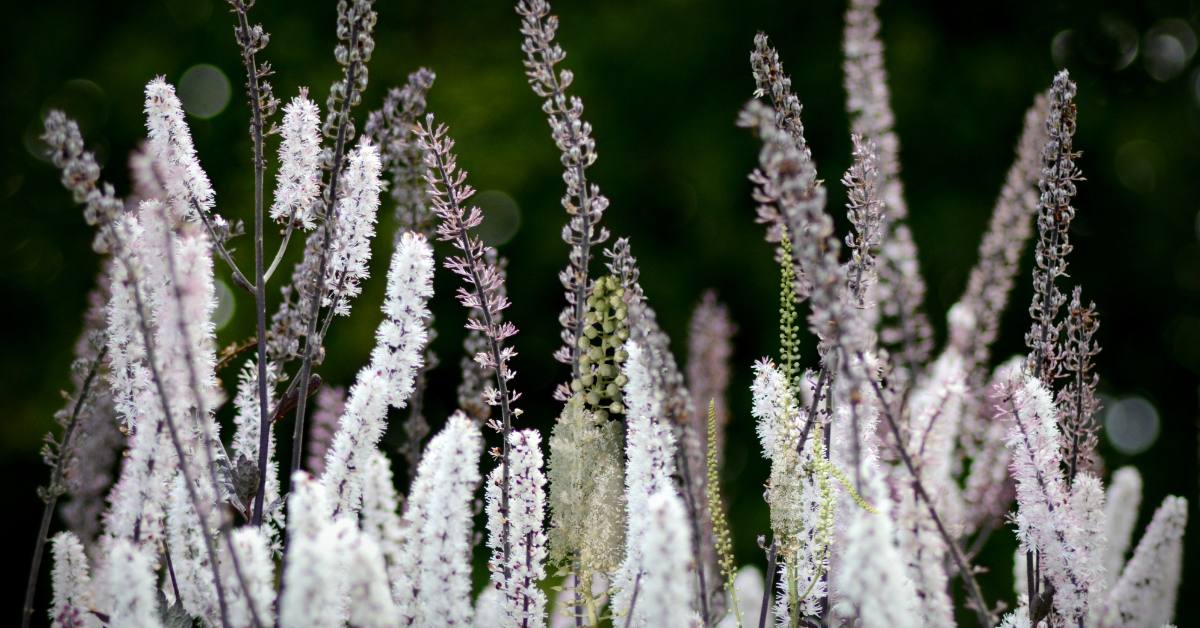
- Identification: a stately plant 4 to 8 feet tall with large, deeply divided, sharply toothed leaves and a long white wand of small flowers from June into September. The flowers smell unpleasant to most people, which is where "bugbane" comes from. The seed pods rattle in winter wind, which gave it "rattleweed" and "rattleroot."1,23
- The medicine: a knotted, blackish rhizome with many long root fibers, harvested in autumn. Cut open, the interior looks like off-white porous wood. The taste is bitter, sharp, and acrid.10,23
- Native range: rich, moist deciduous forests of eastern North America, from Ontario south to Georgia and west to Missouri. It grows best under a tree canopy in slightly acidic, well-drained soil.12
- Names: "black snakeroot" from its use for rattlesnake bite; "squawroot" is recorded by the Eclectics as a name more properly belonging to blue cohosh and is not used on this site.1
Sustainability
Black cohosh is on the United Plant Savers At-Risk list. Annual harvest runs as high as 500,000 pounds dry weight, and an estimated 97 percent of it is wild-dug. Because the root is the medicine, harvest kills the plant. Demand has also led to accidental digging of look-alike Actaea species that are legally protected in several states.12 The plant cultivates easily from seed or root division and is now forest-farmed in Appalachia. Buy cultivated or Forest Grown Verified root from a supplier who names the source, and do not wild-harvest it.
Not blue cohosh
Black cohosh and blue cohosh (Caulophyllum thalictroides) share a common name and a history of use in childbirth and nothing else. They are in different plant families with different chemistry, and blue cohosh carries its own serious cautions. Do not substitute one for the other.1
Not the Chinese sheng ma
The Chinese herb sheng ma is made from Asian Cimicifuga species (C. foetida, C. dahurica, C. heracleifolia), used in that tradition to raise sinking qi and vent rashes. It is a different plant with a different tradition, and Asian species are the main adulterants found in American black cohosh products. This page covers only Actaea racemosa.24,30
Traditional Use
The traditions below describe how practitioners have used black cohosh. These are historical and clinical records, not instructions. None of this is medical advice.
Energetics
Western herbalists read black cohosh as cooling, bitter, pungent, and acrid, with a relaxing and downward-moving quality. Sharol Tilgner lists the taste as bitter, sharp, spicy, and acrid.10 Herbal Reality describes a pungent, mildly bitter, cooling effect and a settled feeling in the nervous system after a dose.9 Felter characterized its properties as sedative, cardiac, anodyne (pain-relieving), and antispasmodic, and called it an ideal utero-ovarian tonic.2 Traditionally it was matched to tense, cramping, aching conditions and to hot, restless states. It has no classical entry in Ayurveda, and Chinese medicine uses a different species.
Native American use
The Eclectic physicians record that black cohosh was "originally an aboriginal and domestic remedy" before they developed its therapy.4 The NIH Office of Dietary Supplements summarizes the documented Native American uses as musculoskeletal pain, fever, cough, pneumonia, sluggish labor, and menstrual irregularities, and the Eclectic record adds rattlesnake bite as the origin of "black snakeroot."1,25 European settlers adopted it as a general tonic for women's reproductive health.25
The Eclectics: macrotys
John King introduced black cohosh into Eclectic medicine in 1844 as a remedy for acute rheumatism and neuralgia, giving the saturated tincture in doses of 10 drops every two hours, increased to 60 drops "or until its action on the brain is observed," meaning headache and dizziness, which he then maintained for several days.4 By the 1898 King's American Dispensatory it was a leading Eclectic medicine, and the specific indications recorded by Scudder were:1
- Muscular pains, rheumatoid muscular pain, and rheumatism "when the pulse is open, the pain paroxysmal, the skin not dry and constricted"
- Uterine pains with tenderness, false pains, irregular pains, "rheumatism of the uterus," and dysmenorrhea (painful periods)
- A sense of soreness with dragging pains in the hips and loins
- Chorea (involuntary jerking movements) associated with absent menstruation
Felter's 1922 Eclectic Materia Medica calls macrotys "primarily a remedy for rheumatoid and myalgic pain" and records its use in labor to increase and normalize weak, erratic contractions, in mastitis and breast pain, and for soreness and tenderness of the womb aggravated by walking or descending stairs. He notes that small doses increase appetite and digestion, that the herb is excreted by skin and kidneys and gives urine its earthy odor, and that it stimulates bronchial secretion enough to serve as a mild expectorant.2 Ellingwood's 1919 materia medica covers the same ground and adds the resinoid macrotin, an impure resin the early Eclectics used and later abandoned.3
The Eclectic record is worth reading because it predates the modern focus on menopause by a century. To King, Scudder, Felter, and Ellingwood, black cohosh was first a muscle, nerve, and joint remedy and second a uterine one. Menopausal use appears in their writing as a minor entry.
Germany and the European regulators
Black cohosh entered European practice in the twentieth century, and by 1989 the German Commission E had approved the root for premenstrual discomfort, dysmenorrhea, and "neurovegetative" menopausal complaints such as hot flashes, sweating, palpitations, sleep disturbance, nervousness, and irritability, with use limited to six months.5 The European Medicines Agency's herbal committee narrowed the indication in its 2018 monograph to menopausal complaints such as hot flushes and profuse sweating, in adult women, for three specific dry extracts, with the same six-month limit before consulting a doctor.6 Germany remains where most of the clinical research was done and where the best-known extract, Remifemin, is made.
Contemporary Western herbalism
Modern herbalists keep both halves of the tradition. Herbal Reality lists neuralgic and rheumatic conditions alongside reproductive and menopausal use.9 Tilgner's monograph treats it as a nervine and antispasmodic with a uterine affinity.10 The menopausal use that dominates the supplement market is the narrowest version of a much wider practice.
Constituents and What They Do
Nobody has proven which compound in black cohosh is responsible for its effects, and that gap explains much of the conflicting research. Many US supplements are standardized to triterpene glycosides because they are easy to measure, but only 6 of the 16 trial extracts in the Cochrane review were standardized that way, and the European monograph defines its preparations by extraction ratio and solvent, not by triterpene content.6,13,25 The UIC work below found that the triterpenes do not account for the serotonin activity of the extract, so a triterpene number on a label does not guarantee the pharmacology this page describes.18
| Constituent | Notes and solubility | What studies show |
|---|---|---|
| Triterpene glycosides (actein, 23-epi-26-deoxyactein, cimicifugoside, cimiracemosides) | The marker compounds. Where products are standardized, it is usually to 2.5 percent triterpene glycosides or to a set amount of 27-deoxyactein. Poorly soluble in water, well extracted by alcohol.5,25 | In the UIC receptor work, isolated triterpenes bound only weakly to the serotonin 5-HT7 receptor and showed no reuptake activity, so they are unlikely to explain the hot-flash effect on their own.18 They are what the NTP standardized its test extract to (7.8 percent) in the two-year animal studies.23 |
| Phenolic acids (fukinolic acid, cimicifugic acids, caffeic and isoferulic acids) | Water- and alcohol-soluble. Fukinolic acid showed weak estrogen-like activity in a 1999 cell study.25 | Bound weakly to serotonin receptors in the UIC assays with no functional activity.18 Antioxidant in laboratory work. No human data on any single phenolic. |
| Nω-methylserotonin (N-omega-methylserotonin, a tryptamine alkaloid) | Present in very small amounts. Water-soluble.18 | Identified in 2008 as the constituent most likely responsible for the serotonin activity of black cohosh extracts: it bound the 5-HT7 receptor at picomolar concentration, activated it, and blocked serotonin reuptake in cells. Serotonin pathways regulate body temperature, which is the proposed link to hot flashes.18 Test-tube findings only; the mechanism is a hypothesis. |
| Formononetin (an isoflavone) | Reported in one 1985 extract and cited for decades as the reason black cohosh "acts like estrogen." | Not detected in 13 wild populations from seven states, nor in Remifemin or a commercial extract, when Kennelly's team looked in 2002 with two independent methods.19 A 2004 paper claimed a trace amount of 3 parts per million; a 2006 recheck again found none.19 If it is present at all, it is far too little to act as a phytoestrogen. |
| Resin (cimicifugin, macrotin) and volatile oil | Alcohol-soluble. The Eclectic resinoid was an impure resin precipitated from tincture with water.3,4 | King held that the resin "possesses all the medicinal properties of the root."3 Not studied in modern work. |
What the Research Shows
Black cohosh has more clinical trials than almost any other Western herb, and they disagree. The pattern is consistent enough to describe. Trials run in Germany on specific manufacturer extracts, many funded by those manufacturers, tend to show benefit for hot flashes and sweating. The two largest independent trials in the United States, both funded by the NIH, found no difference from placebo over a full year. Cochrane reviewers pooling 16 trials called the evidence insufficient either way; a 2023 meta-analysis pooling 22 found a moderate benefit on overall symptoms and a small one on hot flashes. The European regulator read the total as enough to grant a well-established use indication by a vote of 20 to 5, with the five dissenting members from Finland, Ireland, Italy, the Netherlands, and the United Kingdom filing written positions that the trials were of inadequate quality or that the liver risk outweighed the benefit.6 On mechanism, the estrogen explanation has been largely retired and a serotonin explanation has taken its place, so far only in cells. On safety, the liver signal is strong enough to appear on labels while no causal relationship has been established.
Cochrane review: black cohosh for menopausal symptoms
- Design: two Australian academic reviewers searched 15 databases and trial registers through March 2012 and contacted manufacturers. Included trials compared black cohosh alone with placebo or an active drug in perimenopausal and postmenopausal women for 8 to 54 weeks. Doses ran from 8 to 160 mg of extract per day, median 40 mg.
- Findings: pooled results showed no significant difference from placebo on hot-flash frequency or on the menopausal symptom scores that could be combined. Some individual trials were positive. The authors concluded there was insufficient evidence to support or oppose the use of black cohosh for menopausal symptoms and called for larger, better-reported trials.13
- Dose: varied; median 40 mg of extract daily.
- Limitations: the trials used different extracts, solvents, and doses and could not all be pooled. Several were rated at high or unclear risk of bias. The review was independent, but industry authors published a rebuttal in 2013 arguing that pooling different extracts is invalid.17
The HALT trial: black cohosh, multibotanicals, soy, hormone therapy, or placebo
- Design: women aged 45 to 55 with at least two hot flashes or night sweats a day were assigned to 160 mg of black cohosh extract daily, a multi-herb product containing 200 mg black cohosh, the same product plus soy foods, hormone therapy, or placebo, and followed at 3, 6, and 12 months.
- Findings: the hormone therapy group reported fewer and milder symptoms than placebo. Black cohosh did not differ from placebo in the number or intensity of hot flashes and night sweats at any time point. The multi-herb plus soy group had worse symptom intensity than placebo at 12 months.14
- Dose: 160 mg of a 70 percent ethanolic extract daily. The German trials used 5 to 6.5 mg of a different extract equal to 40 mg of root; this extract's root equivalent is not reported the same way, so the two doses cannot be compared by milligram.
- Limitations: the extract was standardized to triterpenes, which may not be the active fraction, and it was not the German isopropanolic product, so manufacturers argue the result does not transfer. Funded by the NIH (NCCAM and the National Institute on Aging) with no industry money, which is its strength.
Black cohosh and red clover versus placebo and hormone therapy
- Design: perimenopausal and postmenopausal women with at least 35 hot flashes and night sweats a week, 55 percent from underrepresented groups, were assigned to 128 mg of black cohosh extract daily, red clover extract, hormone therapy, or placebo, 22 or 23 per arm.
- Findings: vasomotor symptom counts fell in every group over 12 months: 34 percent on black cohosh, 57 percent on red clover, 63 percent on placebo, and 94 percent on hormone therapy. Only hormone therapy differed significantly from placebo. The black cohosh group also reported significantly worse symptom intensity than placebo at 6 and 9 months. Mood, sleep, and sexual outcomes did not differ between groups.15
- Dose: 128 mg of standardized ethanolic extract daily.
- Limitations: small trial. The extract was characterized in detail by the University of Illinois botanical center, which is unusual. NIH-funded through the UIC/NIH Center for Botanical Dietary Supplements Research.
Updated meta-analysis of 22 randomized trials
- Design: a Japanese and Taiwanese academic group pooled randomized trials of black cohosh extracts against placebo, including trials of combination products.
- Findings: black cohosh was associated with a moderate improvement in overall menopausal symptoms (Hedges' g 0.575), a small improvement in hot flashes (g 0.315), and an improvement in bodily symptoms (g 0.418), with no significant effect on anxiety or depressive symptoms. Dropout rates matched placebo.16
- Dose: varied across trials.
- Limitations: including combination products means part of the effect may belong to other herbs. Many of the pooled trials were manufacturer-funded, and heterogeneity between studies was high, which is why this positive result and Cochrane's null result can both be true of the same literature. The authors declared no industry funding for the analysis itself.
The manufacturer's meta-analysis of the isopropanolic extract
- Design: the authors pooled all placebo-controlled randomized trials of one specific extract published between 1987 and 2015, plus one 2019 trial in breast cancer patients.
- Findings: the extract was reported superior to placebo on neurovegetative and psychological menopausal symptoms.17 The EMA's 2025 review noted that this analysis contained no new studies beyond those it had already assessed.8
- Dose: 2 tablets of 2.5 mg dry extract daily, equal to 40 mg of root.
- Limitations: the review covers a single manufacturer's product and its conclusions do not transfer to other black cohosh preparations. One pooled trial tested a combination with St. John's wort, and several of the underlying trials were manufacturer-funded. Authors of this review have ties to the manufacturer, Schaper and Brümmer. Read this as the industry's case.
Does black cohosh act like estrogen? A six-month hormone study
- Design: women with menopausal symptoms took the low or high dose for six months while researchers measured hormone levels (LH, FSH, estradiol, prolactin, SHBG), vaginal cell maturity, and symptom scores.
- Findings: both doses reduced symptom scores about equally. No hormone level changed and vaginal cells did not show an estrogen effect, which the authors read as evidence the extract does not act as a systemic estrogen.20 The 40 mg dose in use today rests partly on this trial.
- Dose: 39 mg or 127 mg of root as isopropanolic extract daily.
- Limitations: no placebo group, so the symptom result cannot be separated from placebo effect. The authors were employees of Schaper and Brümmer, the manufacturer. The hormone measurements are the useful part.
Serotonin activity and the discovery of Nω-methylserotonin
- Design: the University of Illinois at Chicago botanical center tested crude extracts, isolated compounds, and successive fractions of black cohosh for binding to the serotonin 5-HT7 receptor, activation of the receptor, and blocking of serotonin reuptake.
- Findings: crude extracts bound and activated the receptor. Following the activity through the fractions led to Nω-methylserotonin, which bound at 23 picomolar, activated the receptor, and blocked reuptake at 490 nanomolar. Triterpenes and phenolic acids bound weakly and did nothing functionally.18 An earlier UIC rat study had found no estrogenic or anti-estrogenic effect on the uterus at 4 to 400 mg per kg.18
- Dose: not applicable; test-tube concentrations.
- Limitations: all in vitro. The compound is present in very small amounts, and whether enough is absorbed from an oral dose to matter in a human brain is unknown. The serotonin mechanism is a hypothesis, not a demonstrated effect in people. NIH-funded.
Two-year toxicology and carcinogenesis studies in rats and mice
- Design: pregnant rats received 0, 75, 250, or 750 mg per kg daily from day 6 of gestation through nursing, and their female offspring continued the same dose for two years. Female mice received 0 to 1,000 mg per kg daily for two years.
- Findings: "equivocal evidence" of carcinogenic activity in female rats from a marginal increase in rare uterine papillomas with no dose relationship; no evidence in mice. Non-cancer changes appeared in the uterus and ovary of rats and the liver and thyroid of mice. Litter size fell. Mice showed disrupted red blood cell formation and more micronucleated red cells (a marker of chromosome damage) at 3 and 12 months.23
- Dose: the lowest rat dose equals roughly 12 mg per kg in a human; the EMA dose equals about 0.13 mg per kg for a 50 kg woman, nearly 100 times lower.8
- Limitations: animals, gavage, and very high doses of an extract that differs from marketed products. The EMA concluded human relevance is unknown and did not add it to the monograph.8 A follow-up NTP pilot in 23 women who had used black cohosh supplements for at least three months found no increase in micronucleated cells and no blood abnormalities compared with 28 non-users.24 US government funded.
The liver case reports: three causality reviews
- Design: three groups scored the same body of case reports for how likely black cohosh was the cause of the liver injury. The United States Pharmacopeia's committee reviewed 30 cases in 2008; Teschke reanalyzed 69 purported cases in 2010 using a modified version of the RUCAM causality scale; the EMA's first assessment applied RUCAM to 47 reports in 2007.
- Findings: the USP rated all 30 cases "possible" and none "probable" or "certain," and still recommended a label statement advising people with liver disorders to avoid black cohosh.21 Teschke found 27 cases excluded, 21 unlikely, 8 unrelated, 12 unassessable, and 1 possibly related.28 The EMA's 2007 review found most of its 47 reports unassessable, excluded, or unrelated, with 3 graded possible and 2 graded probable.31 Teschke's 2011 survey added that the herbal quality of the products in published cases was almost never verified.22
- Dose: unknown in most cases.
- Limitations: case reports cannot prove cause, and the three reviews disagree with each other. Mahady and colleagues replied to Teschke that his modified scale made most cases unassessable by design, so the "1 possibly related" result is contested rather than settled.28 Adulteration with Asian Cimicifuga species was documented in the US market during the same period. LiverTox, the NIH reference on drug and herb liver injury, classifies black cohosh as a possible cause of idiosyncratic liver injury, with reported severity ranging from raised enzymes to liver failure and death.29 The EMA lists hepatotoxicity as a possible adverse effect and finalized a formal safety review in 2023 that kept the products on the market with continued liver monitoring.6,8
Dosing Perspectives
Not medical advice. The doses below are educational. They show how different practitioners, pharmacopoeias, and regulators have approached black cohosh so you can see where they agree and disagree. They are not a recommendation for you. Work with your healthcare provider before using black cohosh, especially if you have a liver condition, a hormone-sensitive condition, or are pregnant or nursing.
One unit problem runs through everything written about black cohosh. European doses are given in milligrams of concentrated dry extract; American labels give milligrams of crude root. The EU-monographed extracts run 4.5 to 11 parts root to 1 part extract, so "40 mg of herbal substance" is about 5 to 6.5 mg of extract, and a 540 mg root capsule is a different kind of number altogether. Every row below states which it is.
| Source | Preparation | Dose (as stated) | Use |
|---|---|---|---|
| John King, American Eclectic Dispensatory (1854) | Powdered root; saturated tincture; decoction | Powder, a scruple to a drachm three times a day; tincture 5 to 60 drops; decoction 2 to 4 fluid ounces. For acute rheumatism, 10 drops of tincture every two hours, increased to 60 drops | Internal |
| Felter and Lloyd, King's American Dispensatory (1898) | Fluid extract; Specific Medicine Macrotys; tincture (1:5, 91 percent alcohol) | Fluid extract ½ to 2 fluid drachms; Specific Macrotys 10 drops to 1 drachm in 4 ounces of water, taken by the teaspoonful; tincture 10 drops gradually increased to 1 fluid drachm, reduced if it affects the head | Internal |
| Harvey Wickes Felter, The Eclectic Materia Medica (1922) | Specific Medicine Macrotys | 1/10 drop to 20 drops | Internal |
| Finley Ellingwood, American Materia Medica (1919) | Fluid extract; tincture; specific medicine; macrotin resin | Fluid extract 5 to 30 minims; tincture ½ to 1 dram; specific medicine 1/10 to 10 minims; macrotin ½ to 3 grains | Internal |
| German Commission E, as summarized in the ABC Clinical Guide | Dried rhizome and root; decoction; fluid extract (1:1, 90 percent alcohol); ethanolic extracts | Dried rhizome and root 40 to 200 mg daily; decoction of 240 mL boiling water on 40 to 200 mg, simmered 10 to 15 minutes; fluid extract 5 to 30 drops; alcoholic extract equivalent to 40 mg of root daily; not more than 6 months | Internal |
| European Medicines Agency herbal monograph (2018) | Dry extracts only: (a) DER 5 to 10:1, ethanol 58 percent; (b) DER 4.5 to 8.5:1, ethanol 60 percent; (c) DER 6 to 11:1, isopropanol 40 percent | (a) 2.8 mg twice daily, 5.6 mg per day; (b) 6.5 mg once daily; (c) 2.5 mg or 5.0 mg, 5.0 mg per day. Each equals roughly 40 mg of root. Adult women only; not longer than 6 months without consulting a doctor | Internal |
| Herbal Reality monograph | Tincture (1:5 in 60 percent); decoction | Tincture 2 to 4 ml three times daily; decoction of 1 teaspoon dried root per cup of water simmered 10 to 15 minutes, 3 cups a day | Internal |
| Sharol Tilgner, Herbal Medicine from the Heart of the Earth | Decoction; 1:3 dry-plant liquid extract | Decoction 1 heaping teaspoon per cup of water; extract 10 to 40 drops 1 to 4 times per day in a little water | Internal |
| Doses used in the clinical trials (Cochrane summary) | Ethanolic and isopropanolic dry extracts of varying strength | 8 to 160 mg of extract daily, median 40 mg; the two NIH trials used 128 mg and 160 mg of ethanolic extracts | Internal |
Old measures, for reading the Eclectic rows: 1 grain is about 65 mg, 1 scruple is 20 grains (about 1.3 g), 1 drachm or dram is 60 grains (about 3.9 g) by weight or about 3.7 ml as a fluid drachm, and 1 minim is one drop.
The table shows two dosing worlds that barely overlap. The Eclectics used crude preparations of whole root at doses up to a drachm of powder three times a day, and titrated the tincture up to the first sign of headache. Commission E and the EMA dose a few milligrams of concentrated extract, equal to about 40 mg of root, a fraction of the Eclectic amounts. The US Dispensatory of 1918 sat between them at 5 to 30 grains (0.3 to 2 g) of powdered root.3 An Italian hospital gynecology unit has reported using 500 to 1,000 mg of a dry extract standardized to 2.5 percent actein daily in nearly 800 patients, far above the trial doses, and followed 107 of them for liver effects without finding any; that is an observational report from a single department, not a trial.27 Herbalists working with tincture today land in the middle. There is no single black cohosh dose in the record, only a dose for a given preparation within a given tradition, and no source on this page gives an external dose.
Preparations by What You Want to Extract
Black cohosh is an alcohol herb. Its marker compounds barely dissolve in water, which is why every tradition that dosed it seriously used a tincture or an alcohol extract. If the extraction methods are new to you, start with my article on decoctions versus infusions.
Solubility of the constituents
- Triterpene glycosides: poorly soluble in water, well extracted by alcohol. Commercial extracts use 40 percent isopropanol or 58 to 60 percent ethanol.6,8
- Phenolic acids: soluble in both water and alcohol. A decoction delivers these.
- Nω-methylserotonin: a water-soluble alkaloid present in tiny amounts; extracted by water and dilute alcohol.18
- Resin: alcohol only. The Eclectic tincture was made at 91 percent alcohol, high enough to pull it.1
Preparations that fit the chemistry
- Tincture. The preparation of choice in every source on this page. A 1:5 dried-root tincture at 60 percent alcohol covers the triterpenes, phenolics, and part of the resin; the Eclectic 1:5 at 91 percent went after the resin fully.1,9 Fresh root can also be tinctured in autumn.23 Expect a bitter, acrid, earthy taste.
- Decoction. Traditional and still in use: 1 teaspoon of cut dried root per cup, simmered 10 to 15 minutes, covered.9,10 Water pulls the phenolic acids and the alkaloid and leaves most of the triterpenes behind, so a decoction and a tincture deliver different fractions of the plant. This is what "black cohosh tea" means in practice.
- Powdered root in capsules. Nothing is strained away, so both water- and alcohol-soluble fractions reach the gut. The US Dispensatory's 0.3 to 2 g of powder assumed this route.3 Most "black cohosh root 540 mg" capsules on the US market are this preparation.
- Standardized dry extracts. The form the European trials and the EMA monograph cover. A 2.5 mg tablet of the isopropanolic extract equals about 20 mg of root.6 These are not interchangeable with powdered root by milligram: 5 mg of extract and 540 mg of powdered root are not comparable numbers.
Preparations to skip
- Infusion or teabag steep. A short steep of a hard root extracts little of anything. If you want water, decoct.
- Glycerite. Glycerin pulls the triterpenes and resin poorly. It has no place in the historical record for this plant.
- Essential oil. Black cohosh has no meaningful essential oil and no aromatherapy use.
- Any preparation of unverified root. A 2024 review of 322 tested black cohosh samples found 42 percent adulterated or mislabeled, mostly with Asian Actaea species. The problem sat almost entirely in products sold as dietary supplements; products licensed as herbal medicines in Europe tested authentic.30 Five of 23 products in the NTP's own pilot study also looked chemically like other species.24 Buy from a supplier who names the species and origin and tests each batch.
Safety and Cautions
Not medical advice. Herbs contain active compounds that can interact with medications and health conditions. Black cohosh has been used in trials lasting up to a year with side effects at placebo levels, and it also carries a liver warning on regulatory labels in Australia and the European Union and a cautionary statement recommended by the US Pharmacopeia.6,21,25 Talk with your healthcare provider or pharmacist before using it if any of the cautions below apply to you.
Liver
- What is on record. At least 83 reports worldwide describe liver injury in people taking products labeled as black cohosh. LiverTox, the NIH reference on liver injury, lists the reported severity as ranging from raised liver enzymes to acute liver failure, transplant, and death, and classifies black cohosh as a possible cause of idiosyncratic liver injury, meaning a rare reaction in susceptible people rather than a dose-related toxin.25,29 The EMA lists hepatotoxicity as an adverse effect of unknown frequency and instructs users to stop and see a doctor at once for tiredness, loss of appetite, yellowing of the skin or eyes, severe upper stomach pain with nausea, or dark urine.6
- How strong the evidence is. Contested. The USP committee rated all 30 cases it reviewed as "possible" and none as probable. Teschke's reanalysis of 69 cases found only 1 possibly related, and Mahady's group replied that his method made most cases unassessable. The EMA's own 2007 assessment graded 2 of 47 reports as probable. In almost no case was the product analyzed, so adulteration with other Actaea species cannot be ruled out.21,22,28,31 No causal relationship has been established.25 The EU completed a formal safety review in 2023, judged the benefit-risk balance unchanged, and asked for continued liver monitoring.8
- What follows from that. The USP advises people with a liver disorder to avoid black cohosh.21 Herbal Reality advises anyone with a liver condition to consult a professional first.9 Combining it with alcohol in quantity or with medications known to stress the liver is a decision for a prescriber.
Hormone-sensitive conditions and breast cancer
- The regulatory position. The EMA states that women who have been treated or are being treated for breast cancer or other hormone-dependent tumors should not use black cohosh without medical advice.6 Herbal Reality says people with breast cancer, a history of it, or high risk should avoid it or consult a doctor.9
- What the evidence says. Laboratory, animal, and hormone-level studies point away from an estrogen effect, and formononetin has not been found in the plant.18,19,20 The one recent trial in breast cancer patients, an 85-woman Chinese study adding the isopropanolic extract to hormone-suppressing treatment, found lower menopausal scores, unchanged hormone levels, and an unexplained increase in cervical cysts in the treated group. The EMA concluded no firm conclusion on safety in breast cancer patients could be drawn from it.8 The caution stays in place because the question is unsettled. Harm has not been shown.
Pregnancy and nursing
- Pregnancy. The Eclectics used macrotys in labor to normalize weak contractions, and Native Americans used it for sluggish labor, which is why traditional sources avoid it earlier in pregnancy.2,25 The American Herbal Products Association advises against use in pregnancy except under a healthcare provider's supervision, and the EMA does not recommend it.6,25 The NTP rat study found reduced litter size at high doses.23
- Nursing. No data. The EMA does not recommend it during breastfeeding.6
Side effects and overdose signs
- Common, mild. Stomach upset and rashes, both transient, are the most frequent side effects in trials. Breast tenderness, spotting, and musculoskeletal complaints occurred at the same rate as placebo.13,25 The EMA adds allergic skin reactions and swelling of the face and limbs, frequency unknown.6
- Too much. The Eclectics knew the overdose picture well because they dosed to it: headache, a full or dull feeling in the head, dizziness, and nausea, with the dose then reduced. King's tincture instructions say to lower the dose "if it affects the head or nervous system."1,4 Felter records that large doses depress the heart's action and slow the pulse.2
- Blood and DNA. High-dose animal studies showed disrupted red cell formation and chromosome damage markers in mice. A pilot study in 23 women using supplements for at least three months found neither.23,24
Medications
No clinically relevant drug interaction has been established, and the question has not been studied systematically.25 The EMA reports no interaction studies.6 Two theoretical cautions follow from the sections above: added liver load alongside hepatotoxic drugs, and unknown effects alongside tamoxifen or aromatase inhibitors in breast cancer treatment. Both belong to the prescriber.
Duration
Commission E and the EMA both limit use to six months before consulting a doctor.5,6 The six-month rule reflects the length of the trials that supported approval and a wish to keep women in regular medical contact. No toxicity appearing at month seven has been described. The two NIH trials ran a full year without safety problems.14,15
Identity and adulteration
A 2024 review by the American Botanical Council's adulteration program found 42 percent of 322 tested black cohosh samples adulterated or mislabeled, mostly with Asian Actaea species, and some of the liver cases may involve them. Products licensed as herbal medicines in Europe all tested authentic; the adulteration sat in products sold as dietary supplements.30 Because the wild plant is at risk, poorly identified wild-dug material also enters the supply. Buy from a supplier who states Actaea racemosa, the growing source, and batch testing.12,24
Frequently Asked Questions
What is black cohosh used for?
Today, mostly for menopausal complaints: hot flashes, night sweats, and the sleep and mood disturbance that come with them. That is the use approved in Germany and by the European Medicines Agency. Historically it was a muscle, nerve, and joint remedy first. The Eclectic physicians used it for rheumatism, neuralgia, muscular pain, painful periods, and labor, and Native Americans used it for pain, fever, coughs, and menstrual and childbirth support.
What are the benefits of black cohosh?
The trials disagree, so the answer depends on which you trust. Pooled analyses of European extract trials show a moderate improvement in overall menopausal symptoms and a small one in hot flashes. The two largest independent US trials found no difference from placebo over a year. Nothing in the research supports it for anxiety or depression as separate outcomes. For the traditional muscle and joint uses there are no modern trials at all.
Does black cohosh increase estrogen?
The research to date says no. A six-month study measuring estradiol, LH, FSH, and other hormones found no change at either dose. Rat studies found no estrogenic or anti-estrogenic effect on the uterus. Formononetin, the isoflavone that started the phytoestrogen claim in 1985, could not be found in 13 wild populations or in commercial products. The current explanation involves serotonin receptors, based on cell studies, and remains a hypothesis. Regulators still advise medical supervision in hormone-sensitive conditions because the question is not fully closed.
Is 540 mg of black cohosh too much?
540 mg is a common capsule size for powdered whole root in the US, and it cannot be compared directly with the European doses, which are 5 to 6.5 mg of a concentrated extract equal to about 40 mg of root. For crude root, the historical range is wide: Commission E gave 40 to 200 mg of dried root daily, the 1918 US Dispensatory gave 300 to 2,000 mg of powder, and the Eclectics used up to a drachm (about 3.9 g) three times a day. 540 mg sits inside those historical ranges and above the Commission E figure. Whether any amount is right for you is a question for your healthcare provider, especially given the liver caution.
What are the side effects of black cohosh?
In trials, mild stomach upset and rash, at rates close to placebo. Headache, dizziness, and nausea signal too high a dose in the Eclectic literature. Rare reports of liver injury exist, some severe; no causal relationship has been established, and regulators in Europe and Australia require a liver warning. Stop and see a doctor for tiredness, loss of appetite, yellowing skin or eyes, dark urine, or severe upper stomach pain.
Can you make black cohosh tea?
Yes, as a decoction: about 1 teaspoon of cut dried root per cup, simmered 10 to 15 minutes. A teabag steep extracts very little from a hard root. A decoction delivers the water-soluble compounds and leaves most of the triterpene glycosides behind, so it contains a different set of compounds than a tincture or extract.
Is black cohosh the same as blue cohosh?
No. They are unrelated plants in different families that share a common name and a history in childbirth. Blue cohosh carries its own serious cautions. Never substitute one for the other.
How long can you take black cohosh?
Commission E and the EMA say not longer than six months without consulting a doctor. Independent trials have run a year without safety problems. The six-month limit reflects trial length and a preference for medical follow-up rather than evidence of harm after six months. How long is right for you is a decision to make with your provider.
Actaea racemosa or Cimicifuga racemosa?
Both names refer to the same plant. Actaea racemosa is the accepted botanical name after a 1990s reclassification. Cimicifuga racemosa is the older name, still used in European regulatory documents and on many labels.
Sources
- Felter HW, Lloyd JU. Cimicifuga. King's American Dispensatory, 1898. Public domain, hosted at Henriette's Herbal, accessed 13 September 2026. Also Tinctura Cimicifugae, same work.
- Felter HW. Macrotys (Cimicifuga racemosa). The Eclectic Materia Medica, Pharmacology and Therapeutics, 1922. Public domain, hosted at Henriette's Herbal, accessed 13 September 2026.
- Ellingwood F. Cimicifuga. American Materia Medica, Therapeutics and Pharmacognosy, 1919. Also Remington JP, Wood HC, eds. Cimicifuga. The Dispensatory of the United States of America, 1918. Both public domain, hosted at Henriette's Herbal, accessed 13 September 2026.
- King J. Properties and Uses of Cimicifuga Racemosa. From the American Eclectic Dispensatory, reprinted in the Eclectic Medical Gleaner. Public domain, hosted at Henriette's Herbal, accessed 13 September 2026.
- American Botanical Council. Black Cohosh. The ABC Clinical Guide to Herbs, 2003. Source of the Commission E indication and dosage summary; the Commission E monograph was published in the Bundesanzeiger on 2 March 1989. ABC is a nonprofit funded in part by herb industry members.
- European Medicines Agency, Committee on Herbal Medicinal Products. European Union herbal monograph on Cimicifuga racemosa (L.) Nutt., rhizoma, Revision 1. EMA/HMPC/48745/2017, adopted 27 March 2018 by 20 of 25 votes. See the HMPC opinion with the five divergent positions (Finland, Ireland, Italy, the Netherlands, United Kingdom) and the summary for the public.
- European Medicines Agency, Committee on Herbal Medicinal Products. Assessment report on Cimicifuga racemosa (L.) Nutt., rhizoma, Revision 1. EMA/HMPC/48744/2017, 2018.
- European Medicines Agency, Committee on Herbal Medicinal Products. Addendum to Assessment report on Cimicifuga racemosa (L.) Nutt., rhizoma. EMA/HMPC/8411/2025, adopted 19 November 2025, published 11 February 2026. Periodic review concluding no revision needed; source of the NTP dose comparison, the Wang 2019 breast cancer trial summary, and the PSUSA liver-safety outcome.
- Herbal Reality. Black Cohosh (Actaea racemosa) monograph. Herbal Reality is a UK charity founded by Sebastian Pole of Pukka Herbs; herbalist-written, no product sales.
- Tilgner S. Black Cohosh, Actaea racemosa. Excerpt from Herbal Medicine from the Heart of the Earth, first edition, hosted on the author's site, which sells her books.
- Hoffmann D. Medical Herbalism: The Science and Practice of Herbal Medicine. Healing Arts Press, 2003.
- United Plant Savers. Black Cohosh, Actaea racemosa: Species At-Risk. Nonprofit medicinal plant conservation organization.
- Leach MJ, Moore V. Black cohosh (Cimicifuga spp.) for menopausal symptoms. Cochrane Database of Systematic Reviews. 2012;(9):CD007244. DOI: 10.1002/14651858.CD007244.pub2.
- Newton KM, Reed SD, LaCroix AZ, Grothaus LC, Ehrlich K, Guiltinan J. Treatment of vasomotor symptoms of menopause with black cohosh, multibotanicals, soy, hormone therapy, or placebo: a randomized trial. Annals of Internal Medicine. 2006;145(12):869-879. PubMed 17179056. NIH-funded.
- Geller SE, Shulman LP, van Breemen RB, et al. Safety and efficacy of black cohosh and red clover for the management of vasomotor symptoms: a randomized controlled trial. Menopause. 2009;16(6):1156-1166. PubMed 19609225. NIH-funded.
- Sadahiro R, Matsuoka LN, Zeng BS, et al. Black cohosh extracts in women with menopausal symptoms: an updated pairwise meta-analysis. Menopause. 2023;30(7):766-773. DOI: 10.1097/GME.0000000000002196.
- Castelo-Branco C, Gambacciani M, Cano A, et al. Review and meta-analysis: isopropanolic black cohosh extract iCR for menopausal symptoms, an update on the evidence. Climacteric. 2021;24(2):109-119. DOI: 10.1080/13697137.2020.1820477. Covers a single manufacturer's product; authors have ties to the manufacturer. See also the industry rebuttal to Cochrane, Beer AM, et al. Gynecological Endocrinology. 2013;29(12):1022-1025. .
- Powell SL, Gödecke T, Nikolic D, et al. In vitro serotonergic activity of black cohosh and identification of N-omega-methylserotonin as a potential active constituent. Journal of Agricultural and Food Chemistry. 2008;56(24):11718-11726. DOI: 10.1021/jf803298z. See also Burdette JE, et al. Black cohosh acts as a mixed competitive ligand and partial agonist of the serotonin receptor. Journal of Agricultural and Food Chemistry. 2003;51(19):5661-5670, DOI: 10.1021/jf034264r. Both NIH-funded through the UIC botanical center.
- Kennelly EJ, Baggett S, Nuntanakorn P, et al. Analysis of thirteen populations of black cohosh for formononetin. Phytomedicine. 2002;9(5):461-467. PubMed 12222669. See also Jiang B, et al. Analysis of formononetin from black cohosh (Actaea racemosa). Phytomedicine. 2006;13(7):477-486, PubMed 16785040. NIH-funded.
- Liske E, Hänggi W, Henneicke-von Zepelin HH, et al. Physiological investigation of a unique extract of black cohosh (Cimicifugae racemosae rhizoma): a 6-month clinical study demonstrates no systemic estrogenic effect. Journal of Women's Health and Gender-Based Medicine. 2002;11(2):163-174. PubMed 11975864. Authors employed by the manufacturer, Schaper and Brümmer.
- Mahady GB, Low Dog T, Barrett ML, et al. United States Pharmacopeia review of the black cohosh case reports of hepatotoxicity. Menopause. 2008;15(4):628-638. PubMed 18340277.
- Teschke R, Schwarzenboeck A, Schmidt-Taenzer W, Wolff A, Hennermann KH. Herb induced liver injury presumably caused by black cohosh: a survey of initially purported cases and herbal quality specifications. Annals of Hepatology. 2011;10(3):249-259. PubMed 21677326. Source of the finding that product quality was unverified in published cases.
- National Toxicology Program. Toxicology and Carcinogenesis Studies of Black Cohosh Root Extract Administered by Gavage to Sprague Dawley Rats and Female B6C3F1/N Mice. Technical Report 603. Research Triangle Park, NC, 2023. US government funded.
- Smith-Roe SL, Garantziotis S, Church RL, et al. A cross-sectional clinical study in women to investigate possible genotoxicity and hematological abnormalities related to the use of black cohosh botanical dietary supplements. Environmental and Molecular Mutagenesis. 2022;63(8-9):389-399. DOI: 10.1002/em.22516. NTP, US government funded.
- National Institutes of Health, Office of Dietary Supplements. Black Cohosh: Fact Sheet for Health Professionals. Updated June 2020. Source of the Native American use summary (citing Betz et al., 2009), the count of liver reports, the AHPA pregnancy position, and the Australian labeling requirement.
- Brinker F. Herbal Contraindications and Drug Interactions, 4th ed. Eclectic Medical Publications, 2010. Black cohosh entry.
- Firenzuoli F, Gori L, Roberti di Sarsina P. Black cohosh hepatic safety: follow-up of 107 patients consuming a special Cimicifuga racemosa rhizome herbal extract and review of literature. Evidence-Based Complementary and Alternative Medicine. 2011;2011:821178. PMC3110476. Single-department observational report; the authors run the clinic that prescribes the extract.
- Teschke R. Black cohosh and suspected hepatotoxicity: inconsistencies, confounding variables, and prospective use of a diagnostic causality algorithm. A critical review. Menopause. 2010;17(2):426-440. PubMed 20216279. Source of the 69-case reanalysis. Rebuttal: Mahady G, Low Dog T, Sarma ND, Giancaspro GI, Griffiths J. The causal relationship between the use of black cohosh-containing products and hepatotoxicity. Menopause. 2010;17(5):1088-1089, PubMed 20827114.
- National Institute of Diabetes and Digestive and Kidney Diseases. Black Cohosh. LiverTox: Clinical and Research Information on Drug-Induced Liver Injury. Bethesda, MD, updated 2025.
- Orhan N, Gafner S, Blumenthal M. Estimating the extent of adulteration of the popular herbs black cohosh, echinacea, elder berry, ginkgo, and turmeric: its challenges and limitations. Natural Product Reports. 2024;41(10):1604-1621. DOI: 10.1039/D4NP00014E. Open access. Authored by the American Botanical Council's Botanical Adulterants Prevention Program; ABC is funded in part by herb industry members.
- European Medicines Agency, Committee on Herbal Medicinal Products. Assessment report on Cimicifuga racemosa (L.) Nutt., rhizome, first version. EMA/HMPC/3968/2008, adopted 2010, superseded. Source of the 2007 RUCAM grading of 47 liver reports.
Last reviewed 14 September 2026. Regulatory content is current through the EMA periodic-review addendum adopted 19 November 2025. This monograph is updated as new research and sources become available.

Ivy Ham
I'm Ivy Ham, a clinical herbalist dedicated to blending traditional healing wisdom with modern science, and revealing how nature's remedies can enhance everyday wellness. Through my blog, I share insights on herbal solutions, nutrition, and holistic practices to guide you toward a more balanced, vibrant life.
Certified clinical herbalist · Missoula, Montana · Read more about Ivy