Food Folate vs Folic Acid: The MTHFR Angle
Key Takeaways
- Folate is the natural family of vitamin B9 found in real food. Folic acid is the synthetic, fully oxidized version added to supplements and fortified flour. They are not the same molecule.
- The word folate comes from the Latin for leaf. Nature stores it in greens, legumes, and especially liver, in forms your body is built to use.
- Folic acid has to be converted before your cells can use it. When intake is high, some can circulate unconverted, which is one reason a food-first approach appeals to many people.
- The nutrient totals on a chart are not the same as what your body absorbs. Animal foods like liver deliver folate and its companions in more usable forms than plants, which carry absorption-blocking compounds.
- MTHFR gene variants are common and affect one step in folate metabolism. Their real-world importance is still debated, and whole-food folate sidesteps much of the conversation.
Note: Nothing in this article is medical advice. It is educational information about food and nutrition. For anything involving your own health, testing, pregnancy, or supplements, work with a practitioner who knows your history.
Jump to a section
Folate Is Not Folic Acid
The two words get used as if they mean the same thing. They do not. Folate is the umbrella term for the natural forms of vitamin B9 that occur in food. These forms are already partly processed by nature, arriving as reduced polyglutamates that your gut and cells are well equipped to handle.
Folic acid is different. It is a laboratory-made, fully oxidized version of B9 (a monoglutamate) that does not appear in whole foods. It is cheap, shelf-stable, and easy to add to a multivitamin or a sack of enriched flour, which is why it dominates the fortified food supply. Stability is exactly why industry chose it. It is not the form your ancestors ate.
Here is the detail worth remembering: the name folate traces back to the Latin folium, meaning leaf. B9 was first isolated from spinach. The vitamin is quite literally named after foliage, a small etymological reminder of where the body expects to find it.
The Ancestral and Traditional View
Long before anyone measured micrograms, traditional food cultures organized themselves around the exact foods that turn out to be richest in folate. This is not a coincidence. It is what happens when people eat closely from their land over many generations and keep what makes them thrive.
Organ meats, liver above all, were treated as prizes rather than scraps in nearly every traditional diet, from Indigenous nose-to-tail hunting cultures to European farm kitchens. In Traditional Chinese Medicine, liver and dark leafy greens are classic blood-building foods. Ayurveda leans on bitter greens and legumes as staples of a grounding, nourishing plate. Western folk traditions paired liver with onions and served lentil and bean pottages as everyday fare.
The late Dr. Ray Peat, whose metabolic framework shapes a lot of holistic thinking today, recommended eating liver roughly once a week, valuing it for folate, the B vitamins, preformed vitamin A, and copper together in one food. Dr. Terry Wahls built an entire nutrient-density protocol around large daily volumes of leafy greens and, where tolerated, organ meats. Different lineages, same instinct: get B9 from the foods that carry it in company with everything else it works alongside.
Understanding MTHFR
MTHFR stands for methylenetetrahydrofolate reductase. It is simply an enzyme, one worker on the assembly line that turns folate into its active circulating form, 5-methyltetrahydrofolate (5-MTHF). That active form drives methylation, the process your body uses to recycle homocysteine, build DNA, and run countless quiet housekeeping tasks.
Two common variations in the MTHFR gene get most of the attention: C677T and A1298C. Inheriting two copies of the C677T variant (the TT genotype) can meaningfully slow that one enzyme. According to a review indexed on PubMed, the TT genotype appears in roughly 15 percent of some populations, and people with it tend to show higher homocysteine and lower serum folate than others (Hiraoka and Kagawa, DOI: 10.1111/cga.12232).
Here is the part the internet usually skips. That same review noted that giving folic acid narrowed or erased those differences. In other words, MTHFR variants are real and common, but how much they matter in daily life for most people remains an open question among researchers. The variant is not a diagnosis, and it is not a reason to panic. It is one useful piece of context, and, conveniently, whole-food folate steps around most of the argument entirely.
The Folic Acid Conversion Question
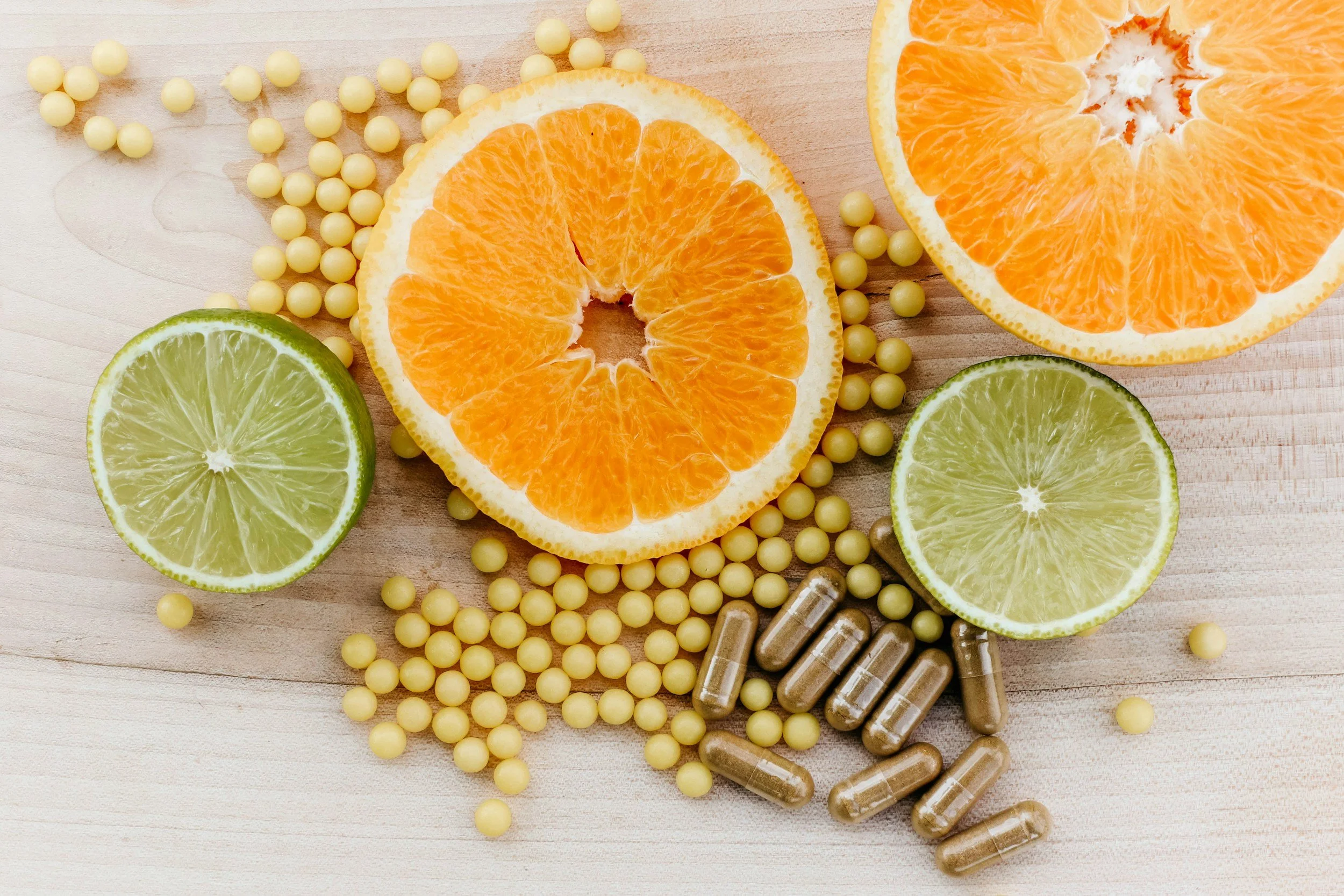
Synthetic folic acid cannot be used as it arrives. Your body has to run it through several conversion steps, starting with an enzyme called DHFR (dihydrofolate reductase), before it reaches the active 5-MTHF form. The catch is that human DHFR capacity is modest and varies from person to person. When folic acid intake is high, some of it can slip into the bloodstream unconverted. Researchers call this unmetabolized folic acid, or UMFA.
A 2023 randomized trial indexed on PubMed put numbers on this. Pregnant women were assigned either 0.6 mg of folic acid or the natural 5-MTHF form daily. Those taking plain folic acid ended up with markedly more unmetabolized folic acid in their breast milk, roughly a fourteenfold higher proportion, while total folate levels stayed similar between groups (Cochrane et al., Scientific Reports, DOI: 10.1038/s41598-023-38224-4).
It is worth being precise about what this does and does not show. It demonstrates that the form of B9 you take changes what shows up in the body, clearly and measurably. What the long-term health meaning of circulating UMFA actually is remains an open research question, and the study authors themselves called for more investigation. This is exactly the kind of well-designed comparison, with a real control group and no obvious commercial stake in the outcome, that is worth paying attention to without overstating. The practical takeaway is simpler: natural food folates and the 5-MTHF form do not depend on that shaky conversion step in the same way.
The Best Food Sources
If folate is the goal, three categories do the heavy lifting: liver, legumes, and leafy greens. The approximate amounts below are the totals listed per typical serving and will shift with portion size and cooking method, so treat them as a map rather than a measurement. As the next section explains, the total on the label and the amount your body actually absorbs are two different numbers.
| Food | Typical Serving | Approx. Folate |
|---|---|---|
| Chicken liver, cooked | 3 oz | Very high (around 490 mcg) |
| Lentils, cooked | 1 cup | Around 350 mcg |
| Chickpeas, cooked | 1 cup | Around 280 mcg |
| Spinach, cooked | 1 cup | Around 260 mcg |
| Asparagus, cooked | 1 cup | Around 260 mcg |
| Beef liver, cooked | 3 oz | Around 215 mcg |
| Black beans, cooked | 1 cup | Around 255 mcg |
| Avocado | 1 whole | Around 120 to 160 mcg |
| Beets, cooked | 1 cup | Around 135 mcg |
A practical point about greens: folate is water soluble and sensitive to heat. Boiling greens and pouring the water down the drain sends a good share of the folate with it. Steaming lightly, sauteing quickly, or eating some greens raw preserves more. Liver holds its folate reasonably well through gentle cooking, which is one more reason it has stayed a traditional staple. If liver is a hard sell at your table, freezing it in small cubes and grating a little into ground meat is an old trick that hides it well.
Plants vs Animal Foods: The Bioavailability Gap
Look at the table above and it is easy to conclude that a cup of lentils and a serving of liver are roughly interchangeable. On paper, the folate numbers are close. In your body, they are not, and this is where nutrient charts quietly mislead people.
Two things separate plant sources from animal sources. The first is the form the nutrient comes in. The second is what else is in the food that interferes with absorption.
Plants carry a set of natural defense compounds, sometimes called antinutrients, that protect the seed or leaf and, as a side effect, bind up minerals in your gut. Phytic acid in legumes, grains, nuts, and seeds latches onto iron, zinc, calcium, and magnesium so you absorb less of them. Oxalates in spinach, chard, and beet greens bind calcium and iron and can burden the kidneys in people prone to stones. Goitrogens in raw cruciferous vegetables can interfere with the thyroid's use of iodine, which matters more than most people realize (more on the thyroid below). Tannins and other polyphenols can blunt iron and B-vitamin absorption too.
Traditional cultures were not naive about this. Soaking, sprouting, fermenting, and long cooking of beans and grains all lower phytic acid, and cooking reduces oxalates and goitrogens. This is exactly why beans were soaked overnight and corn was nixtamalized. Preparation matters. Even so, a plate built mainly on plants starts several steps behind one that includes animal foods, and here is the nutrient-by-nutrient reason why.
| Nutrient | In Plants | In Animal Foods (esp. Liver) |
|---|---|---|
| Folate | Natural folate, but absorbed at roughly half the rate of synthetic folic acid, and some is lost to cooking water | Dense natural folate; liver is among the richest sources anywhere |
| Iron | Non-heme iron, poorly absorbed and blocked further by phytates and tannins | Heme iron, absorbed several times more efficiently |
| Vitamin A | Beta-carotene, which must be converted to retinol, a step that is inefficient and varies widely between people | Preformed retinol, ready to use with no conversion needed |
| Zinc and copper | Present, but bound by phytic acid, lowering how much you actually absorb | Highly bioavailable; liver is a standout source of copper |
| Vitamin B12 | Essentially absent from plants | Abundant in liver and other animal foods |
None of this means greens and legumes are worthless. They are real, valuable foods, and a bowl of lentils delivers meaningful folate. The point is one of context: when plants make up the bulk of the plate, the body absorbs less of what the label promises. Animal foods, and liver in particular, hand you folate alongside iron, vitamin A, copper, and B12 in ready-to-use forms without the absorption blockers. The most resilient approach uses both, with animal foods anchoring the nutrients that plants deliver poorly.
If You Choose to Supplement
Food first does not mean food only. I do not lean on many supplements, but there are a few I take every day, and the brand I trust for them is Heart & Soil. The quality is excellent, and several of their formulas are built from pasture-raised, grass-fed beef liver and other organ meats, which is about as close to eating the whole animal as a capsule can get. For anyone who cannot stomach liver at the table, this is the shortcut I point them toward.
A brand I actually use
Here's 20% off at Heart & Soil! They make their supplements from the most nutrient-rich foods on the planet, organ meats. Reclaim your health today!
If your interest is specifically the folate question and you want a targeted option, the forms worth knowing are methylfolate (5-MTHF, the active form) and folinic acid, both of which skip the folic acid conversion problem. Dr. Rhonda Patrick, a biochemist who speaks often about methylation and MTHFR, is among those who steer people toward these bioavailable forms over plain folic acid. As always, the specifics are a conversation for you and your practitioner.
None of this replaces eating well. A supplement is a patch. Liver and greens are the fabric.
The Thyroid Thread
There is a metabolic angle that often gets left out of folate conversations. The thyroid sets the pace of your entire metabolism, including the enzymatic machinery that processes B vitamins. Dr. Broda Barnes spent his career arguing that low thyroid function was widely missed, and practitioners working in his tradition note that a sluggish metabolism can ripple outward into how efficiently the body handles many nutrients.
An underactive thyroid has been associated with higher homocysteine, the same marker that rises when folate metabolism is not keeping up. The threads connect: thyroid function, B-vitamin status, and methylation are not separate silos but parts of one metabolic whole. It also loops back to the goitrogens mentioned earlier, since a plant-heavy plate leans on some of the same foods that can nudge the thyroid. This is a framework for thinking, not a diagnostic claim about anyone in particular.
A Food-First Approach
Pulling it together, a whole-food approach to folate looks refreshingly simple. Put liver on the menu roughly once a week, in whatever form you will actually eat. Make legumes a regular habit, prepared the traditional way with soaking or sprouting to soften their antinutrient load. Eat leafy greens most days, cooked gently or raw. Round it out with asparagus, avocado, beets, and pastured eggs as they come into season.
The beauty of this approach is that it renders much of the folic acid versus MTHFR debate academic. Whole foods deliver folate in the natural forms your body evolved to use, and animal foods deliver it in the most absorbable package of all, alongside the other vitamins, minerals, and cofactors that make the whole system run. You are not trying to outsmart a single enzyme. You are feeding the whole organism the way it expects to be fed.
A Note on Pregnancy
One area deserves extra care and a straight look at the evidence. Adequate folate status before conception and in the earliest weeks of pregnancy is one of the most robustly established findings in all of nutrition science, tied to a lower risk of neural tube defects in the developing baby. That evidence is strong and worth respecting, whatever your view of the institutions that promote it.
What this means in practice is not complicated: if you are pregnant or hoping to be, this is the moment to be most intentional about folate, not least. A food-first plate rich in the sources above is a wonderful foundation, and many practitioners pair it with a bioavailable methylfolate form during this window. The right move is to work closely with a knowledgeable provider who can look at your particular situation rather than to make this call from a blog article, including this one.
Frequently Asked Questions
What is the difference between folate and folic acid?
Folate is the natural family of vitamin B9 found in foods like liver, greens, and legumes, in forms the body uses readily. Folic acid is a synthetic, oxidized version used in supplements and fortified flour that must be converted before your cells can use it. Same vitamin family, different molecules with different behavior in the body.
Is folic acid bad for you?
That framing is stronger than the evidence supports. Folic acid is effective at raising folate levels, and research indexed on PubMed shows it can even narrow the gap in people with MTHFR variants. The open question is unmetabolized folic acid when intake is high, whose long-term significance researchers are still studying. Many people simply prefer to get B9 from food or from the natural 5-MTHF form to avoid the question.
Are plant folate sources as good as liver?
Greens and legumes are real, valuable sources, but the folate in them is absorbed at roughly half the rate of the synthetic form, some is lost to cooking, and plants carry compounds like phytates and oxalates that blunt mineral absorption. Liver delivers dense folate alongside iron, vitamin A, copper, and B12 in ready-to-use forms without those blockers. A plate with both is ideal, and if you had to name one powerhouse, liver is hard to beat.
What is the best form of folate if I have MTHFR?
Whole-food folate is the approach that sidesteps the conversion issue most cleanly, since natural folates do not lean on the same enzymatic bottleneck. If you supplement, the methylfolate (5-MTHF) and folinic acid forms are the ones commonly chosen for MTHFR variants. Testing and choices are best made with a practitioner who knows your history.
Can I get enough folate from food alone?
For many people, yes, a plate that regularly includes liver, legumes, and leafy greens is remarkably folate dense. Liver and lentils in particular are among the richest sources anywhere. Certain life stages and health situations may call for more attention, which is where a knowledgeable practitioner comes in.
Does cooking destroy folate?
Some of it. Folate is water soluble and heat sensitive, so boiling greens and discarding the water is the biggest loss. Steaming, quick sauteing, and eating some produce raw preserve more. Liver retains folate fairly well through gentle cooking.
What are signs of low folate?
Classically, low folate can show up as a type of anemia with fatigue, along with elevated homocysteine on lab work. These are general patterns, not a self-diagnosis tool. If you are concerned, testing through a provider is the way to actually know.
References
Research in this article was located through PubMed. Please credit the original authors.
Cochrane KM, Elango R, Devlin AM, Hutcheon JA, Karakochuk CD. Human milk unmetabolized folic acid is increased following supplementation with synthetic folic acid as compared to (6S)-5-methyltetrahydrofolic acid. Scientific Reports. 2023. DOI: 10.1038/s41598-023-38224-4
Hiraoka M, Kagawa Y. Genetic polymorphisms and folate status. Congenital Anomalies. 2017. DOI: 10.1111/cga.12232